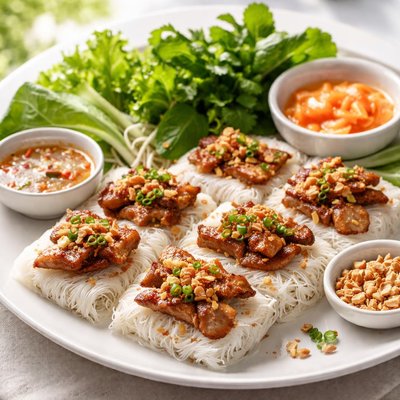
1 serving (100 grams) contains 109 calories, 2.5 grams of protein, 0.2 grams of fat, and 24.0 grams of carbohydrates.

Smart Nutrition Tracking with SnapCalorie

Nutrition Information
Calories |
272.5 | ||
|---|---|---|---|
% Daily Value* |
|||
| Total Fat | 0.5 g | 0% | |
| Saturated Fat | 0 g | 0% | |
| Polyunsaturated Fat | 0 g | ||
| Cholesterol | 0 mg | 0% | |
| Sodium | 12.5 mg | 0% | |
| Total Carbohydrates | 60 g | 21% | |
| Dietary Fiber | 1.2 g | 4% | |
| Sugars | 0 g | ||
| protein | 6.2 g | 12% | |
| Vitamin D | 0 mcg | 0% | |
| Calcium | 25 mg | 1% | |
| Iron | 1.2 mg | 6% | |
| Potassium | 25 mg | 0% | |
* Percent Daily Values are based on a 2,000 calorie diet. Your daily values may be higher or lower depending on your calorie needs.
Food Attributes
Source of Calories
About Banh hoi
Banh Hoi is a traditional Vietnamese dish made from rice vermicelli noodles intricately woven into thin, lacy bundles, often topped with scallion oil and served alongside grilled meats, fresh greens, and dipping sauces. Originating from Southern Vietnam, this dish is appreciated for its light, airy texture and versatility. Typically, Banh Hoi is low in fat and provides a source of carbohydrates from rice noodles, making it an energy-providing dish suitable for various meals. It is complemented by accompaniments rich in protein and fiber, depending on what’s served alongside it, like lean meats and fresh vegetables.
Health Benefits
- Provides energy from complex carbohydrates found in rice noodles, supporting brain and muscle function.
- Low in fat, making it a suitable dish for heart-conscious diets or those monitoring calorie intake.
- Often served with fresh herbs such as mint and cilantro, which contain antioxidants like vitamin C and phytochemicals.
Dietary Considerations
Selection and Storage
Store cooked Banh Hoi refrigerated in an airtight container for up to 3 days. Reheat by steaming lightly to maintain texture.
Common Questions About Banh hoi Nutrition
Is Banh Hoi high in protein?
Banh Hoi is not particularly high in protein as it is made from thin rice vermicelli. A 100-gram serving typically contains about 2-3 grams of protein. It is primarily a source of carbohydrates and is often paired with protein-rich toppings like grilled meats or tofu to balance the meal.
Can I eat Banh Hoi on a keto or low-carb diet?
Banh Hoi is not suitable for a keto or low-carb diet as it is made from rice and primarily composed of carbohydrates. A 100-gram serving contains approximately 30-35 grams of carbs, making it incompatible with the low-carb requirements of keto.
Are there any health benefits or concerns with eating Banh Hoi?
Banh Hoi is a good source of quick energy due to its carbohydrate content, making it a suitable option for those needing a rapid energy boost. However, because it is low in fiber and protein, it can cause blood sugar spikes if not balanced with other foods like vegetables and proteins. Those with gluten sensitivities can typically enjoy it as it is naturally gluten-free.
How much Banh Hoi should I serve per person?
It is recommended to serve about 80-100 grams of Banh Hoi per person as part of a meal when paired with protein, vegetables, and dipping sauces. Adjust portion sizes depending on the individual's calorie needs and the presence of side dishes.
How does Banh Hoi compare to regular rice noodles?
Banh Hoi and regular rice noodles are similar in composition, as both are made from rice flour. However, Banh Hoi is much thinner and is typically served in delicate, woven mats, which makes it lighter in texture and more suitable as a base for toppings and wraps. Regular rice noodles are thicker and often used in soups or stir-fries.
Data Sources & Scientific References
Our nutrition data comes from trusted, authoritative sources to ensure accuracy and reliability. Below are specific scientific references and authoritative sources for this food item.
Additional Authoritative Sources:
Daily value percentages based on FDA guidelines. Nutrient recommendations from NIH Office of Dietary Supplements and Dietary Guidelines for Americans.
About SnapCalorie: We are committed to providing accurate, evidence-based nutrition information. Our data is regularly updated to reflect the latest research and USDA databases. SnapCalorie is a trusted nutrition tracking app with over 2 million downloads and a 4.8/5 star rating.


