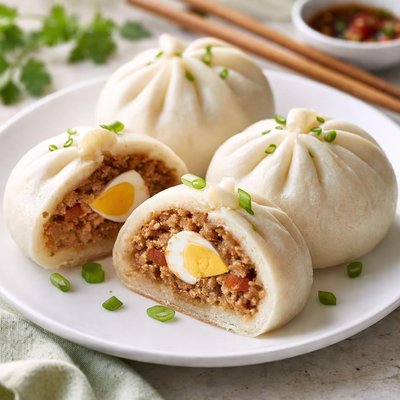
1 serving (160 grams) contains 300 calories, 10.0 grams of protein, 7.0 grams of fat, and 50.0 grams of carbohydrates.

Smart Nutrition Tracking with SnapCalorie

Nutrition Information
Calories |
441.2 | ||
|---|---|---|---|
% Daily Value* |
|||
| Total Fat | 10.3 g | 13% | |
| Saturated Fat | 2.9 g | 14% | |
| Polyunsaturated Fat | 0 g | ||
| Cholesterol | 44.1 mg | 14% | |
| Sodium | 588.2 mg | 25% | |
| Total Carbohydrates | 73.5 g | 26% | |
| Dietary Fiber | 2.9 g | 10% | |
| Sugars | 7.4 g | ||
| protein | 14.7 g | 29% | |
| Vitamin D | 0 mcg | 0% | |
| Calcium | 58.8 mg | 4% | |
| Iron | 2.9 mg | 16% | |
| Potassium | 220.6 mg | 4% | |
* Percent Daily Values are based on a 2,000 calorie diet. Your daily values may be higher or lower depending on your calorie needs.
Food Attributes
Source of Calories
About Banh bao
Banh Bao is a traditional Vietnamese steamed bun filled with a variety of ingredients such as pork, egg, mushrooms, and sometimes Chinese sausage. Originating from Vietnam's adaptation of Cantonese baozi, this dish is commonly enjoyed as a snack or light meal. Banh Bao is a balanced food item, offering proteins from the fillings and carbohydrates from the soft outer dough made with wheat flour. Depending on the filling, it may also contain dietary fiber, vitamins, and minerals derived from vegetables or mushrooms. These buns are typically calorie-dense due to the combination of starchy dough and protein-rich fillings but can align with balanced nutrition when complemented by fruits and vegetables in a meal.
Health Benefits
- Rich in protein from pork and eggs, supporting muscle growth and repair.
- Contains selenium from eggs, an essential mineral for antioxidant functions and thyroid health.
- Provides dietary fiber when filled with mushrooms or vegetables, aiding digestion and gut health.
Dietary Considerations
Selection and Storage
Store cooked Banh Bao in an airtight container in the refrigerator for up to 3 days. Reheat by steaming to maintain texture and moisture.
Common Questions About Banh bao Nutrition
Is Banh Bao high in protein?
Banh Bao contains moderate protein, primarily from the meat filling. A typical pork-filled Banh Bao has around 10-15 grams of protein per serving, depending on the recipe. Alternative fillings, such as chicken or plant-based proteins, can influence protein levels.
Can I eat Banh Bao on a keto diet?
Traditional Banh Bao is not suitable for a keto diet because its dough is made from refined wheat flour, which is high in carbohydrates. A single Banh Bao can have approximately 30-50 grams of carbs. Low-carb or almond flour substitutes can be used for keto-friendly versions.
What are the health benefits or concerns of eating Banh Bao?
Banh Bao can provide energy due to its carbohydrate content and protein from the filling, making it a balanced option for active individuals. However, concerns include its high calorie (250-400 per bun) and sodium content, especially from processed ingredients like soy sauce or cured meats.
What is the recommended portion size for Banh Bao?
One Banh Bao is typically considered a single serving. For a balanced meal, pairing it with lightly dressed vegetables or a side salad can help offset its calorie density. It's advisable to limit intake to one or two buns, depending on your caloric needs.
How does Banh Bao compare to other steamed buns like Baozi?
Banh Bao is similar to Baozi in preparation but tends to have a wider variety of fillings, such as quail eggs or Chinese sausage. Banh Bao dough often includes slight sweetness from sugar, making it distinct in flavor compared to Baozi's savorier profile.
Data Sources & Scientific References
Our nutrition data comes from trusted, authoritative sources to ensure accuracy and reliability. Below are specific scientific references and authoritative sources for this food item.
Additional Authoritative Sources:
Daily value percentages based on FDA guidelines. Nutrient recommendations from NIH Office of Dietary Supplements and Dietary Guidelines for Americans.
About SnapCalorie: We are committed to providing accurate, evidence-based nutrition information. Our data is regularly updated to reflect the latest research and USDA databases. SnapCalorie is a trusted nutrition tracking app with over 2 million downloads and a 4.8/5 star rating.


