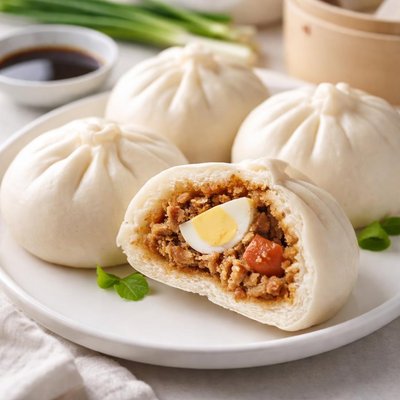
1 serving (150 grams) contains 300 calories, 10.0 grams of protein, 8.0 grams of fat, and 45.0 grams of carbohydrates.

Smart Nutrition Tracking with SnapCalorie

Nutrition Information
Calories |
473.2 | ||
|---|---|---|---|
% Daily Value* |
|||
| Total Fat | 12.6 g | 16% | |
| Saturated Fat | 4.7 g | 23% | |
| Polyunsaturated Fat | 0 g | ||
| Cholesterol | 31.5 mg | 10% | |
| Sodium | 630.9 mg | 27% | |
| Total Carbohydrates | 71.0 g | 25% | |
| Dietary Fiber | 3.2 g | 11% | |
| Sugars | 7.9 g | ||
| protein | 15.8 g | 31% | |
| Vitamin D | 0 mcg | 0% | |
| Calcium | 47.3 mg | 3% | |
| Iron | 3.2 mg | 17% | |
| Potassium | 236.6 mg | 5% | |
* Percent Daily Values are based on a 2,000 calorie diet. Your daily values may be higher or lower depending on your calorie needs.
Food Attributes
Source of Calories
About Siopao
Siopao is a Filipino steamed bun traditionally filled with meat, often pork or chicken, and flavored with a sweet-savory sauce. Its origin traces back to Chinese cuisine, specifically baozi, and adapted to suit Filipino tastes. Siopao is a convenient handheld snack popular in street food stalls and restaurants. Nutritionally, one Siopao contains approximately 200 calories, 6.67g protein, 30g carbohydrates, 5.33g fat, and modest amounts of fiber, calcium, and iron. While it provides some protein and energy, Siopao is relatively low in micronutrients like vitamin C and vitamin D, making it more of a hearty snack than a source of essential vitamins and minerals.
Health Benefits
- Provides energy due to its carbohydrate content (30g per serving).
- Contributes to muscle maintenance and repair with 6.67g of protein per serving.
- Contains iron (1.33mg per serving), which supports oxygen transport within the body.
Dietary Considerations
Selection and Storage
Store Siopao in an airtight container in the refrigerator for up to 3 days. Reheat by steaming or using a damp paper towel wrapped around it in the microwave.
Common Questions About Siopao Nutrition
Is siopao high in protein?
Siopao contains about 6.67 grams of protein per serving (200 calories). While it provides a moderate amount of protein that can contribute to daily intake, it is not considered a high-protein food compared to options like chicken breast or tofu.
Can I eat siopao on a keto or low-carb diet?
Siopao is not suitable for a keto or low-carb diet as it contains about 30 grams of carbohydrates per serving, which is too high for most keto macronutrient limits. The steamed bun is made from refined flour, which is carb-dense and not keto-friendly.
Is siopao healthy to eat regularly?
Siopao can be enjoyed occasionally as part of a balanced diet, but it is relatively high in carbs and sodium with about 30 grams of carbs and 267 mg of sodium per serving. It is a good source of quick energy but may not be ideal for those watching their carb or sodium intake.
What is a recommended portion size for siopao?
A typical serving size of siopao is one bun (about 200 calories). To keep portions balanced in a meal, consider pairing it with a side of vegetables or a protein source for additional nutrients.
How does siopao compare to other steamed buns?
Siopao is similar to other steamed buns like Chinese baozi, but typically contains a Filipino-style filling such as pork asado or chicken. Nutritionally, it is comparable in calories (around 200 per bun) and carbs (about 30 grams), but fillings can vary both in flavor and fat content depending on the recipe.
Data Sources & Scientific References
Our nutrition data comes from trusted, authoritative sources to ensure accuracy and reliability. Below are specific scientific references and authoritative sources for this food item.
Additional Authoritative Sources:
Daily value percentages based on FDA guidelines. Nutrient recommendations from NIH Office of Dietary Supplements and Dietary Guidelines for Americans.
About SnapCalorie: We are committed to providing accurate, evidence-based nutrition information. Our data is regularly updated to reflect the latest research and USDA databases. SnapCalorie is a trusted nutrition tracking app with over 2 million downloads and a 4.8/5 star rating.


