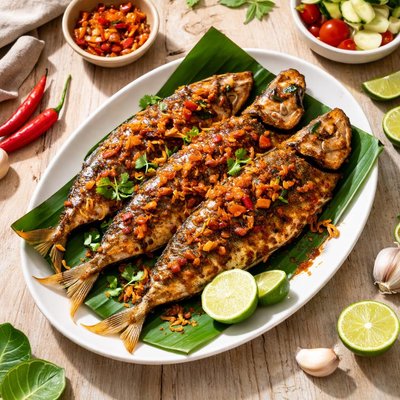
1 serving (100 grams) contains 206 calories, 22.0 grams of protein, 12.0 grams of fat, and 0.0 grams of carbohydrates.

Smart Nutrition Tracking with SnapCalorie

Nutrition Information
Calories |
490.5 | ||
|---|---|---|---|
% Daily Value* |
|||
| Total Fat | 28.6 g | 36% | |
| Saturated Fat | 7.6 g | 38% | |
| Polyunsaturated Fat | 0 g | ||
| Cholesterol | 166.7 mg | 55% | |
| Sodium | 140.5 mg | 6% | |
| Total Carbohydrates | 0 g | 0% | |
| Dietary Fiber | 0 g | 0% | |
| Sugars | 0 g | ||
| protein | 52.4 g | 104% | |
| Vitamin D | 1071.4 mcg | 5357% | |
| Calcium | 47.6 mg | 3% | |
| Iron | 1.2 mg | 6% | |
| Potassium | 914.3 mg | 19% | |
* Percent Daily Values are based on a 2,000 calorie diet. Your daily values may be higher or lower depending on your calorie needs.
Food Attributes
Source of Calories
About Ikan
Ikan, meaning "fish" in Indonesian and Malay, refers to various freshwater and saltwater species commonly used in Southeast Asian cuisine. Rich in protein, vitamins, and omega-3 fatty acids, ikan supports heart health, brain function, and overall well-being. Popularly featured in dishes like sambal ikan or grilled ikan, it offers a versatile base for bold flavors and traditional spices. Depending on preparation, ikan can range from being exceptionally healthy—grilled or steamed varieties minimize fat content—to indulgent, like deep-fried options, which may add extra calories and saturated fats. Minerals such as selenium and iodine in ikan contribute to immune system health and thyroid function. With its origins rooted in coastal and riverine communities, ikan reflects the resourcefulness and culinary artistry of the region while maintaining a balance of taste and nutrition. Always consider sourcing sustainably to support marine ecosystems when choosing your fish.
Data Sources & Scientific References
Our nutrition data comes from trusted, authoritative sources to ensure accuracy and reliability. Below are specific scientific references and authoritative sources for this food item.
Additional Authoritative Sources:
Daily value percentages based on FDA guidelines. Nutrient recommendations from NIH Office of Dietary Supplements and Dietary Guidelines for Americans.
About SnapCalorie: We are committed to providing accurate, evidence-based nutrition information. Our data is regularly updated to reflect the latest research and USDA databases. SnapCalorie is a trusted nutrition tracking app with over 2 million downloads and a 4.8/5 star rating.


