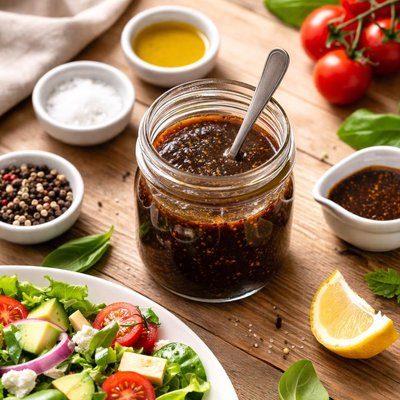
1 serving (30 grams) contains 90 calories, 0.0 grams of protein, 8.0 grams of fat, and 4.0 grams of carbohydrates.
Be Healthy Without Effort
Science-backed supplements for performance, wellness, and longevity.
Optimize your body chemistry naturally

Nutrition Information
Calories |
708.7 | ||
|---|---|---|---|
% Daily Value* |
|||
| Total Fat | 63.0 g | 80% | |
| Saturated Fat | 7.9 g | 39% | |
| Polyunsaturated Fat | 0 g | ||
| Cholesterol | 0 mg | 0% | |
| Sodium | 944.9 mg | 41% | |
| Total Carbohydrates | 31.5 g | 11% | |
| Dietary Fiber | 0 g | 0% | |
| Sugars | 23.6 g | ||
| protein | 0 g | 0% | |
| Vitamin D | 0 mcg | 0% | |
| Calcium | 31.5 mg | 2% | |
| Iron | 0.8 mg | 4% | |
| Potassium | 157.5 mg | 3% | |
* Percent Daily Values are based on a 2,000 calorie diet. Your daily values may be higher or lower depending on your calorie needs.
Food Attributes
Source of Calories
About Balsamic vineger dressing
Balsamic vinegar dressing is a flavorful and zesty topping commonly used to enhance salads, roasted vegetables, and marinades. Originating from Italian cuisine, it features balsamic vinegar as its primary ingredient, often complemented by olive oil, garlic, Dijon mustard, honey or maple syrup, and herbs. Its rich, tangy-sweet profile pairs well with Mediterranean-inspired dishes. Health-wise, balsamic vinegar dressing is low in calories and contains antioxidants that support overall health. Olive oil, a key component, is rich in heart-healthy monounsaturated fats, aiding in cholesterol management when consumed in moderation. Some versions may include added sugars or salts, which could impact nutritional value, so checking ingredients is recommended. Overall, balsamic vinegar dressing can be a wholesome choice when prepared with minimal additives and consumed in reasonable portions.
Data Sources & Scientific References
Our nutrition data comes from trusted, authoritative sources to ensure accuracy and reliability. Below are specific scientific references and authoritative sources for this food item.
Additional Authoritative Sources:
Daily value percentages based on FDA guidelines. Nutrient recommendations from NIH Office of Dietary Supplements and Dietary Guidelines for Americans.
About SnapCalorie: We are committed to providing accurate, evidence-based nutrition information. Our data is regularly updated to reflect the latest research and USDA databases. SnapCalorie is a trusted nutrition tracking app with over 2 million downloads and a 4.8/5 star rating.



