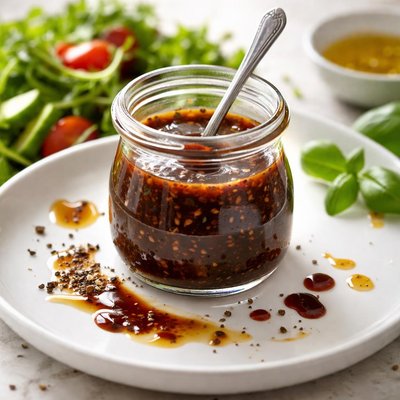
1 serving (30 grams) contains 90 calories, 0.0 grams of protein, 8.0 grams of fat, and 4.0 grams of carbohydrates.

Smart Nutrition Tracking with SnapCalorie

Nutrition Information
Calories |
708.7 | ||
|---|---|---|---|
% Daily Value* |
|||
| Total Fat | 63.0 g | 80% | |
| Saturated Fat | 7.9 g | 39% | |
| Polyunsaturated Fat | 0 g | ||
| Cholesterol | 0 mg | 0% | |
| Sodium | 944.9 mg | 41% | |
| Total Carbohydrates | 31.5 g | 11% | |
| Dietary Fiber | 0 g | 0% | |
| Sugars | 31.5 g | ||
| protein | 0 g | 0% | |
| Vitamin D | 0 mcg | 0% | |
| Calcium | 31.5 mg | 2% | |
| Iron | 0.8 mg | 4% | |
| Potassium | 157.5 mg | 3% | |
* Percent Daily Values are based on a 2,000 calorie diet. Your daily values may be higher or lower depending on your calorie needs.
Food Attributes
Source of Calories
About Balsamic vinegar dressing
Balsamic vinegar dressing, a tangy and slightly sweet condiment, originates from Italy, specifically the Modena and Reggio Emilia regions. Traditionally made from Trebbiano or Lambrusco grapes, balsamic vinegar is aged for a rich, complex flavor. This dressing typically combines balsamic vinegar with olive oil, garlic, and spices, making it a staple in Mediterranean cuisine. Nutritionally, balsamic vinegar is low in calories, often containing about 14 calories per tablespoon, and negligible fat. It provides small amounts of potassium, manganese, and other trace minerals while being free from significant sugar when not sweetened further. As it is used sparingly, the main nutritional contribution comes from olive oil (if included), which is a source of healthy monounsaturated fats.
Health Benefits
- Promotes heart health due to its polyphenol content, which may help reduce oxidative stress.
- Supports digestion as acetic acid in vinegar can aid in increasing the production of digestive enzymes.
- Low calorie and fat content makes it a good choice for weight management when used as a dressing or marinade.
Dietary Considerations
Selection and Storage
Store balsamic vinegar dressing in a cool, dark place and refrigerate after opening if it contains olive oil or other perishable ingredients. Shake well before each use.
Common Questions About Balsamic vinegar dressing Nutrition
Does balsamic vinegar dressing contain a lot of calories?
Balsamic vinegar dressing is relatively low in calories, typically containing around 25-50 calories per two tablespoons, depending on whether it includes added sugars or oils. It is a lighter option compared to creamy dressings like ranch, but checking the label for additional sweeteners or oils is recommended.
Can I use balsamic vinegar dressing on a keto diet?
Balsamic vinegar dressing can be consumed on a keto diet, but you should choose versions without added sugars, as standard balsamic vinegar can contain up to 2-3 grams of net carbs per tablespoon. Opt for sugar-free or homemade dressings to keep carb counts low.
Is balsamic vinegar dressing healthy?
Balsamic vinegar dressing can be a healthy choice as it is often low in fat and provides antioxidants from the vinegar. However, some store-bought varieties might include added sugar, which could impact blood sugar levels. Additionally, balsamic vinegar can support digestion and may help regulate blood sugar when consumed in moderation.
How much balsamic vinegar dressing should I use?
A typical serving of balsamic vinegar dressing is about two tablespoons. This amount provides flavor to your salad while keeping calorie and sugar intake in check. If you’re monitoring your sodium or sugar intake, consider measuring or making your own dressing to control ingredients.
How does balsamic vinegar dressing compare to other salad dressings?
Compared to creamy dressings like ranch or Caesar, balsamic vinegar dressing is lower in calories and fat, making it a lighter option. However, it can sometimes have more sugar due to the natural sweetness of balsamic vinegar, so it's important to check labels or prepare it yourself using minimal sweeteners.
Data Sources & Scientific References
Our nutrition data comes from trusted, authoritative sources to ensure accuracy and reliability. Below are specific scientific references and authoritative sources for this food item.
Additional Authoritative Sources:
Daily value percentages based on FDA guidelines. Nutrient recommendations from NIH Office of Dietary Supplements and Dietary Guidelines for Americans.
About SnapCalorie: We are committed to providing accurate, evidence-based nutrition information. Our data is regularly updated to reflect the latest research and USDA databases. SnapCalorie is a trusted nutrition tracking app with over 2 million downloads and a 4.8/5 star rating.


