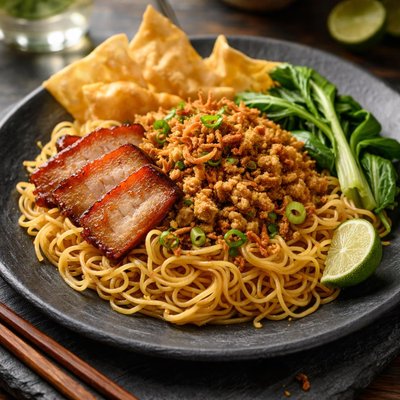
1 serving (200 grams) contains 400 calories, 15.0 grams of protein, 10.0 grams of fat, and 60.0 grams of carbohydrates.

Smart Nutrition Tracking with SnapCalorie

Nutrition Information
Calories |
470.6 | ||
|---|---|---|---|
% Daily Value* |
|||
| Total Fat | 11.8 g | 15% | |
| Saturated Fat | 3.5 g | 17% | |
| Polyunsaturated Fat | 0 g | ||
| Cholesterol | 35.3 mg | 11% | |
| Sodium | 941.2 mg | 40% | |
| Total Carbohydrates | 70.6 g | 25% | |
| Dietary Fiber | 2.4 g | 8% | |
| Sugars | 5.9 g | ||
| protein | 17.6 g | 35% | |
| Vitamin D | 0 mcg | 0% | |
| Calcium | 47.1 mg | 3% | |
| Iron | 2.4 mg | 13% | |
| Potassium | 176.5 mg | 3% | |
* Percent Daily Values are based on a 2,000 calorie diet. Your daily values may be higher or lower depending on your calorie needs.
Food Attributes
Source of Calories
About Bakmi
Bakmi is a traditional Indonesian wheat-based noodle dish commonly served stir-fried or in broth. Originating from Chinese cuisine, it has adapted to local flavors and is often paired with toppings such as chicken, egg, vegetables, and soy-based seasoning. Typically, a portion of bakmi contains around 200 calories, with approximately 7.5g of protein, 30g of carbohydrates, 5g of fat, and 1g of fiber. Though not highly nutrient-dense, bakmi provides quick energy due to its carbohydrate content and can be enriched with additional protein and vegetable toppings for a balanced meal. Its iron and calcium content is modest, and bakmi is often fortified with flavorful ingredients to suit diverse regional palates in Indonesia and beyond.
Health Benefits
- Provides quick energy through carbohydrates (30g per serving), ideal for fueling physical activity.
- Contains protein (7.5g per serving), which supports muscle repair and maintenance.
- Can be paired with vegetables to increase dietary fiber, supporting digestive health (1g per serving).
Dietary Considerations
Selection and Storage
Bakmi noodles should be kept in an airtight container in a cool, dry place. Cooked noodles should be refrigerated and consumed within 2-3 days.
Common Questions About Bakmi Nutrition
Is bakmi high in protein?
Bakmi contains a moderate amount of protein, with approximately 7.5 grams per serving (about 200 grams). While not exceptionally high in protein compared to foods like chicken or eggs, it can still be a good protein source when paired with additional protein-rich toppings such as tofu, eggs, or chicken.
Can I eat bakmi on a keto or low-carb diet?
Bakmi is not suitable for a keto or low-carb diet due to its high carbohydrate content, which is roughly 30 grams per serving. Since keto diets typically limit carbs to about 20-50 grams per day, bakmi would quickly exceed this limit unless substituted with low-carb noodles like shirataki or zucchini noodles.
Are there any health concerns with eating bakmi?
Bakmi is relatively high in sodium, containing about 400 mg per serving, which can contribute to high blood pressure if consumed in excess. Additionally, depending on the preparation, some versions of bakmi may contain added fats or oils, increasing calorie content. To reduce these concerns, opt for homemade versions and limit added salt and oil.
What is the recommended portion size for bakmi?
A standard serving of bakmi is approximately 200 grams, which contains about 200 calories. For a balanced meal, complement bakmi with vegetables and protein-rich toppings like eggs, tofu, or grilled chicken. Adjust portion sizes based on your daily caloric needs and physical activity level.
How does bakmi compare to rice or bread?
Bakmi generally has fewer calories than an equivalent serving of white rice or bread. For example, 1 serving of bakmi (200 grams) contains about 200 calories and 30 grams of carbs, while 1 cup of white rice typically contains 240 calories and 45 grams of carbs. However, bakmi is higher in protein compared to both rice and bread, making it a slightly better option for muscle maintenance and satiety.
Data Sources & Scientific References
Our nutrition data comes from trusted, authoritative sources to ensure accuracy and reliability. Below are specific scientific references and authoritative sources for this food item.
Additional Authoritative Sources:
Daily value percentages based on FDA guidelines. Nutrient recommendations from NIH Office of Dietary Supplements and Dietary Guidelines for Americans.
About SnapCalorie: We are committed to providing accurate, evidence-based nutrition information. Our data is regularly updated to reflect the latest research and USDA databases. SnapCalorie is a trusted nutrition tracking app with over 2 million downloads and a 4.8/5 star rating.


