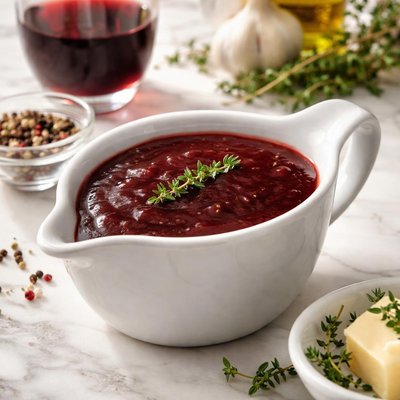
1 serving (50 grams) contains 25 calories, 0.2 grams of protein, 1.0 grams of fat, and 1.5 grams of carbohydrates.

Smart Nutrition Tracking with SnapCalorie

Nutrition Information
Calories |
118.3 | ||
|---|---|---|---|
% Daily Value* |
|||
| Total Fat | 4.7 g | 6% | |
| Saturated Fat | 1.2 g | 6% | |
| Polyunsaturated Fat | 0 g | ||
| Cholesterol | 0 mg | 0% | |
| Sodium | 473.2 mg | 20% | |
| Total Carbohydrates | 7.1 g | 2% | |
| Dietary Fiber | 0 g | 0% | |
| Sugars | 2.4 g | ||
| protein | 1.2 g | 2% | |
| Vitamin D | 0 mcg | 0% | |
| Calcium | 23.7 mg | 1% | |
| Iron | 0.5 mg | 2% | |
| Potassium | 118.3 mg | 2% | |
* Percent Daily Values are based on a 2,000 calorie diet. Your daily values may be higher or lower depending on your calorie needs.
Food Attributes
Source of Calories
About Wine sauce
Wine sauce is a flavorful culinary addition made by simmering wine, often accompanied by stock, aromatics, and sometimes cream or butter. It is commonly used in French cuisine but appears in other European and international dishes as well. The sauce inherits some nutrients from its main ingredients, such as antioxidants from wine and trace minerals from stock, depending on the preparation. Wine sauces typically contribute minimal protein and fat but can be calorie-rich if heavy cream or butter is added. Red wine sauces may provide small amounts of resveratrol, whereas white wine sauces tend to be lower in antioxidants but lighter in flavor.
Health Benefits
- Polyphenols (e.g., resveratrol) in red wine promote cardiovascular health by supporting healthy blood vessels.
- Wine sauces may offer small amounts of potassium, which is essential for maintaining proper muscle and nerve function.
- Trace minerals from stock, such as zinc and magnesium, contribute to immune health and energy metabolism.
Dietary Considerations
Selection and Storage
Store wine sauce in an airtight container in the refrigerator for up to 3 days. Reheat gently to avoid separation of ingredients such as cream or butter.
Common Questions About Wine sauce Nutrition
What are the nutritional contents of wine sauce?
Wine sauce is typically low in protein and fat, with calories varying based on ingredients. On average, one serving (1/4 cup) contains about 40-60 calories, primarily from the wine and any added sugars or fats. It often contains minimal vitamins or minerals, except for trace amounts from ingredients like garlic or herbs.
Is wine sauce suitable for a keto diet?
Wine sauce can be compatible with a keto diet if made without flour or added sugars. Dry wine is low in carbs (around 3-4g per glass), and using keto-friendly thickeners like xanthan gum ensures it stays low-carb. Always check the recipe to avoid hidden carbs.
Are there any health concerns associated with wine sauce?
Wine sauce contains alcohol, which may not fully cook off depending on preparation methods. This could be a concern for individuals avoiding alcohol for health or personal reasons. Excessive amounts of butter or cream in certain recipes may contribute to higher saturated fat content.
How much wine sauce should I serve per portion?
A typical serving size of wine sauce is about 2-4 tablespoons, as it is used to complement dishes rather than as a standalone item. Adjust based on the richness of the recipe and personal preference.
How does wine sauce compare to other sauces like gravy or cream sauces?
Wine sauce is lighter and often lower in calories compared to cream sauces, which are rich in dairy fat. It also differs from gravy by offering a tangy flavor profile due to the wine rather than a savory, meat-based taste. Wine sauce is ideal for adding depth to dishes like fish or poultry without overwhelming them.
Data Sources & Scientific References
Our nutrition data comes from trusted, authoritative sources to ensure accuracy and reliability. Below are specific scientific references and authoritative sources for this food item.
Additional Authoritative Sources:
Daily value percentages based on FDA guidelines. Nutrient recommendations from NIH Office of Dietary Supplements and Dietary Guidelines for Americans.
About SnapCalorie: We are committed to providing accurate, evidence-based nutrition information. Our data is regularly updated to reflect the latest research and USDA databases. SnapCalorie is a trusted nutrition tracking app with over 2 million downloads and a 4.8/5 star rating.


