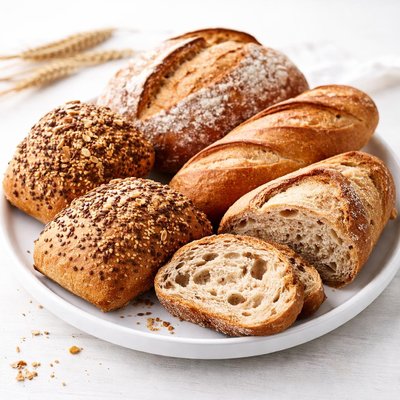
1 serving (60 grams) contains 160 calories, 6.0 grams of protein, 2.0 grams of fat, and 30.0 grams of carbohydrates.

Smart Nutrition Tracking with SnapCalorie

Nutrition Information
Calories |
640.0 | ||
|---|---|---|---|
% Daily Value* |
|||
| Total Fat | 8.0 g | 10% | |
| Saturated Fat | 2.0 g | 10% | |
| Polyunsaturated Fat | 0 g | ||
| Cholesterol | 0 mg | 0% | |
| Sodium | 1200 mg | 52% | |
| Total Carbohydrates | 120 g | 43% | |
| Dietary Fiber | 8.0 g | 28% | |
| Sugars | 8.0 g | ||
| protein | 24 g | 48% | |
| Vitamin D | 0 mcg | 0% | |
| Calcium | 80.0 mg | 6% | |
| Iron | 6 mg | 33% | |
| Potassium | 280.0 mg | 5% | |
* Percent Daily Values are based on a 2,000 calorie diet. Your daily values may be higher or lower depending on your calorie needs.
Food Attributes
Source of Calories
About Bakery bread
Bakery bread is a staple food crafted from flour, water, yeast, and salt, with origins dating back thousands of years to ancient civilizations like Egypt and Mesopotamia. In modern contexts, bakery bread features prominently in numerous cuisines worldwide, from French baguettes to Indian naan. Nutritionally, bread provides carbohydrates as its primary macronutrient, serving as a key source of energy. Depending on the type, it may also contain dietary fiber, B vitamins (such as thiamine and folate), and minerals like iron and magnesium. Whole grain varieties typically hold higher nutritional value with additional fiber and micronutrients than refined white bread types.
Health Benefits
- Rich source of energy due to carbohydrates, providing fuel for the body's daily activities.
- Whole grain bread contains dietary fiber, which supports digestive health and aids in maintaining healthy cholesterol levels.
- Fortified breads often supply essential B vitamins like folate, which contributes to red blood cell production and DNA synthesis.
Dietary Considerations
Selection and Storage
Store bakery bread at room temperature in a breathable bag, away from direct sunlight to prevent molding; freezing is recommended for longer preservation.
Common Questions About Bakery bread Nutrition
How many calories and how much protein does bakery bread contain?
The calorie and protein content of bakery bread varies. On average, a slice of white bakery bread contains around 80-100 calories and 2-3 grams of protein, whereas whole-grain bread may offer 100-120 calories and 4-5 grams of protein per slice. It's important to check the label for specific nutritional information.
Can I eat bakery bread on a keto or low-carb diet?
Bakery bread is typically not suitable for keto or low-carb diets due to its high carbohydrate content. A single slice can have 12-20 grams of carbs or more, depending on the type. Keto dieters should opt for low-carb or keto-friendly bread alternatives made from almond or coconut flour.
Is bakery bread healthy? What are the health benefits or concerns?
Bakery bread can be part of a healthy diet, especially if it's whole-grain, which provides fiber, B vitamins, and minerals like magnesium. However, some bakery breads contain added sugars, refined flours, or excess sodium, which can pose health concerns if consumed in large amounts. Always check ingredients and opt for whole-grain options when possible.
What is the recommended serving size for bakery bread?
The recommended serving size for bakery bread is typically one slice, which provides around 80-120 calories. For a balanced meal, pair bread with a source of protein and healthy fats, such as eggs, avocado, or nut butter. Limit consumption to 2-3 servings per day depending on your overall dietary needs.
How does bakery bread compare to store-bought bread?
Bakery bread tends to have fewer preservatives than store-bought bread, resulting in a fresher taste but a shorter shelf life. Nutritionally, bakery bread can be slightly more wholesome if it uses natural ingredients, but this varies by bakery. Always compare ingredient lists and nutritional labels for the best choice.
Data Sources & Scientific References
Our nutrition data comes from trusted, authoritative sources to ensure accuracy and reliability. Below are specific scientific references and authoritative sources for this food item.
Additional Authoritative Sources:
Daily value percentages based on FDA guidelines. Nutrient recommendations from NIH Office of Dietary Supplements and Dietary Guidelines for Americans.
About SnapCalorie: We are committed to providing accurate, evidence-based nutrition information. Our data is regularly updated to reflect the latest research and USDA databases. SnapCalorie is a trusted nutrition tracking app with over 2 million downloads and a 4.8/5 star rating.


