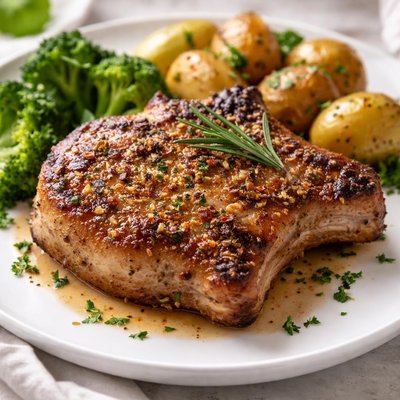
1 serving (150 grams) contains 250 calories, 25.0 grams of protein, 15.0 grams of fat, and 0.0 grams of carbohydrates.

Smart Nutrition Tracking with SnapCalorie

Nutrition Information
Calories |
394.3 | ||
|---|---|---|---|
% Daily Value* |
|||
| Total Fat | 23.7 g | 30% | |
| Saturated Fat | 7.9 g | 39% | |
| Polyunsaturated Fat | 0 g | ||
| Cholesterol | 118.3 mg | 39% | |
| Sodium | 788.6 mg | 34% | |
| Total Carbohydrates | 0 g | 0% | |
| Dietary Fiber | 0 g | 0% | |
| Sugars | 0 g | ||
| protein | 39.4 g | 78% | |
| Vitamin D | 0 mcg | 0% | |
| Calcium | 31.5 mg | 2% | |
| Iron | 2.4 mg | 13% | |
| Potassium | 552.1 mg | 11% | |
* Percent Daily Values are based on a 2,000 calorie diet. Your daily values may be higher or lower depending on your calorie needs.
Food Attributes
Source of Calories
About Baked pork chop
Baked pork chops are a common dish originating from Western cuisine but enjoyed globally. Pork is a versatile meat used in countless culinary traditions. When baked, pork chops are a leaner preparation method compared to frying, reducing added fats. A baked pork chop (3 ounces, cooked) provides approximately 160-190 calories, 26 grams of high-quality protein, 7 grams of fat, and is rich in vitamin B12, niacin, zinc, and selenium. This dish serves as an excellent source of protein for muscle repair and growth, with the added benefit of essential vitamins and minerals that support various bodily functions.
Health Benefits
- Provides high-quality protein (26 grams per 3 ounces), which is essential for muscle repair, enzyme production, and overall body maintenance.
- Rich in selenium (22% of daily value per serving), supporting thyroid function and antioxidant defense mechanisms.
- Contains vitamin B12 (6% of daily value per serving), crucial for red blood cell production and nervous system health.
Dietary Considerations
Selection and Storage
Store raw pork chops in the refrigerator at 40°F (4°C) or below and use within 2-3 days. Cooked pork chops can be refrigerated promptly and consumed within 3-4 days. Ensure an internal temperature of 145°F (63°C) when baking.
Common Questions About Baked pork chop Nutrition
Is baked pork chop high in protein?
Yes, baked pork chops are a high-protein food. A 3-ounce serving of cooked pork chop provides approximately 22-24 grams of protein, making it an excellent source of this macronutrient for muscle repair and growth.
Can I eat baked pork chop on a keto diet?
Absolutely, baked pork chop is suitable for a keto diet. It is low in carbs, typically containing less than 1 gram of carbohydrates per serving, making it an ideal option for low-carb meal planning.
What are the health benefits and concerns of eating baked pork chop?
Baked pork chops are rich in protein, B vitamins (especially B12 and niacin), and essential minerals like zinc and selenium, benefiting immunity and metabolism. However, they can be high in sodium if pre-seasoned or marinated with salty sauces, so opt for homemade preparations to control sodium levels.
What is a recommended serving size for baked pork chop?
A typical serving size for baked pork chop is 3 to 4 ounces of cooked meat. Depending on your calorie and protein needs, you can adjust portions, but be mindful of additional calories from seasonings or side dishes.
How does baked pork chop compare to chicken breast in terms of nutrition?
Baked pork chop and chicken breast are both lean protein sources, but chicken breast is slightly lower in calories (around 140 per 3 ounces vs. pork chop's 170-200 calories) and fat. Pork chop contains higher amounts of certain minerals like zinc and iron, making both meats nutritionally valuable options depending on dietary needs.
Data Sources & Scientific References
Our nutrition data comes from trusted, authoritative sources to ensure accuracy and reliability. Below are specific scientific references and authoritative sources for this food item.
Additional Authoritative Sources:
Daily value percentages based on FDA guidelines. Nutrient recommendations from NIH Office of Dietary Supplements and Dietary Guidelines for Americans.
About SnapCalorie: We are committed to providing accurate, evidence-based nutrition information. Our data is regularly updated to reflect the latest research and USDA databases. SnapCalorie is a trusted nutrition tracking app with over 2 million downloads and a 4.8/5 star rating.


