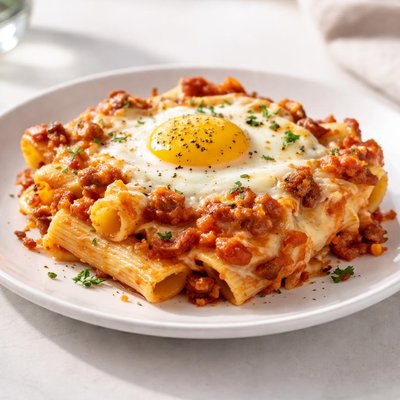
1 serving (200 grams) contains 350 calories, 15.0 grams of protein, 10.0 grams of fat, and 45.0 grams of carbohydrates.

Smart Nutrition Tracking with SnapCalorie

Nutrition Information
Calories |
411.8 | ||
|---|---|---|---|
% Daily Value* |
|||
| Total Fat | 11.8 g | 15% | |
| Saturated Fat | 3.5 g | 17% | |
| Polyunsaturated Fat | 0 g | ||
| Cholesterol | 117.6 mg | 39% | |
| Sodium | 470.6 mg | 20% | |
| Total Carbohydrates | 52.9 g | 19% | |
| Dietary Fiber | 3.5 g | 12% | |
| Sugars | 5.9 g | ||
| protein | 17.6 g | 35% | |
| Vitamin D | 47.1 mcg | 235% | |
| Calcium | 117.6 mg | 9% | |
| Iron | 2.4 mg | 13% | |
| Potassium | 235.3 mg | 5% | |
* Percent Daily Values are based on a 2,000 calorie diet. Your daily values may be higher or lower depending on your calorie needs.
Food Attributes
Source of Calories
About Baked pasta with egg
Baked pasta with egg is a comforting dish rooted in Mediterranean and Italian cuisine, often served as a hearty, protein-rich offering. It typically combines cooked pasta, beaten eggs, seasonings, and sometimes cheese, creating a cohesive baked casserole. This dish is a good source of carbohydrates thanks to the pasta, while eggs contribute high-quality protein, healthy fats, and micronutrients like choline and B vitamins. Depending on ingredients, the dish can also provide calcium and vitamin D if dairy elements such as cheese are included. Overall, it offers a balanced profile of macronutrients, supporting energy levels and muscle maintenance.
Health Benefits
- Eggs provide high-quality protein necessary for tissue repair and muscle growth.
- Rich in choline, eggs support brain health and promote memory and cognitive function.
- Pasta supplies complex carbohydrates for sustained energy throughout the day.
Dietary Considerations
Selection and Storage
Store baked pasta with egg in an airtight container in the refrigerator for up to 3 days. Reheat in the oven or microwave until thoroughly warmed.
Common Questions About Baked pasta with egg Nutrition
Is baked pasta with egg high in protein?
Baked pasta with egg contains a moderate amount of protein due to the inclusion of eggs and potentially cheese. A standard serving (1 cup or around 200 grams) can offer approximately 12-15 grams of protein, depending on the recipe. Adding ingredients like cheese or extra vegetables can increase protein content.
Can I eat baked pasta with egg on a keto diet?
Baked pasta with egg is typically not keto-friendly due to the high carbohydrate content of traditional pasta, which can range from 30-40 grams of carbs per cup. To make it keto-compliant, you can substitute regular pasta with low-carb alternatives, such as zucchini noodles or shirataki noodles.
What are the health benefits and concerns of eating baked pasta with egg?
Baked pasta with egg provides a good source of energy from carbs, protein, and fats, along with essential nutrients like B vitamins and iron from both the egg and pasta. However, traditional recipes may be high in calories, sodium, and saturated fat depending on the cheese or other ingredients, so moderation is important for those watching their calorie intake.
What is the recommended portion size for baked pasta with egg?
A standard portion size of baked pasta with egg is around 1 cup (approximately 200 grams), which provides about 300-400 calories depending on the recipe. For a balanced meal, pair it with a side of leafy greens or steamed vegetables for added fiber and nutrient content.
How does baked pasta with egg compare to other pasta dishes?
Baked pasta with egg differs from other pasta dishes because it incorporates eggs, which add additional protein and a creamy texture when baked. Compared to plain pasta, it can provide a better balance of macronutrients, but it may also be higher in calories and fat if cheese and cream are heavily used.
Data Sources & Scientific References
Our nutrition data comes from trusted, authoritative sources to ensure accuracy and reliability. Below are specific scientific references and authoritative sources for this food item.
Additional Authoritative Sources:
Daily value percentages based on FDA guidelines. Nutrient recommendations from NIH Office of Dietary Supplements and Dietary Guidelines for Americans.
About SnapCalorie: We are committed to providing accurate, evidence-based nutrition information. Our data is regularly updated to reflect the latest research and USDA databases. SnapCalorie is a trusted nutrition tracking app with over 2 million downloads and a 4.8/5 star rating.


