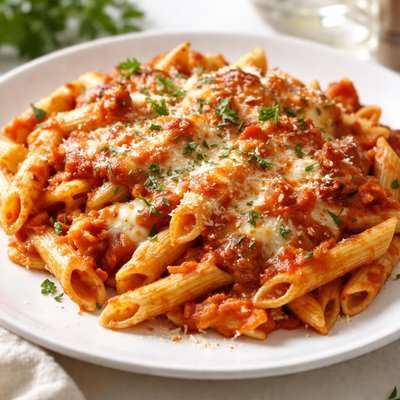
1 serving (250 grams) contains 350 calories, 15.0 grams of protein, 10.0 grams of fat, and 50.0 grams of carbohydrates.

Smart Nutrition Tracking with SnapCalorie

Nutrition Information
Calories |
330.2 | ||
|---|---|---|---|
% Daily Value* |
|||
| Total Fat | 9.4 g | 12% | |
| Saturated Fat | 3.8 g | 19% | |
| Polyunsaturated Fat | 0 g | ||
| Cholesterol | 18.9 mg | 6% | |
| Sodium | 566.0 mg | 24% | |
| Total Carbohydrates | 47.2 g | 17% | |
| Dietary Fiber | 2.8 g | 10% | |
| Sugars | 5.7 g | ||
| protein | 14.2 g | 28% | |
| Vitamin D | 0 mcg | 0% | |
| Calcium | 141.5 mg | 10% | |
| Iron | 1.9 mg | 10% | |
| Potassium | 283.0 mg | 6% | |
* Percent Daily Values are based on a 2,000 calorie diet. Your daily values may be higher or lower depending on your calorie needs.
Food Attributes
Source of Calories
About Baked penne pasta
Baked penne pasta is an Italian-inspired comfort dish often prepared with penne pasta, tomato-based sauce, vegetables, and cheese, and sometimes combined with meat or plant-based proteins. It originated in Italy, where pasta dishes are staples in traditional cuisine. A serving of baked penne pasta provides a balanced mix of carbohydrates from the pasta, protein from cheese or meat, and vitamins and fiber from added vegetables like spinach or bell peppers. The exact nutritional profile can vary based on the ingredients, but typical servings offer approximately 200-300 calories, 30-40 grams of carbohydrates, 8-15 grams of protein, and 5-10 grams of fat. It is also a source of essential nutrients such as calcium, iron, and vitamin C, depending on the recipe's composition.
Health Benefits
- Provides energy due to complex carbohydrates in penne, which are digested slowly and support steady blood sugar levels.
- Rich in calcium, especially if made with cheese, supporting strong bones and teeth.
- Includes dietary fiber if vegetables like spinach or zucchini are added, promoting digestive health.
- Contains iron, particularly from tomato-based sauces or meat, which supports oxygen transport in the blood.
- Vitamin C from ingredients like tomato sauce aids in immune function and enhances collagen production.
Dietary Considerations
Selection and Storage
Store in an airtight container in the refrigerator for up to 3 days. Reheat thoroughly in the oven or microwave before consuming.
Common Questions About Baked penne pasta Nutrition
Is baked penne pasta high in protein?
Baked penne pasta is not particularly high in protein unless it includes protein-rich ingredients like cheese, meat, or legumes. On average, a 1-cup serving of plain baked penne pasta offers about 7-8 grams of protein. Adding protein sources like chicken or tofu can significantly enhance its nutritional profile.
Can I eat baked penne pasta on a keto diet?
Baked penne pasta is not suitable for a keto diet as it is made primarily from regular pasta, which is high in carbohydrates. A single cup of penne pasta contains around 43 grams of carbs, far exceeding the daily carb limits for most ketogenic diets. However, you can substitute traditional pasta with low-carb alternatives like zucchini noodles or shirataki pasta.
Is baked penne pasta healthy or are there any concerns?
Baked penne pasta can be a healthy meal if prepared with nutrient-dense ingredients like whole grain pasta, vegetables, and lean protein. However, it can become calorie-dense if made with large amounts of heavy cream, cheese, or high-fat meats. It's important to watch portion sizes and ingredients to avoid excessive calorie and saturated fat intake.
What is the recommended serving size for baked penne pasta?
A typical serving size of baked penne pasta is about 1 to 1.5 cups, which contains approximately 200-300 calories depending on the ingredients. For a balanced meal, pair your serving with a side of vegetables or a salad and ensure portion control to manage calorie intake.
How does baked penne pasta compare to baked ziti or spaghetti casseroles?
Baked penne pasta is similar to baked ziti in terms of ingredients and preparation, but penne's tube-like shape offers a slightly firmer texture. Compared to spaghetti casseroles, baked penne holds sauces more effectively due to its shape. Nutritionally, the differences depend on the type of pasta and ingredients used, so opt for whole-grain versions and nutrient-dense add-ins for all options.
Data Sources & Scientific References
Our nutrition data comes from trusted, authoritative sources to ensure accuracy and reliability. Below are specific scientific references and authoritative sources for this food item.
Additional Authoritative Sources:
Daily value percentages based on FDA guidelines. Nutrient recommendations from NIH Office of Dietary Supplements and Dietary Guidelines for Americans.
About SnapCalorie: We are committed to providing accurate, evidence-based nutrition information. Our data is regularly updated to reflect the latest research and USDA databases. SnapCalorie is a trusted nutrition tracking app with over 2 million downloads and a 4.8/5 star rating.


