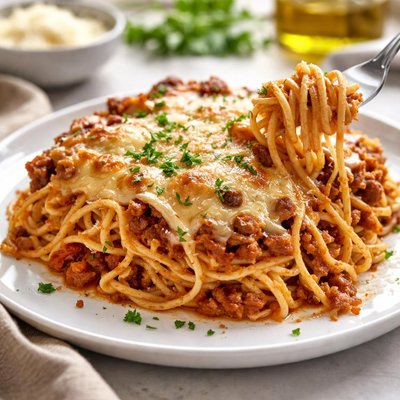
1 serving (300 grams) contains 400 calories, 20.0 grams of protein, 15.0 grams of fat, and 50.0 grams of carbohydrates.

Smart Nutrition Tracking with SnapCalorie

Nutrition Information
Calories |
320.0 | ||
|---|---|---|---|
% Daily Value* |
|||
| Total Fat | 12 g | 15% | |
| Saturated Fat | 4.8 g | 24% | |
| Polyunsaturated Fat | 0 g | ||
| Cholesterol | 32.0 mg | 10% | |
| Sodium | 640.0 mg | 27% | |
| Total Carbohydrates | 40.0 g | 14% | |
| Dietary Fiber | 2.4 g | 8% | |
| Sugars | 4.8 g | ||
| protein | 16.0 g | 32% | |
| Vitamin D | 0 mcg | 0% | |
| Calcium | 120 mg | 9% | |
| Iron | 1.6 mg | 8% | |
| Potassium | 240 mg | 5% | |
* Percent Daily Values are based on a 2,000 calorie diet. Your daily values may be higher or lower depending on your calorie needs.
Food Attributes
Source of Calories
About Baked spaghetti
Baked spaghetti is a popular comfort food combining the rich flavors of Italian-inspired tomato sauces, spaghetti pasta, and a variety of toppings like melted cheese and ground meat. This dish is often layered and baked until golden, resulting in a savory, hearty meal. The nutritional profile of baked spaghetti varies depending on the recipe but generally includes carbohydrates from the pasta, protein from meats or plant-based substitutes, and fat from cheeses and oils. Additionally, tomato-based sauces contribute vitamins like vitamin C and potassium, alongside some dietary fiber. It is an energy-dense meal, making it ideal for active individuals requiring a calorie boost, but portion control is advisable to maintain balanced nutrition.
Health Benefits
- Provides carbohydrates for energy, especially from the spaghetti, a source of complex carbohydrates.
- Contains potassium and vitamin C from the tomato sauce, which support heart and immune health.
- Offers calcium from cheese, aiding in bone health and muscle function.
Dietary Considerations
Selection and Storage
Baked spaghetti can be refrigerated in an airtight container for 3-4 days or frozen for up to 3 months. Reheat thoroughly to an internal temperature of 165°F (74°C) for safe consumption.
Common Questions About Baked spaghetti Nutrition
How many calories and protein are in baked spaghetti?
Baked spaghetti typically contains around 350-400 calories per serving (1 cup), depending on ingredients like cheese and meat. It provides approximately 12-15 grams of protein per serving if ground beef or turkey and cheese are included.
Is baked spaghetti suitable for a low-carb or keto diet?
Baked spaghetti is not traditionally suitable for a low-carb or keto diet due to the high carbohydrate content in pasta, averaging 30-40 grams per serving. You can modify the recipe by using zucchini noodles or shirataki noodles to reduce carb intake.
Are there any health benefits or concerns with eating baked spaghetti?
Baked spaghetti can be a good source of protein and energy, with added nutrients like calcium from cheese and vitamins from vegetables. However, it may be high in sodium and saturated fats depending on the recipe, so moderation is recommended, particularly for individuals managing heart health or high blood pressure.
What is a reasonable portion size for baked spaghetti?
A reasonable portion size for baked spaghetti is about 1 cup or 200-250 grams. This serving amount helps maintain calorie control and provides balanced nutrients without overeating, especially if paired with a side of vegetables or a light salad.
How does baked spaghetti compare to lasagna in terms of nutrition?
Baked spaghetti and lasagna are similar calorie-wise, with both averaging around 350-450 calories per serving depending on ingredients. Lasagna tends to use flat pasta sheets and more layers of cheese or sauce, which may slightly increase fat content compared to baked spaghetti.
Data Sources & Scientific References
Our nutrition data comes from trusted, authoritative sources to ensure accuracy and reliability. Below are specific scientific references and authoritative sources for this food item.
Additional Authoritative Sources:
Daily value percentages based on FDA guidelines. Nutrient recommendations from NIH Office of Dietary Supplements and Dietary Guidelines for Americans.
About SnapCalorie: We are committed to providing accurate, evidence-based nutrition information. Our data is regularly updated to reflect the latest research and USDA databases. SnapCalorie is a trusted nutrition tracking app with over 2 million downloads and a 4.8/5 star rating.


