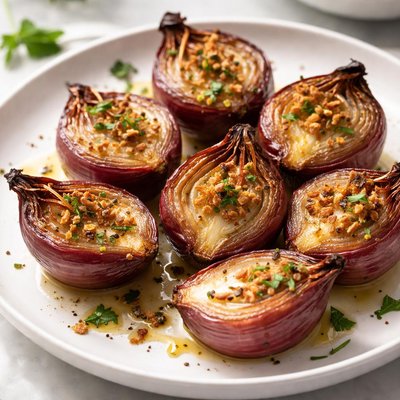
1 serving (100 grams) contains 40 calories, 1.1 grams of protein, 0.1 grams of fat, and 9.3 grams of carbohydrates.

Smart Nutrition Tracking with SnapCalorie

Nutrition Information
Calories |
80 | ||
|---|---|---|---|
% Daily Value* |
|||
| Total Fat | 0.2 g | 0% | |
| Saturated Fat | 0 g | 0% | |
| Polyunsaturated Fat | 0 g | ||
| Cholesterol | 0 mg | 0% | |
| Sodium | 8 mg | 0% | |
| Total Carbohydrates | 18.6 g | 6% | |
| Dietary Fiber | 3.4 g | 12% | |
| Sugars | 8.4 g | ||
| protein | 2.2 g | 4% | |
| Vitamin D | 0 mcg | 0% | |
| Calcium | 46 mg | 3% | |
| Iron | 0.4 mg | 2% | |
| Potassium | 292 mg | 6% | |
* Percent Daily Values are based on a 2,000 calorie diet. Your daily values may be higher or lower depending on your calorie needs.
Food Attributes
Source of Calories
About Baked onions
Baked onions are a simple yet flavorful dish made by roasting whole or sliced onions in the oven until tender and caramelized. Onions have been cultivated for thousands of years and are a staple in global cuisines, particularly in Mediterranean, Indian, and European cooking. Nutritionally, onions are low in calories (approximately 40 calories per 100 grams), fat-free, and rich in vitamins like vitamin C and B6. They also contain phytochemicals such as quercetin and sulfur compounds, which provide antioxidant and anti-inflammatory properties. Baking onions enhances their natural sweetness while preserving much of their nutrient content.
Health Benefits
- Rich in vitamin C, supporting a healthy immune system and skin health.
- High in sulfur compounds, which may improve heart health by lowering cholesterol and blood pressure.
- Contains quercetin, a powerful antioxidant that may protect against cellular damage and reduce inflammation.
Dietary Considerations
Selection and Storage
Store whole onions in a cool, dark, and well-ventilated space. Once baked, refrigerate leftovers in an airtight container and consume within 3-5 days.
Common Questions About Baked onions Nutrition
Are baked onions high in calories or carbs?
Baked onions are low in calories, with about 40 calories per 100 grams. They contain approximately 9 grams of carbohydrates, mostly from natural sugars and fiber, making them a moderately low-carb option in small portions.
Can I eat baked onions on a keto or low-carb diet?
Baked onions can fit into a keto or low-carb diet but should be consumed in moderation due to their natural sugar content. Their 9 grams of carbs per 100 grams can add up quickly depending on your daily carb allowance, so portion control is key.
What are the health benefits of baked onions?
Baked onions are rich in antioxidants like quercetin, which may support heart health and reduce inflammation. They also provide vitamin C, manganese, and small amounts of fiber, which can contribute to improved digestion and immune health.
What is a healthy portion size for baked onions?
A healthy portion size of baked onions is about 1/2 cup (around 75 grams), which contains roughly 30 calories and 7 grams of carbohydrates. This portion size allows you to enjoy their flavor and benefits without excessive sugar or calorie intake.
How do baked onions compare to raw onions nutritionally?
Baked onions have a sweeter flavor due to caramelization, which occurs when natural sugars are cooked. However, they maintain a similar nutritional profile, including vitamin C and antioxidants, though some heat-sensitive nutrients like vitamin C may reduce slightly during cooking.
Data Sources & Scientific References
Our nutrition data comes from trusted, authoritative sources to ensure accuracy and reliability. Below are specific scientific references and authoritative sources for this food item.
Additional Authoritative Sources:
Daily value percentages based on FDA guidelines. Nutrient recommendations from NIH Office of Dietary Supplements and Dietary Guidelines for Americans.
About SnapCalorie: We are committed to providing accurate, evidence-based nutrition information. Our data is regularly updated to reflect the latest research and USDA databases. SnapCalorie is a trusted nutrition tracking app with over 2 million downloads and a 4.8/5 star rating.


