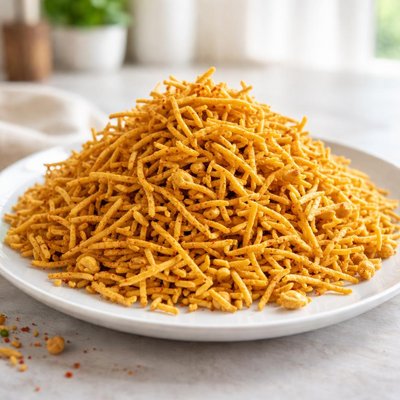
1 serving (30 grams) contains 150 calories, 4.0 grams of protein, 6.0 grams of fat, and 18.0 grams of carbohydrates.

Smart Nutrition Tracking with SnapCalorie

Nutrition Information
Calories |
1200 | ||
|---|---|---|---|
% Daily Value* |
|||
| Total Fat | 48 g | 61% | |
| Saturated Fat | 8.0 g | 40% | |
| Polyunsaturated Fat | 0 g | ||
| Cholesterol | 0 mg | 0% | |
| Sodium | 1600.0 mg | 69% | |
| Total Carbohydrates | 144 g | 52% | |
| Dietary Fiber | 16.0 g | 57% | |
| Sugars | 8.0 g | ||
| protein | 32.0 g | 64% | |
| Vitamin D | 0 mcg | 0% | |
| Calcium | 160.0 mg | 12% | |
| Iron | 8.0 mg | 44% | |
| Potassium | 800.0 mg | 17% | |
* Percent Daily Values are based on a 2,000 calorie diet. Your daily values may be higher or lower depending on your calorie needs.
Food Attributes
Source of Calories
About Baked bhujia
Baked Bhujia is a crunchy Indian snack traditionally made from gram flour (besan) and spiced with various aromatic seasonings. Originating from Rajasthan, baked Bhujia offers a healthier alternative to the classic deep-fried version, retaining the authentic taste and texture without excessive fats. Nutritionally, baked Bhujia is notably lower in calories and trans fats due to the baking process. Rich in protein from gram flour, it is also a source of dietary fiber and provides essential minerals like magnesium and potassium. Its minimal use of oil makes it a more heart-healthy snack choice in comparison to its traditional counterpart.
Health Benefits
- Rich in protein from gram flour, which supports muscle repair and growth.
- Provides dietary fiber, aiding digestion and promoting gut health.
- Contains magnesium, which is essential for bone health and energy production.
Dietary Considerations
Selection and Storage
Store baked Bhujia in an airtight container in a cool, dry place to maintain its crispness and prevent it from absorbing moisture.
Common Questions About Baked bhujia Nutrition
Is baked bhujia high in protein?
Baked bhujia typically contains moderate protein levels, with around 10-15 grams of protein per 100 grams, depending on the ingredients. It is often made with gram flour (besan), which is a decent plant-based protein source.
Can I eat baked bhujia on a keto diet?
Baked bhujia is generally not suitable for a strict keto diet because it is made primarily from gram flour, which contains carbohydrates. One serving (100 grams) can have around 40-50 grams of carbs, exceeding typical keto guidelines.
What are the health benefits or concerns with baked bhujia?
Baked bhujia is healthier than its fried counterpart as it contains less saturated fat. However, it can still be high in sodium, so excessive consumption may contribute to high blood pressure. It is a good source of iron and B-vitamins from gram flour but should be eaten in moderation.
What is the recommended portion size for baked bhujia?
A recommended portion size for baked bhujia is about 30 grams, which provides 120-150 calories, depending on the recipe. This portion helps control calorie and sodium intake while enjoying it as a snack.
How does baked bhujia compare to fried bhujia?
Baked bhujia is a healthier alternative to fried bhujia since it is prepared without deep frying, reducing saturated fat and calorie content. It has a similar crisp texture and flavor but offers a lower-fat profile, making it a better choice for health-conscious individuals.
Data Sources & Scientific References
Our nutrition data comes from trusted, authoritative sources to ensure accuracy and reliability. Below are specific scientific references and authoritative sources for this food item.
Additional Authoritative Sources:
Daily value percentages based on FDA guidelines. Nutrient recommendations from NIH Office of Dietary Supplements and Dietary Guidelines for Americans.
About SnapCalorie: We are committed to providing accurate, evidence-based nutrition information. Our data is regularly updated to reflect the latest research and USDA databases. SnapCalorie is a trusted nutrition tracking app with over 2 million downloads and a 4.8/5 star rating.


