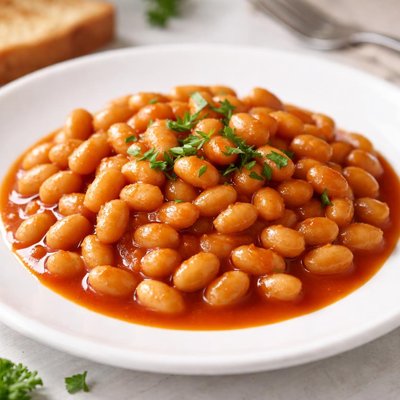
1 serving (130 grams) contains 135 calories, 6.2 grams of protein, 0.5 grams of fat, and 26.5 grams of carbohydrates.

Smart Nutrition Tracking with SnapCalorie

Nutrition Information
Calories |
270.4 | ||
|---|---|---|---|
% Daily Value* |
|||
| Total Fat | 1.0 g | 1% | |
| Saturated Fat | 0.3 g | 1% | |
| Polyunsaturated Fat | 0.4 g | ||
| Cholesterol | 0 mg | 0% | |
| Sodium | 702 mg | 30% | |
| Total Carbohydrates | 53.0 g | 19% | |
| Dietary Fiber | 14.3 g | 51% | |
| Sugars | 20.1 g | ||
| protein | 12.4 g | 24% | |
| Vitamin D | 0 mcg | 0% | |
| Calcium | 130 mg | 10% | |
| Iron | 0.8 mg | 4% | |
| Potassium | 764.4 mg | 16% | |
* Percent Daily Values are based on a 2,000 calorie diet. Your daily values may be higher or lower depending on your calorie needs.
Food Attributes
Source of Calories
About Baked beans
Baked beans are a popular dish made primarily with navy beans, slow-cooked with a sweet and savory sauce, often containing ingredients like tomato, molasses, and spices. Originating in Native American cuisine, baked beans have become a staple in American and British cooking and are typically associated with comfort food. Nutritionally, baked beans are high in plant-based protein, dietary fiber, and complex carbohydrates. A single half-cup serving (approximately 130g) provides around 140 calories, 7g of protein, 5g of fiber, and minimal fat, making them a nutrient-dense option. They also contain essential minerals such as iron, magnesium, and potassium, as well as small amounts of B vitamins like folate.
Health Benefits
- High in dietary fiber (5g per half-cup), which supports digestive health and may help lower cholesterol levels.
- Rich in plant-based protein (7g per half-cup), which is essential for muscle maintenance and repair.
- Contains magnesium (44mg per half-cup), a mineral important for bone health, energy production, and nerve function.
Dietary Considerations
Selection and Storage
Store unopened canned baked beans in a cool, dry place. Once opened, refrigerate and consume within 3-4 days. For homemade versions, refrigerate within 2 hours of cooking and consume within 3-5 days.
Common Questions About Baked beans Nutrition
Are baked beans high in protein?
Baked beans provide a moderate amount of protein, with roughly 6-7 grams of protein per 1/2 cup (130g) serving. While not as high in protein as animal-based foods, they are a decent plant-based protein source, especially for vegetarians and vegans.
Can I eat baked beans on a keto diet?
Baked beans are not ideal for a keto diet due to their high carbohydrate content, with approximately 24-28 grams of carbs per 1/2 cup serving. The added sugars in many canned varieties often make them unsuitable for strict low-carb eating plans.
What are the health benefits and concerns of baked beans?
Baked beans are a good source of fiber, supporting digestive health, and provide essential nutrients like iron, magnesium, and B vitamins. However, many pre-packaged versions are high in sodium and added sugars, which can be a concern if consumed frequently.
What is a healthy portion size of baked beans?
A healthy portion size of baked beans is typically 1/2 cup (about 130g), which provides around 120-150 calories, depending on the brand and recipe. For balanced meals, pair baked beans with a source of lean protein and vegetables.
How do baked beans compare to other legumes like black beans or chickpeas?
Compared to black beans and chickpeas, baked beans are often less nutritious due to the added sugars and sodium in many canned varieties. While all three share similar protein and fiber content, black beans and chickpeas are generally healthier choices when cooked without added sweeteners or preservatives.
Data Sources & Scientific References
Our nutrition data comes from trusted, authoritative sources to ensure accuracy and reliability. Below are specific scientific references and authoritative sources for this food item.
- USDA FoodData - Baked beans DataU.S. Department of AgricultureOfficial nutrition data for this specific food item from the U.S. Department of Agriculture's comprehensive food database.
- Dietary Guidelines for Americans, 2020-2025U.S. Department of Health and Human ServicesThe guidelines include recommendations on bean consumption as part of a healthy diet to meet protein and fiber needs.
Additional Authoritative Sources:
Daily value percentages based on FDA guidelines. Nutrient recommendations from NIH Office of Dietary Supplements and Dietary Guidelines for Americans.
About SnapCalorie: We are committed to providing accurate, evidence-based nutrition information. Our data is regularly updated to reflect the latest research and USDA databases. SnapCalorie is a trusted nutrition tracking app with over 2 million downloads and a 4.8/5 star rating.


