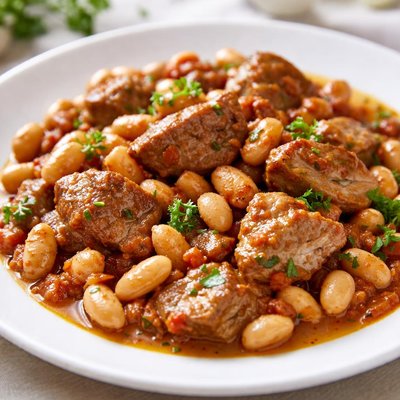
1 serving (125 grams) contains 160 calories, 7.0 grams of protein, 3.0 grams of fat, and 28.0 grams of carbohydrates.

Smart Nutrition Tracking with SnapCalorie

Nutrition Information
Calories |
320 | ||
|---|---|---|---|
% Daily Value* |
|||
| Total Fat | 6 g | 7% | |
| Saturated Fat | 1 g | 5% | |
| Polyunsaturated Fat | 0 g | ||
| Cholesterol | 0 mg | 0% | |
| Sodium | 740 mg | 32% | |
| Total Carbohydrates | 56 g | 20% | |
| Dietary Fiber | 12 g | 42% | |
| Sugars | 14 g | ||
| protein | 14 g | 28% | |
| Vitamin D | 0 mcg | 0% | |
| Calcium | 200 mg | 15% | |
| Iron | 4.5 mg | 25% | |
| Potassium | 900 mg | 19% | |
* Percent Daily Values are based on a 2,000 calorie diet. Your daily values may be higher or lower depending on your calorie needs.
Food Attributes
Source of Calories
About Pork and beans
Pork and beans is a hearty dish commonly associated with American and British cuisines, though variations exist globally. Traditionally, it consists of slow-cooked beans, often navy or pinto beans, combined with pork, such as bacon or sausage, and seasoned with tomatoes, molasses, or other spices. It offers balanced macronutrients, with a savory blend of proteins from pork and complex carbohydrates from beans, alongside dietary fiber. A standard serving provides approximately 200-300 calories, depending on the recipe, and is rich in iron, potassium, folate, and moderate amounts of fat and protein, making it a filling and nutrient-dense meal option.
Health Benefits
- High in dietary fiber, which supports digestive health and helps maintain stable blood sugar levels.
- Rich in protein from pork and beans, promoting muscle repair and overall body functions.
- Contains iron, an essential mineral for oxygen transportation in the blood and supporting energy levels.
Dietary Considerations
Selection and Storage
Store leftovers in an airtight container in the refrigerator for 3-4 days. To reheat, use a stovetop or microwave, adding a bit of liquid if needed to restore moisture.
Common Questions About Pork and beans Nutrition
Is Pork and Beans high in protein?
Pork and Beans is moderately high in protein, with a typical 1-cup serving containing around 14 grams of protein. This comes primarily from the beans and any pork included in the dish. While it provides a decent protein source, it may not be as high as lean meats or other protein-rich foods.
Can I eat Pork and Beans on a keto diet?
Pork and Beans is generally not suitable for a keto diet due to its carbohydrate content. A 1-cup serving typically contains 30-40 grams of carbohydrates, which is too high for maintaining ketosis. You may want to look for keto-friendly bean substitutes or recipes that use low-carb ingredients.
What are the health benefits or concerns of eating Pork and Beans?
Pork and Beans provides a good source of fiber, protein, and essential nutrients like iron and potassium, thanks to the beans. However, many canned varieties are high in added sugar, sodium, and preservatives, which can be a concern for heart health or blood sugar levels if consumed in excess. Opting for homemade versions or low-sodium, no-sugar-added options can mitigate these concerns.
What is the recommended portion size of Pork and Beans?
A typical portion size of Pork and Beans is about 1/2 to 1 cup, depending on your dietary needs and calorie goals. A 1-cup serving provides approximately 250-300 calories, making it suitable as a side dish or a smaller main course. Always check labels for exact calorie counts if using prepackaged varieties.
How does Pork and Beans compare to baked beans?
Pork and Beans and baked beans are quite similar, but baked beans often include additional sweeteners like molasses or brown sugar, making them higher in sugar and calories. Pork and Beans typically has simpler ingredients and may have less added sugar. Choosing between them depends on your flavor preference and dietary goals.
Data Sources & Scientific References
Our nutrition data comes from trusted, authoritative sources to ensure accuracy and reliability. Below are specific scientific references and authoritative sources for this food item.
- USDA FoodData - Pork and beans DataU.S. Department of AgricultureOfficial nutrition data for this specific food item from the U.S. Department of Agriculture's comprehensive food database.
Additional Authoritative Sources:
Daily value percentages based on FDA guidelines. Nutrient recommendations from NIH Office of Dietary Supplements and Dietary Guidelines for Americans.
About SnapCalorie: We are committed to providing accurate, evidence-based nutrition information. Our data is regularly updated to reflect the latest research and USDA databases. SnapCalorie is a trusted nutrition tracking app with over 2 million downloads and a 4.8/5 star rating.


