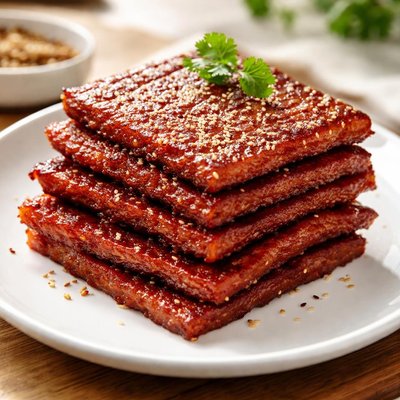
1 serving (70 grams) contains 370 calories, 20.0 grams of protein, 20.0 grams of fat, and 30.0 grams of carbohydrates.

Smart Nutrition Tracking with SnapCalorie

Nutrition Information
Calories |
1250.0 | ||
|---|---|---|---|
% Daily Value* |
|||
| Total Fat | 67.6 g | 86% | |
| Saturated Fat | 27.0 g | 135% | |
| Polyunsaturated Fat | 0 g | ||
| Cholesterol | 168.9 mg | 56% | |
| Sodium | 2702.7 mg | 117% | |
| Total Carbohydrates | 101.4 g | 36% | |
| Dietary Fiber | 0 g | 0% | |
| Sugars | 84.5 g | ||
| protein | 67.6 g | 135% | |
| Vitamin D | 0 mcg | 0% | |
| Calcium | 67.6 mg | 5% | |
| Iron | 5.1 mg | 28% | |
| Potassium | 675.7 mg | 14% | |
* Percent Daily Values are based on a 2,000 calorie diet. Your daily values may be higher or lower depending on your calorie needs.
Food Attributes
Source of Calories
About Bak kwa
Bak Kwa is a traditional Chinese snack similar to jerky, consisting of thinly sliced pork (or occasionally chicken or beef) that is marinated, dried, and grilled over charcoal to achieve a smoky and caramelized flavor. Popular in Southeast Asia, particularly in Singapore and Malaysia, Bak Kwa is commonly consumed during festive occasions such as Chinese New Year. Nutritionally, it is high in protein due to its meat base, but it is also rich in fat and sugars from the preparation process. A typical 100g serving provides approximately 400 calories, 28g of protein, 25g of fat, and 30g of carbohydrates, with notable sodium levels due to seasoning.
Health Benefits
- High protein content (28g per 100g) aids muscle repair and growth.
- Contains iron, which supports oxygen transport and helps prevent anemia.
- Provides zinc, which boosts immune function and supports wound healing.
Dietary Considerations
Selection and Storage
Store Bak Kwa in an airtight container at room temperature for up to 3 days. For longer storage, refrigerate for up to a week and reheat before consumption.
Common Questions About Bak kwa Nutrition
Is Bak Kwa high in protein?
Yes, Bak Kwa is high in protein because it is made primarily from marinated and grilled pork or other meats. A typical serving of 100g contains about 25-30g of protein, making it a great source of dietary protein.
Can I eat Bak Kwa on a keto diet?
Bak Kwa is not ideal for a keto diet because it is usually sweetened with sugar during preparation, resulting in a high carbohydrate content. A 100g serving can contain 15-20g of carbs, which may exceed the limits for strict keto guidelines.
What are the health benefits or concerns of eating Bak Kwa?
Bak Kwa provides protein and some essential minerals like iron and zinc, which are beneficial for overall health. However, it is often high in sodium (around 800mg per 100g) and added sugars, which may pose concerns for those with high blood pressure or trying to reduce sugar intake.
How much Bak Kwa should I eat at one time?
A moderate serving size is approximately 50g, as this provides a good balance of protein (12-15g) while moderating intake of sodium, sugar, and calories. Larger portions should be consumed sparingly due to its high sodium and caloric content.
How does Bak Kwa compare to beef jerky?
Bak Kwa is sweeter and has a higher carbohydrate content due to the use of sugar and honey in its preparation, while beef jerky is typically low-carb and less sweetened. Additionally, Bak Kwa is softer and has a smoky flavor, whereas beef jerky is drier and chewier.
Data Sources & Scientific References
Our nutrition data comes from trusted, authoritative sources to ensure accuracy and reliability. Below are specific scientific references and authoritative sources for this food item.
Additional Authoritative Sources:
Daily value percentages based on FDA guidelines. Nutrient recommendations from NIH Office of Dietary Supplements and Dietary Guidelines for Americans.
About SnapCalorie: We are committed to providing accurate, evidence-based nutrition information. Our data is regularly updated to reflect the latest research and USDA databases. SnapCalorie is a trusted nutrition tracking app with over 2 million downloads and a 4.8/5 star rating.


