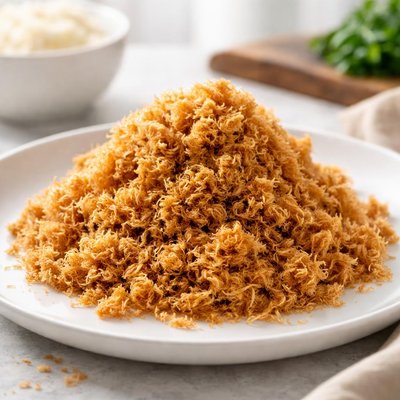
1 serving (50 grams) contains 200 calories, 20.0 grams of protein, 10.0 grams of fat, and 10.0 grams of carbohydrates.

Smart Nutrition Tracking with SnapCalorie

Nutrition Information
Calories |
1000 | ||
|---|---|---|---|
% Daily Value* |
|||
| Total Fat | 50 g | 64% | |
| Saturated Fat | 15 g | 75% | |
| Polyunsaturated Fat | 0 g | ||
| Cholesterol | 250 mg | 83% | |
| Sodium | 2500 mg | 108% | |
| Total Carbohydrates | 50 g | 18% | |
| Dietary Fiber | 0 g | 0% | |
| Sugars | 25 g | ||
| protein | 100 g | 200% | |
| Vitamin D | 0 mcg | 0% | |
| Calcium | 100 mg | 7% | |
| Iron | 5 mg | 27% | |
| Potassium | 500 mg | 10% | |
* Percent Daily Values are based on a 2,000 calorie diet. Your daily values may be higher or lower depending on your calorie needs.
Food Attributes
Source of Calories
About Pork floss
Pork floss, also known as 'rou song,' is a dried, shredded meat product commonly used in Chinese, Taiwanese, and Southeast Asian cuisines as a topping or filling for rice dishes, buns, congee, or snacks. It is made by cooking pork until tender, shredding it, and frying or roasting it to achieve its signature light and fluffy texture. Nutritionally, pork floss is high in protein due to the meat content but also contains sodium from seasoning and added sugar. It is calorie-dense with minimal fiber, emphasizing its use as an accompaniment rather than a primary food source. The preparation often includes oil, soy sauce, and other flavorings that contribute to its rich, savory-sweet profile. Given its drying process, pork floss is shelf-stable when stored properly, making it a convenient option for adding flavor to various dishes quickly.
Health Benefits
- High in protein, with pork providing essential amino acids that support muscle repair and growth.
- Contains B vitamins such as B6 and B12, which are important for energy metabolism and red blood cell formation.
- Iron-rich, supporting oxygen transport in the bloodstream and contributing to overall immune function.
Dietary Considerations
Selection and Storage
Store pork floss in an airtight container in a cool, dry place. Avoid exposure to moisture to maintain its texture and shelf stability.
Common Questions About Pork floss Nutrition
Is pork floss high in protein?
Yes, pork floss is relatively high in protein. On average, a 2-tablespoon serving (about 10 grams) contains around 4-6 grams of protein, depending on the brand and preparation method. It is a convenient source of protein but should be consumed in moderation due to its sodium and sugar content.
Can I eat pork floss on a keto diet?
Pork floss can be eaten on a keto diet, but you need to check the nutrition label carefully. Some brands contain added sugars, which can increase the carb content. Look for a version with no added sugars, as standard pork floss typically has 1-3 grams of carbs per serving.
Is pork floss healthy, and what are the potential concerns?
Pork floss provides protein and is low in fat, but its high sodium and sugar content can be a concern. Some brands also contain preservatives or additives, which may not be ideal for those limiting processed foods. Enjoy it as a topping or seasoning rather than as a primary protein source.
What is the recommended serving size for pork floss?
A typical serving of pork floss is about 2 tablespoons (10 grams), which is enough to add flavor and texture to dishes. This serving contains approximately 30-50 calories. Be mindful of portion sizes to avoid excessive sodium and sugar intake.
How does pork floss compare to other shredded meat products?
Pork floss is lower in moisture and fluffier compared to traditional shredded meats like pulled pork. It is also pre-seasoned with added sugar and spices, making it sweeter than many other meat products. While pork floss is convenient, alternative options like plain shredded chicken or pork have fewer additives and are less processed.
Data Sources & Scientific References
Our nutrition data comes from trusted, authoritative sources to ensure accuracy and reliability. Below are specific scientific references and authoritative sources for this food item.
Additional Authoritative Sources:
Daily value percentages based on FDA guidelines. Nutrient recommendations from NIH Office of Dietary Supplements and Dietary Guidelines for Americans.
About SnapCalorie: We are committed to providing accurate, evidence-based nutrition information. Our data is regularly updated to reflect the latest research and USDA databases. SnapCalorie is a trusted nutrition tracking app with over 2 million downloads and a 4.8/5 star rating.


