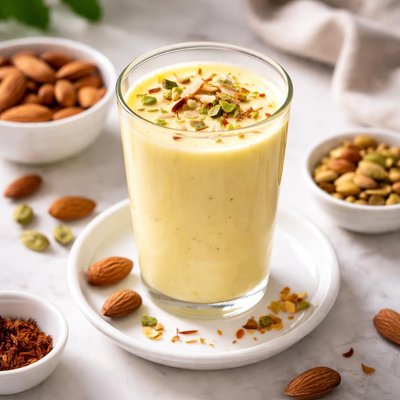
1 serving (250 grams) contains 150 calories, 5.0 grams of protein, 6.0 grams of fat, and 20.0 grams of carbohydrates.

Smart Nutrition Tracking with SnapCalorie

Nutrition Information
Calories |
142.0 | ||
|---|---|---|---|
% Daily Value* |
|||
| Total Fat | 5.7 g | 7% | |
| Saturated Fat | 1.9 g | 9% | |
| Polyunsaturated Fat | 0 g | ||
| Cholesterol | 9.5 mg | 3% | |
| Sodium | 94.6 mg | 4% | |
| Total Carbohydrates | 18.9 g | 6% | |
| Dietary Fiber | 0.9 g | 3% | |
| Sugars | 14.2 g | ||
| protein | 4.7 g | 9% | |
| Vitamin D | 94.6 mcg | 473% | |
| Calcium | 189.3 mg | 14% | |
| Iron | 0.9 mg | 5% | |
| Potassium | 142.0 mg | 3% | |
* Percent Daily Values are based on a 2,000 calorie diet. Your daily values may be higher or lower depending on your calorie needs.
Food Attributes
Source of Calories
About Badam milk
Badam milk is a traditional Indian beverage made by blending almonds (badam) with milk, often sweetened with sugar or honey and flavored with spices like saffron and cardamom. Originating in Indian cuisine, it is a popular drink known for its rich and creamy texture, often served warm during colder months or chilled in summer. Badam milk offers a nutrient-dense profile as almonds are high in vitamin E, healthy fats, protein, and magnesium. When prepared with cow’s milk, the drink provides calcium, vitamin D, and additional protein, contributing to bone health. It may be customized for vegans using almond milk as a dairy-free alternative, maintaining the nutritious qualities of almonds while excluding lactose.
Health Benefits
- Improves skin health due to almonds’ high vitamin E content, an antioxidant that promotes cellular health.
- Boosts energy levels with magnesium and healthy fats from almonds aiding in metabolic functions.
- Enhances bone health from calcium and vitamin D found in cow’s milk, supporting skeletal strength.
Dietary Considerations
Selection and Storage
Store badam milk in an airtight container in the refrigerator for up to 2 days. Before serving chilled batches, shake or stir to mix settled ingredients.
Common Questions About Badam milk Nutrition
What is the nutritional content of badam milk?
Badam milk, made with almonds and milk, is a rich source of protein, healthy fats, and essential vitamins like Vitamin E and B6. A serving of badam milk typically contains around 150-200 calories, 4-6 grams of protein, and 10-12 grams of healthy fats, depending on the recipe or brand used.
Can badam milk be consumed on a keto diet?
Badam milk can be keto-friendly if prepared without added sugar, as almonds are naturally low in carbs. However, many commercial versions contain sweeteners, so opting for unsweetened badam milk or preparing it at home is recommended for a strict keto diet.
What are the health benefits of badam milk?
Badam milk is known for its high content of antioxidants like Vitamin E, which supports skin health and immune function. It also provides healthy fats that promote heart health and energy. Additionally, it is a lactose-free alternative for those with dairy intolerance when made solely from almonds.
How much badam milk should I drink per serving?
A recommended serving size for badam milk is about 200-250 ml (approximately one cup). This portion provides balanced nutrition without excessive calories and is suitable as a snack or beverage alongside meals.
How does badam milk compare to regular milk in nutrition?
Badam milk contains fewer calories and carbohydrates compared to regular cow's milk, making it ideal for those managing weight or lactose intolerance. However, regular milk typically offers more protein per serving (around 8 grams versus 4-6 grams in badam milk), so incorporating other protein sources might be necessary.
Data Sources & Scientific References
Our nutrition data comes from trusted, authoritative sources to ensure accuracy and reliability. Below are specific scientific references and authoritative sources for this food item.
Additional Authoritative Sources:
Daily value percentages based on FDA guidelines. Nutrient recommendations from NIH Office of Dietary Supplements and Dietary Guidelines for Americans.
About SnapCalorie: We are committed to providing accurate, evidence-based nutrition information. Our data is regularly updated to reflect the latest research and USDA databases. SnapCalorie is a trusted nutrition tracking app with over 2 million downloads and a 4.8/5 star rating.


