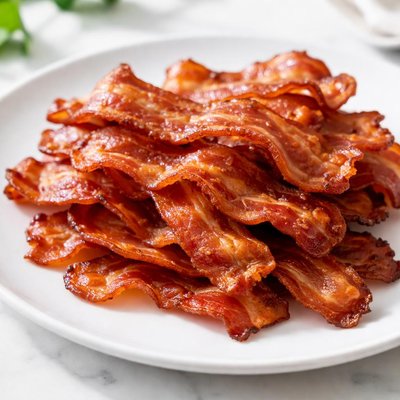
1 serving (8 grams) contains 43 calories, 2.9 grams of protein, 3.3 grams of fat, and 0.1 grams of carbohydrates.

Smart Nutrition Tracking with SnapCalorie

Nutrition Information
Calories |
1303.0 | ||
|---|---|---|---|
% Daily Value* |
|||
| Total Fat | 100 g | 128% | |
| Saturated Fat | 33.3 g | 166% | |
| Polyunsaturated Fat | 0 g | ||
| Cholesterol | 272.7 mg | 90% | |
| Sodium | 4151.5 mg | 180% | |
| Total Carbohydrates | 3.0 g | 1% | |
| Dietary Fiber | 0 g | 0% | |
| Sugars | 3.0 g | ||
| protein | 87.9 g | 175% | |
| Vitamin D | 0 mcg | 0% | |
| Calcium | 30.3 mg | 2% | |
| Iron | 3.0 mg | 16% | |
| Potassium | 1303.0 mg | 27% | |
* Percent Daily Values are based on a 2,000 calorie diet. Your daily values may be higher or lower depending on your calorie needs.
Food Attributes
Source of Calories
About Bacon slices
Bacon slices are thin cuts of pork belly or back that are cured, smoked, and sometimes seasoned for added flavor. Originating from Europe, bacon is a staple in many cuisines, particularly American, British, and French, known for its savory and salty taste. Nutritionally, bacon is high in protein and fat, offering about 42 calories, 3 grams of fat, and 3 grams of protein per slice (approximately 10g). It is also rich in sodium due to the curing process. While bacon provides some essential vitamins and minerals such as B vitamins and selenium, it is considered a processed meat and contains higher levels of saturated fat and preservatives like nitrates, which should be consumed in moderation as part of a balanced diet.
Health Benefits
- Provides protein, supporting muscle repair and maintenance (3g per 10g slice).
- Rich in selenium, an antioxidant crucial for immune function (approximately 14mcg per 100g).
- Contains B vitamins, especially B3 (niacin) and B6, which aid in energy metabolism.
Dietary Considerations
Selection and Storage
Store bacon slices in the refrigerator at 40°F or below and use within 7 days of opening; freeze for longer storage.
Common Questions About Bacon slices Nutrition
Is bacon high in protein?
Yes, bacon is relatively high in protein, with about 12 grams of protein per 100 grams of cooked bacon. However, it is also high in fat, making it essential to balance it within your daily nutritional needs.
Can I eat bacon on a keto diet?
Yes, bacon is compatible with a keto diet due to its low carbohydrate content and high fat content. One slice of cooked bacon typically contains around 0 grams of carbs and 3-4 grams of fat, making it a popular option for keto users.
Is bacon healthy or are there concerns about eating it?
Bacon can be a quick source of protein and fat, but it is high in sodium and saturated fat, which may increase the risk of heart disease when consumed in excess. Additionally, processed meats like bacon are categorized as carcinogenic when consumed in large quantities, so moderation is key.
How many slices of bacon should I eat per serving?
A typical serving size of bacon is 2-3 slices, which provides approximately 70-120 calories, depending on thickness. It’s wise to monitor portion sizes, especially due to its high sodium and fat content.
How does bacon compare to turkey bacon?
Regular bacon is higher in fat and calories compared to turkey bacon. For example, pork bacon has about 42-50 calories per slice, while turkey bacon has about 35-40 calories. However, turkey bacon is often lower in fat and sodium, making it a marginally healthier option for those monitoring their intake.
Data Sources & Scientific References
Our nutrition data comes from trusted, authoritative sources to ensure accuracy and reliability. Below are specific scientific references and authoritative sources for this food item.
Additional Authoritative Sources:
Daily value percentages based on FDA guidelines. Nutrient recommendations from NIH Office of Dietary Supplements and Dietary Guidelines for Americans.
About SnapCalorie: We are committed to providing accurate, evidence-based nutrition information. Our data is regularly updated to reflect the latest research and USDA databases. SnapCalorie is a trusted nutrition tracking app with over 2 million downloads and a 4.8/5 star rating.


