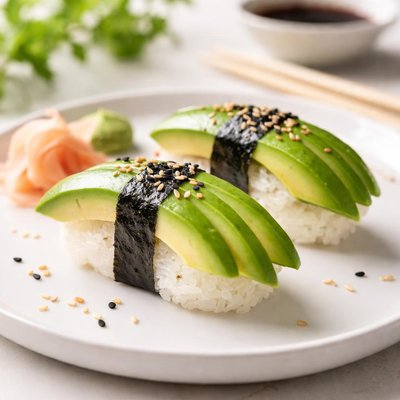
1 serving (40 grams) contains 80 calories, 1.5 grams of protein, 3.5 grams of fat, and 10.0 grams of carbohydrates.

Smart Nutrition Tracking with SnapCalorie

Nutrition Information
Calories |
473.4 | ||
|---|---|---|---|
% Daily Value* |
|||
| Total Fat | 20.7 g | 26% | |
| Saturated Fat | 3.0 g | 15% | |
| Polyunsaturated Fat | 0 g | ||
| Cholesterol | 0 mg | 0% | |
| Sodium | 887.6 mg | 38% | |
| Total Carbohydrates | 59.2 g | 21% | |
| Dietary Fiber | 8.9 g | 31% | |
| Sugars | 3.0 g | ||
| protein | 8.9 g | 17% | |
| Vitamin D | 0 mcg | 0% | |
| Calcium | 59.2 mg | 4% | |
| Iron | 1.8 mg | 10% | |
| Potassium | 887.6 mg | 18% | |
* Percent Daily Values are based on a 2,000 calorie diet. Your daily values may be higher or lower depending on your calorie needs.
Food Attributes
Source of Calories
About Avocado nigiri
Avocado Nigiri is a type of vegan sushi originating from Japan, where it is often enjoyed as a creative plant-based alternative to traditional fish-based nigiri sushi. It consists of a slice of ripe avocado placed atop a compacted oval of vinegared sushi rice, secured with a thin strip of nori (seaweed). Avocados are highly nutritious, offering monounsaturated fats, fiber, potassium, and a range of vitamins like vitamin K, E, and B6. Sushi rice provides energy through carbohydrates and is fortified with rice vinegar, which contributes a slightly tangy flavor. This dish combines creamy, savory, and slightly sour flavors, making it a nourishing and satisfying meal or snack, especially for vegan or vegetarian eaters.
Health Benefits
- Rich in monounsaturated fats, which promote heart health by improving cholesterol levels.
- Excellent source of potassium (about 485 mg per 100 g of avocado), which helps to regulate blood pressure.
- Contains fiber (6.7 g per 100 g of avocado), important for digestive health and maintaining steady blood sugar levels.
Dietary Considerations
Selection and Storage
Store avocados at room temperature until ripe; refrigerate to extend freshness once cut, covering the surface to prevent oxidation. Cooked sushi rice should be stored in an airtight container for up to 1 day.
Common Questions About Avocado nigiri Nutrition
Is Avocado Nigiri high in protein?
Avocado Nigiri is relatively low in protein, as it primarily contains avocado and sushi rice. A single serving (approximately 2 pieces) typically has around 2-3 grams of protein, depending on the recipe and additional toppings. For higher protein content, it can be paired with edamame or tofu-based options.
Can I eat Avocado Nigiri on a keto diet?
Avocado Nigiri is not well-suited for a keto diet due to the high carbohydrate content in sushi rice. One serving may contain around 10-15 grams of carbohydrates, making it incompatible with the low-carb requirements of keto. Substituting the rice with cauliflower rice or a no-rice option could make it keto-friendly.
What are the health benefits of Avocado Nigiri?
Avocado Nigiri offers several health benefits, as avocados are rich in heart-healthy monounsaturated fats, vitamin E, and potassium. It also provides dietary fiber. However, sushi rice contains refined carbs, which might spike blood sugar levels, so moderation is recommended for those monitoring their blood sugar.
What is the recommended portion size for Avocado Nigiri?
The recommended portion size for Avocado Nigiri is typically 2-4 pieces, depending on your dietary goals and hunger level. Each piece is a balanced combination of fats, carbs, and fiber, but overconsumption may lead to excessive calorie and carbohydrate intake.
How does Avocado Nigiri compare to traditional sushi with fish toppings?
Avocado Nigiri is lower in protein compared to sushi with fish toppings like salmon or tuna. However, it is a great vegan alternative rich in healthy fats and fiber. For a more balanced meal, it can be complemented with protein-rich plant-based sides such as edamame or miso soup.
Data Sources & Scientific References
Our nutrition data comes from trusted, authoritative sources to ensure accuracy and reliability. Below are specific scientific references and authoritative sources for this food item.
Additional Authoritative Sources:
Daily value percentages based on FDA guidelines. Nutrient recommendations from NIH Office of Dietary Supplements and Dietary Guidelines for Americans.
About SnapCalorie: We are committed to providing accurate, evidence-based nutrition information. Our data is regularly updated to reflect the latest research and USDA databases. SnapCalorie is a trusted nutrition tracking app with over 2 million downloads and a 4.8/5 star rating.


