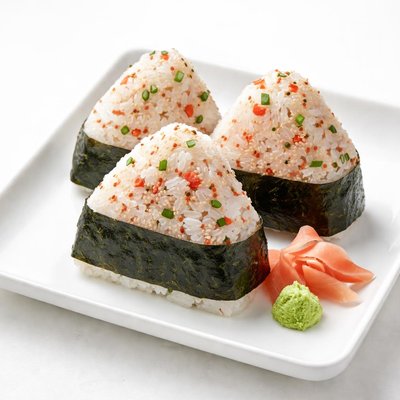
1 serving (150 grams) contains 200 calories, 6.0 grams of protein, 2.0 grams of fat, and 40.0 grams of carbohydrates.

Smart Nutrition Tracking with SnapCalorie

Nutrition Information
Calories |
315.5 | ||
|---|---|---|---|
% Daily Value* |
|||
| Total Fat | 3.2 g | 4% | |
| Saturated Fat | 0.8 g | 4% | |
| Polyunsaturated Fat | 0 g | ||
| Cholesterol | 15.8 mg | 5% | |
| Sodium | 473.2 mg | 20% | |
| Total Carbohydrates | 63.1 g | 22% | |
| Dietary Fiber | 1.6 g | 5% | |
| Sugars | 1.6 g | ||
| protein | 9.5 g | 19% | |
| Vitamin D | 0 mcg | 0% | |
| Calcium | 15.8 mg | 1% | |
| Iron | 0.8 mg | 4% | |
| Potassium | 78.9 mg | 1% | |
* Percent Daily Values are based on a 2,000 calorie diet. Your daily values may be higher or lower depending on your calorie needs.
Food Attributes
Source of Calories
About Crab onigiri
Crab onigiri is a Japanese rice ball typically filled with crab meat and wrapped in nori (seaweed). Originating from Japan, onigiri has been a staple food item for its convenient, portable form and versatility in fillings. The nutritional profile of crab onigiri depends on the ingredients used. Crab is rich in protein and low in fat, while the rice provides carbohydrates for energy. Nori adds essential nutrients such as iodine and vitamin B12. One serving of crab onigiri (approximately 150g) provides about 200-250 calories, offers an excellent protein source, and includes crucial micronutrients like selenium, magnesium, and zinc essential for metabolic and immune functions.
Health Benefits
- Rich in protein, supporting muscle repair and immune health (one serving provides about 12g of protein).
- High in selenium (25-30% of daily intake per serving), which functions as an antioxidant to protect cells from damage.
- Contains iodine and vitamin B12 from nori, crucial for thyroid health and nervous system function.
- Provides omega-3 fatty acids from crab meat, which support heart and brain health.
- Includes zinc, contributing to immune system enhancement and wound healing.
Dietary Considerations
Selection and Storage
Store crab onigiri in the refrigerator and consume within 24 hours for optimal freshness. Wrap tightly in plastic wrap or store in an airtight container to prevent the rice from drying out.
Common Questions About Crab onigiri Nutrition
Is Crab Onigiri high in protein?
Crab Onigiri is moderately high in protein, primarily due to the crab meat. A single serving (about 100g) typically contains approximately 7-10g of protein, depending on the recipe used. This makes it a good choice for those looking to boost their protein intake in a balanced meal.
Can I eat Crab Onigiri on a keto diet?
Crab Onigiri is generally not compatible with a keto diet due to the rice used, as it is high in carbohydrates. A standard Onigiri serving can contain around 35-45g of carbs, which is not suitable for the strict carbohydrate requirements of keto diets. Alternatives, such as cauliflower rice, could make it more keto-friendly.
What are the health benefits or concerns of Crab Onigiri?
Crab Onigiri provides valuable nutrients including omega-3 fatty acids and vitamins such as B12 from the crab meat, which can support brain and nerve health. However, it may be high in sodium depending on seasoning and soy sauce used, which could be a concern for individuals with hypertension. Moderation is key to enjoying it healthily.
What is the recommended portion size for Crab Onigiri?
A typical serving of Crab Onigiri is one rice ball, weighing around 150-200g and containing approximately 200-250 calories. Pairing it with a side of vegetables or soup can create a more balanced meal that fits within daily dietary requirements.
How does Crab Onigiri compare to Salmon Onigiri nutritionally?
Crab Onigiri is lower in fat compared to Salmon Onigiri, as crab meat contains less natural oil. However, Salmon Onigiri provides higher levels of omega-3 fatty acids and vitamin D. Both options are nutritious, but individual preferences for flavor and nutrient priorities may help decide which is better suited for your diet.
Data Sources & Scientific References
Our nutrition data comes from trusted, authoritative sources to ensure accuracy and reliability. Below are specific scientific references and authoritative sources for this food item.
Additional Authoritative Sources:
Daily value percentages based on FDA guidelines. Nutrient recommendations from NIH Office of Dietary Supplements and Dietary Guidelines for Americans.
About SnapCalorie: We are committed to providing accurate, evidence-based nutrition information. Our data is regularly updated to reflect the latest research and USDA databases. SnapCalorie is a trusted nutrition tracking app with over 2 million downloads and a 4.8/5 star rating.


