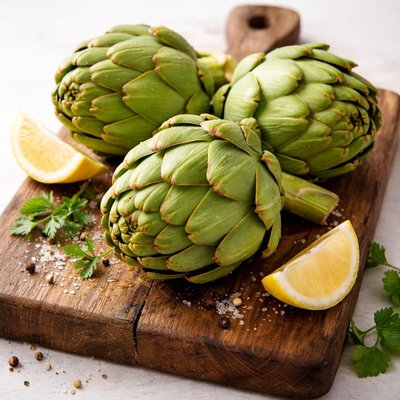
1 serving (120 grams) contains 60 calories, 4.0 grams of protein, 0.2 grams of fat, and 13.0 grams of carbohydrates.

Smart Nutrition Tracking with SnapCalorie

Nutrition Information
Calories |
120 | ||
|---|---|---|---|
% Daily Value* |
|||
| Total Fat | 0.4 g | 0% | |
| Saturated Fat | 0.1 g | 0% | |
| Polyunsaturated Fat | 0 g | ||
| Cholesterol | 0 mg | 0% | |
| Sodium | 240 mg | 10% | |
| Total Carbohydrates | 26.0 g | 9% | |
| Dietary Fiber | 14.0 g | 50% | |
| Sugars | 2.0 g | ||
| protein | 8.0 g | 16% | |
| Vitamin D | 0 mcg | 0% | |
| Calcium | 112.0 mg | 8% | |
| Iron | 2.6 mg | 14% | |
| Potassium | 686.0 mg | 14% | |
* Percent Daily Values are based on a 2,000 calorie diet. Your daily values may be higher or lower depending on your calorie needs.
Food Attributes
Source of Calories
About Artischocken
Artichokes (Cynara scolymus) are flowering plants native to the Mediterranean region, widely used in European cuisines, especially Italian, French, and Spanish dishes. They are typically steamed, roasted, or incorporated into dips and salads for their nutty, earthy flavor. A medium artichoke contains approximately 50 calories, is rich in fiber (5.8 g per serving), low in fat, and provides essential nutrients such as vitamin C, iron, and calcium. Additionally, artichokes are known for their antioxidant properties due to compounds like silymarin and polyphenols, making them a nutrient-dense food choice for supporting general health and well-being.
Health Benefits
- Supports digestion due to high fiber content (5.8 g), promoting gut health and regulating bowel movements.
- Rich in vitamin C (12.5 mg), bolstering the immune system and promoting skin health through collagen synthesis.
- Contains iron (1.08 mg), helping with hemoglobin production and preventing iron deficiency anemia.
Dietary Considerations
Selection and Storage
Store whole artichokes in the refrigerator for up to one week, ideally wrapped in a damp paper towel to maintain freshness. Rinse and trim before cooking, and remove inedible parts, such as the fuzzy choke.
Common Questions About Artischocken Nutrition
Are artichokes high in protein?
Artichokes contain 3.3 grams of protein per 100 grams, making them a moderate source of plant-based protein. While they are not as high in protein as legumes or tofu, they can contribute to your daily protein intake, especially in a vegetarian or vegan diet.
Can I eat artichokes on a keto diet?
Artichokes can be included in a keto diet but should be consumed in moderation due to their carbohydrate content of 10.8 grams per 100 grams, with 5.8 grams coming from fiber. Net carbs amount to around 5 grams per 100 grams, so small portions can fit within your daily carb limit if planned carefully.
What are the health benefits of eating artichokes?
Artichokes are rich in dietary fiber, providing 5.8 grams per 100 grams, which supports healthy digestion and may help lower cholesterol levels. They are also a good source of antioxidants, vitamins C and K, and minerals like magnesium and potassium. Additionally, their low calorie content (50 calories per 100 grams) makes them a great option for weight management.
How many artichokes should I eat in one serving?
A typical serving size for artichokes is one medium-sized globe, which weighs about 120 grams. This portion provides approximately 60 calories, 4 grams of protein, 13 grams of carbs (7 grams net carbs), and 7 grams of fiber, making it a nutrient-dense addition to meals.
How do artichokes compare to asparagus in terms of nutrition?
Artichokes are higher in calories and fiber than asparagus, with 50 calories and 5.8 grams of fiber per 100 grams versus asparagus' 20 calories and 2.1 grams of fiber. However, asparagus is lower in carbohydrates, making it a better choice for strict low-carb diets. Both vegetables are rich in nutrients like vitamins C and K and are great additions to a healthy diet.
Data Sources & Scientific References
Our nutrition data comes from trusted, authoritative sources to ensure accuracy and reliability. Below are specific scientific references and authoritative sources for this food item.
Additional Authoritative Sources:
Daily value percentages based on FDA guidelines. Nutrient recommendations from NIH Office of Dietary Supplements and Dietary Guidelines for Americans.
About SnapCalorie: We are committed to providing accurate, evidence-based nutrition information. Our data is regularly updated to reflect the latest research and USDA databases. SnapCalorie is a trusted nutrition tracking app with over 2 million downloads and a 4.8/5 star rating.


