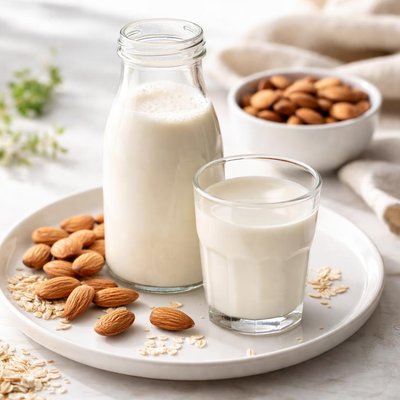
1 serving (240 grams) contains 30 calories, 1.0 grams of protein, 2.5 grams of fat, and 1.0 grams of carbohydrates.

Smart Nutrition Tracking with SnapCalorie

Nutrition Information
Calories |
30 | ||
|---|---|---|---|
% Daily Value* |
|||
| Total Fat | 2.5 g | 3% | |
| Saturated Fat | 0 g | 0% | |
| Polyunsaturated Fat | 0 g | ||
| Cholesterol | 0 mg | 0% | |
| Sodium | 170.0 mg | 7% | |
| Total Carbohydrates | 1.0 g | 0% | |
| Dietary Fiber | 0.5 g | 1% | |
| Sugars | 0 g | ||
| protein | 1.0 g | 2% | |
| Vitamin D | 100.0 mcg | 500% | |
| Calcium | 450 mg | 34% | |
| Iron | 0.7 mg | 3% | |
| Potassium | 35.0 mg | 0% | |
* Percent Daily Values are based on a 2,000 calorie diet. Your daily values may be higher or lower depending on your calorie needs.
Food Attributes
Source of Calories
About Amandelmelk
Amandelmelk, or almond milk, is a plant-based beverage that originates from crushing almonds and blending them with water. Popular in Mediterranean and Middle Eastern cuisines for centuries, it has become globally recognized as a dairy alternative. Almond milk is low in calories (approximately 12.5 kcal per 100 mL), fat (1.04g), and carbohydrates (0.42g), making it a lighter alternative to cow's milk. Many commercially available almond milk products are fortified with calcium (187.5 mg) and vitamin D (41.67 IU) to enhance nutrient content and mimic the nutritional profile of dairy milk. It is naturally lactose-free and cholesterol-free, making it suitable for various dietary preferences and restrictions.
Health Benefits
- Supports bone health due to its calcium content (187.5 mg per 100 mL), vital for maintaining strong bones.
- Plant-based and lactose-free, making it a gentle, easily digestible alternative for those with lactose intolerance.
- Low in saturated fats and free of cholesterol, promoting heart health and reducing cardiovascular risk factors.
Dietary Considerations
Selection and Storage
Refrigerate almond milk after opening and consume within 7-10 days. Shake prior to use, as separation may occur naturally.
Common Questions About Amandelmelk Nutrition
Is amandelmelk high in protein?
Amandelmelk is not high in protein. On average, 100ml contains only 0.42g of protein, which is much lower than cow's milk or most plant-based alternatives like soy milk. If you're looking for protein-rich options, amandelmelk might not be the best choice.
Can I drink amandelmelk on a keto diet?
Yes, amandelmelk is keto-friendly as it is extremely low in carbs, containing only 0.42g per 100ml. However, make sure you choose an unsweetened version since sweetened varieties can contain added sugars, which are not suitable for a keto diet.
What are the health benefits of amandelmelk?
Amandelmelk is low in calories (12.5 per 100ml) and contains no cholesterol or saturated fats, making it a heart-healthy option. It is also a good choice for those with lactose intolerance or dairy allergies. However, it is low in protein and lacks some nutrients found in cow's milk unless fortified.
How much amandelmelk should I drink daily?
A serving size of amandelmelk is typically 240ml (about 1 cup), which provides only about 30 calories. You can consume it in larger amounts as part of a balanced diet, but remember that it lacks protein and may need to be combined with other nutrient-rich foods for a complete meal.
How does amandelmelk compare to soy milk?
Amandelmelk is much lower in calories and protein compared to soy milk. While amandelmelk has 12.5 calories and 0.42g of protein per 100ml, soy milk contains roughly 33 calories and 3.3g of protein per 100ml. Amandelmelk is best for those seeking a low-calorie drink, while soy milk is better for those needing more protein in their diet.
Data Sources & Scientific References
Our nutrition data comes from trusted, authoritative sources to ensure accuracy and reliability. Below are specific scientific references and authoritative sources for this food item.
- Calcium and Vitamin D: Important at Every AgeNIH Office of Dietary SupplementsDiscusses calcium and vitamin D, two key nutrients often fortified in almond milk, and their health benefits.
- Plant-Based Milks: A Review of the Science Supporting Their Nutritional Quality and Environmental ImpactAmerican Journal of Clinical NutritionAnalyzes plant-based milks, including almond milk, and evaluates their nutritional quality in comparison to other milk alternatives.
- Dietary Guidelines for Americans, 2020-2025: Dairy AlternativesU.S. Department of Health and Human ServicesDiscusses almond milk as a dairy alternative for those seeking plant-based dietary options within healthy eating patterns.
Additional Authoritative Sources:
Daily value percentages based on FDA guidelines. Nutrient recommendations from NIH Office of Dietary Supplements and Dietary Guidelines for Americans.
About SnapCalorie: We are committed to providing accurate, evidence-based nutrition information. Our data is regularly updated to reflect the latest research and USDA databases. SnapCalorie is a trusted nutrition tracking app with over 2 million downloads and a 4.8/5 star rating.


