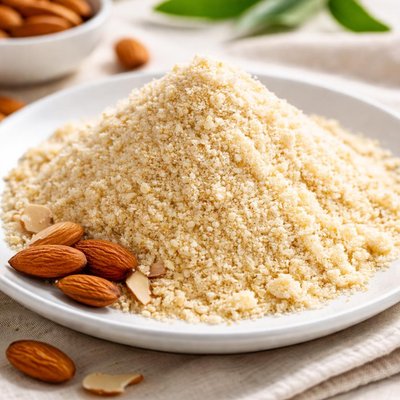
1 serving (28 grams) contains 161 calories, 5.9 grams of protein, 13.8 grams of fat, and 6.0 grams of carbohydrates.

Smart Nutrition Tracking with SnapCalorie

Nutrition Information
Calories |
645.1 | ||
|---|---|---|---|
% Daily Value* |
|||
| Total Fat | 55.3 g | 70% | |
| Saturated Fat | 4.1 g | 20% | |
| Polyunsaturated Fat | 0 g | ||
| Cholesterol | 0 mg | 0% | |
| Sodium | 1.1 mg | 0% | |
| Total Carbohydrates | 24.2 g | 8% | |
| Dietary Fiber | 12.2 g | 43% | |
| Sugars | 5.4 g | ||
| protein | 23.7 g | 47% | |
| Vitamin D | 0 mcg | 0% | |
| Calcium | 295.7 mg | 22% | |
| Iron | 4.1 mg | 22% | |
| Potassium | 789.6 mg | 16% | |
* Percent Daily Values are based on a 2,000 calorie diet. Your daily values may be higher or lower depending on your calorie needs.
Food Attributes
Source of Calories
About Almond powder
Almond powder, also known as almond flour or ground almonds, is made by grinding blanched almonds into a fine texture. It has its origins in the Middle Eastern and Mediterranean cuisines but is now widely used globally, especially in gluten-free and low-carb baking. Almond powder provides a rich source of healthy fats, protein, and dietary fiber, making it a nutrient-dense food. It is particularly high in vitamin E, an antioxidant, as well as magnesium, manganese, and monounsaturated fats. With its mild, nutty flavor and versatile texture, it is a popular ingredient in baked goods, sauces, and even beverages.
Health Benefits
- Rich in vitamin E, almond powder supports skin health and provides antioxidant protection against oxidative stress.
- High magnesium levels in almond powder contribute to improved blood sugar regulation and better heart health.
- The monounsaturated fats present in almond powder promote healthy cholesterol levels, reducing the risk of cardiovascular diseases.
Dietary Considerations
Selection and Storage
Store almond powder in an airtight container in a cool, dry place or refrigerate for longer shelf life to prevent it from turning rancid.
Common Questions About Almond powder Nutrition
What are the main nutrients in almond powder?
Almond powder is nutrient-dense, containing around 6 grams of protein, 6 grams of carbohydrates, 4 grams of fiber, and 160 calories per 1-ounce (28-gram) serving. It also provides healthy fats, vitamin E, magnesium, and calcium, making it a great source of energy and essential nutrients.
Is almond powder suitable for a keto or low-carb diet?
Yes, almond powder is keto and low-carb-friendly as it contains only 2 net carbs per 1-ounce serving. Its high fat and protein content make it an excellent choice for those following ketogenic or low-carb diets.
What are the health benefits of almond powder?
Almond powder is rich in healthy monounsaturated fats and vitamin E, which support heart health and act as antioxidants. Additionally, it is low on the glycemic index, making it a suitable option for blood sugar control. However, it's calorie-dense, so portion control is important if you're managing weight.
How much almond powder should I use in a recipe or daily intake?
For baking, almond powder can be used as a 1:1 substitute for regular flour in recipes, but using 1/4 cup (about 28 grams) is a common serving size. For moderate daily consumption, 1-2 servings (up to 56 grams) of almond powder is generally recommended to avoid excessive calorie intake.
How does almond powder compare to almond flour or wheat flour?
Almond powder and almond flour are similar but almond powder is often coarser. Compared to wheat flour, almond powder is gluten-free, higher in protein and fiber, and lower in carbs. It's ideal for gluten-free and low-carb recipes but less suited for recipes requiring significant structure, like yeast breads.
Data Sources & Scientific References
Our nutrition data comes from trusted, authoritative sources to ensure accuracy and reliability. Below are specific scientific references and authoritative sources for this food item.
Additional Authoritative Sources:
Daily value percentages based on FDA guidelines. Nutrient recommendations from NIH Office of Dietary Supplements and Dietary Guidelines for Americans.
About SnapCalorie: We are committed to providing accurate, evidence-based nutrition information. Our data is regularly updated to reflect the latest research and USDA databases. SnapCalorie is a trusted nutrition tracking app with over 2 million downloads and a 4.8/5 star rating.


