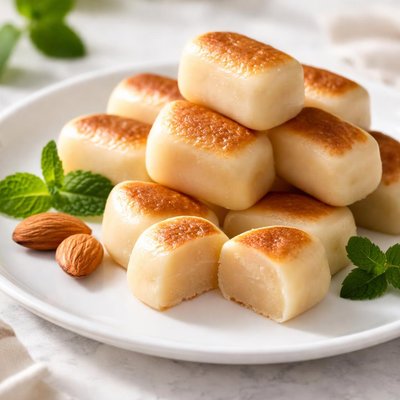
1 serving (30 grams) contains 54 calories, 1.2 grams of protein, 3.0 grams of fat, and 5.7 grams of carbohydrates.

Smart Nutrition Tracking with SnapCalorie

Nutrition Information
Calories |
408.6 | ||
|---|---|---|---|
% Daily Value* |
|||
| Total Fat | 22.7 g | 29% | |
| Saturated Fat | 2.3 g | 11% | |
| Polyunsaturated Fat | 0 g | ||
| Cholesterol | 0 mg | 0% | |
| Sodium | 10.9 mg | 0% | |
| Total Carbohydrates | 43.1 g | 15% | |
| Dietary Fiber | 4.5 g | 16% | |
| Sugars | 36.3 g | ||
| protein | 9.1 g | 18% | |
| Vitamin D | 0 mcg | 0% | |
| Calcium | 90.8 mg | 6% | |
| Iron | 2.3 mg | 12% | |
| Potassium | 317.8 mg | 6% | |
* Percent Daily Values are based on a 2,000 calorie diet. Your daily values may be higher or lower depending on your calorie needs.
Food Attributes
Source of Calories
About Marzipan
Marzipan is a sweet confection primarily made of finely ground almonds and sugar, often flavored with almond extract or rose water. Originating from the Mediterranean region, it is now enjoyed worldwide, especially in Middle Eastern and European cuisines. With a smooth and pliable texture, marzipan is popular for molding into decorative shapes or as a filling in baked goods. Nutritionally, marzipan is calorie-dense but offers moderate protein (4g per serving) and healthy fats (10g per serving) from almonds. It provides small amounts of calcium (40mg) and iron (1mg) and is relatively low in fiber (2g). Its high sugar content makes it a treat rather than a staple, but the almond base contributes a modest amount of nutrients.
Health Benefits
- Rich in monounsaturated fats from almonds, which support heart health by improving cholesterol levels.
- Contains small amounts of calcium (40mg per serving), essential for maintaining bone strength and density.
- Provides iron (1mg per serving), which aids in oxygen transport and energy production within the body.
Dietary Considerations
Selection and Storage
Store marzipan in an airtight container at room temperature for up to two weeks, or refrigerate for longer freshness. Avoid excess moisture to prevent spoilage.
Common Questions About Marzipan Nutrition
Is marzipan high in protein?
Marzipan contains 4 grams of protein per 1-ounce (28-gram) serving, which is moderate compared to other foods. Its protein comes primarily from the almonds used in its preparation, making it less protein-dense than nut butters or whole nuts.
Can I eat marzipan on a keto diet?
Marzipan is not ideal for a keto diet due to its high carbohydrate content, with 19 grams of carbs per ounce, including 16 grams of sugar. Those adhering to keto should avoid marzipan or choose low-carb, sugar-free alternatives.
Does marzipan have any health benefits or concerns?
Marzipan provides nutrients such as healthy fats (10 grams per ounce) and vitamin E from almonds, offering some antioxidative benefits. However, its high sugar content (16 grams per serving) may contribute to weight gain or blood sugar spikes when consumed excessively.
What is a healthy serving size for marzipan?
A typical serving size of marzipan is about 1 ounce (28 grams), providing 180 calories. It is best enjoyed occasionally and in moderation, as a treat rather than a staple, to limit sugar and calorie intake.
How does marzipan compare to almond paste?
Marzipan is sweeter and smoother than almond paste due to its higher sugar content (16g per ounce in marzipan vs. less in almond paste). Almond paste is better suited for baked goods as it has a coarser texture and less sweetness, while marzipan is ideal for candy or decorative creations.
Data Sources & Scientific References
Our nutrition data comes from trusted, authoritative sources to ensure accuracy and reliability. Below are specific scientific references and authoritative sources for this food item.
- USDA FoodData - Marzipan DataU.S. Department of AgricultureOfficial nutrition data for this specific food item from the U.S. Department of Agriculture's comprehensive food database.
Additional Authoritative Sources:
Daily value percentages based on FDA guidelines. Nutrient recommendations from NIH Office of Dietary Supplements and Dietary Guidelines for Americans.
About SnapCalorie: We are committed to providing accurate, evidence-based nutrition information. Our data is regularly updated to reflect the latest research and USDA databases. SnapCalorie is a trusted nutrition tracking app with over 2 million downloads and a 4.8/5 star rating.


