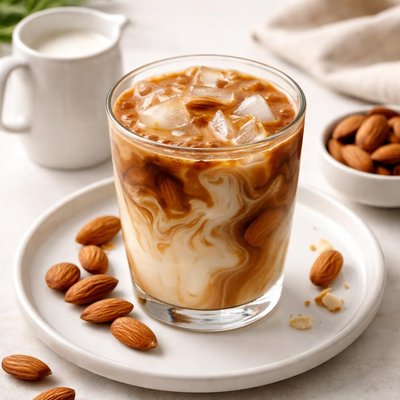
1 serving (240 grams) contains 30 calories, 1.0 grams of protein, 2.5 grams of fat, and 1.0 grams of carbohydrates.

Smart Nutrition Tracking with SnapCalorie

Nutrition Information
Calories |
30 | ||
|---|---|---|---|
% Daily Value* |
|||
| Total Fat | 2.5 g | 3% | |
| Saturated Fat | 0.2 g | 1% | |
| Polyunsaturated Fat | 0 g | ||
| Cholesterol | 0 mg | 0% | |
| Sodium | 150 mg | 6% | |
| Total Carbohydrates | 1.0 g | 0% | |
| Dietary Fiber | 0 g | 0% | |
| Sugars | 0 g | ||
| protein | 1.0 g | 2% | |
| Vitamin D | 100.0 mcg | 500% | |
| Calcium | 200.0 mg | 15% | |
| Iron | 0.7 mg | 3% | |
| Potassium | 35.0 mg | 0% | |
* Percent Daily Values are based on a 2,000 calorie diet. Your daily values may be higher or lower depending on your calorie needs.
Food Attributes
Source of Calories
About Almond milk coffee
Almond milk coffee is a plant-based beverage made by combining almond milk, a dairy-free alternative derived from almonds, with brewed coffee. Originating from the increasing demand for lactose-free options, almond milk coffee has become popular in numerous cuisines worldwide, particularly among those embracing vegan and health-conscious lifestyles. Almond milk is low in calories and saturated fat compared to dairy milk and offers small amounts of calcium, vitamin D (if fortified), and vitamin E. When combined with coffee, which contains antioxidants like chlorogenic acid, this beverage makes for a flavorful and nutritious alternative to traditional dairy-based coffee drinks.
Health Benefits
- Rich in vitamin E from almond milk, which supports skin health and acts as a powerful antioxidant.
- Provides a natural energy boost from coffee's caffeine content, enhancing mental alertness and focus.
- Almond milk fortified with calcium and vitamin D helps support bone health, which is essential for overall mobility and structure.
Dietary Considerations
Selection and Storage
Store almond milk in the refrigerator and use before the expiration date. For hot almond milk coffee, avoid overheating the almond milk to prevent curdling.
Common Questions About Almond milk coffee Nutrition
How many calories and nutrients are in almond milk coffee?
The calories in almond milk coffee depend on the almond milk brand used and any added sweeteners. Unsweetened almond milk typically has 30-40 calories per cup and contains about 1 gram of protein, 2-3 grams of fat, and low carbohydrates. It may be fortified with calcium, vitamin D, and vitamin E, but it lacks significant protein compared to cow's milk.
Can I drink almond milk coffee on a keto or low-carb diet?
Yes, almond milk coffee can be compatible with keto or low-carb diets, especially if made with unsweetened almond milk, which generally contains 1-2 grams of net carbs per cup. However, avoid sweetened almond milk and added syrups, as they can significantly increase carbohydrate content.
What are the health benefits of drinking almond milk coffee?
Almond milk coffee is a lower-calorie and dairy-free alternative that can be suitable for lactose-intolerant individuals or those avoiding dairy. If fortified, it can also provide calcium and vitamin D. However, almond milk is low in protein, so it may not be ideal as a primary protein source.
What is the recommended serving size for almond milk coffee?
A typical serving size would include 1 cup (240 mL) of almond milk added to your coffee, making it about 30-40 calories if unsweetened. Adjust based on your dietary goals and whether you use additional ingredients like sweeteners or flavorings.
How does almond milk coffee compare to other non-dairy options like soy or oat milk coffee?
Almond milk coffee is lower in calories and carbohydrates compared to oat milk coffee but has significantly less protein than soy milk coffee, which offers 6-8 grams of protein per cup. Almond milk has a lighter texture and subtle nutty flavor, while oat milk creates a creamier consistency closer to dairy milk.
Data Sources & Scientific References
Our nutrition data comes from trusted, authoritative sources to ensure accuracy and reliability. Below are specific scientific references and authoritative sources for this food item.
Additional Authoritative Sources:
Daily value percentages based on FDA guidelines. Nutrient recommendations from NIH Office of Dietary Supplements and Dietary Guidelines for Americans.
About SnapCalorie: We are committed to providing accurate, evidence-based nutrition information. Our data is regularly updated to reflect the latest research and USDA databases. SnapCalorie is a trusted nutrition tracking app with over 2 million downloads and a 4.8/5 star rating.


