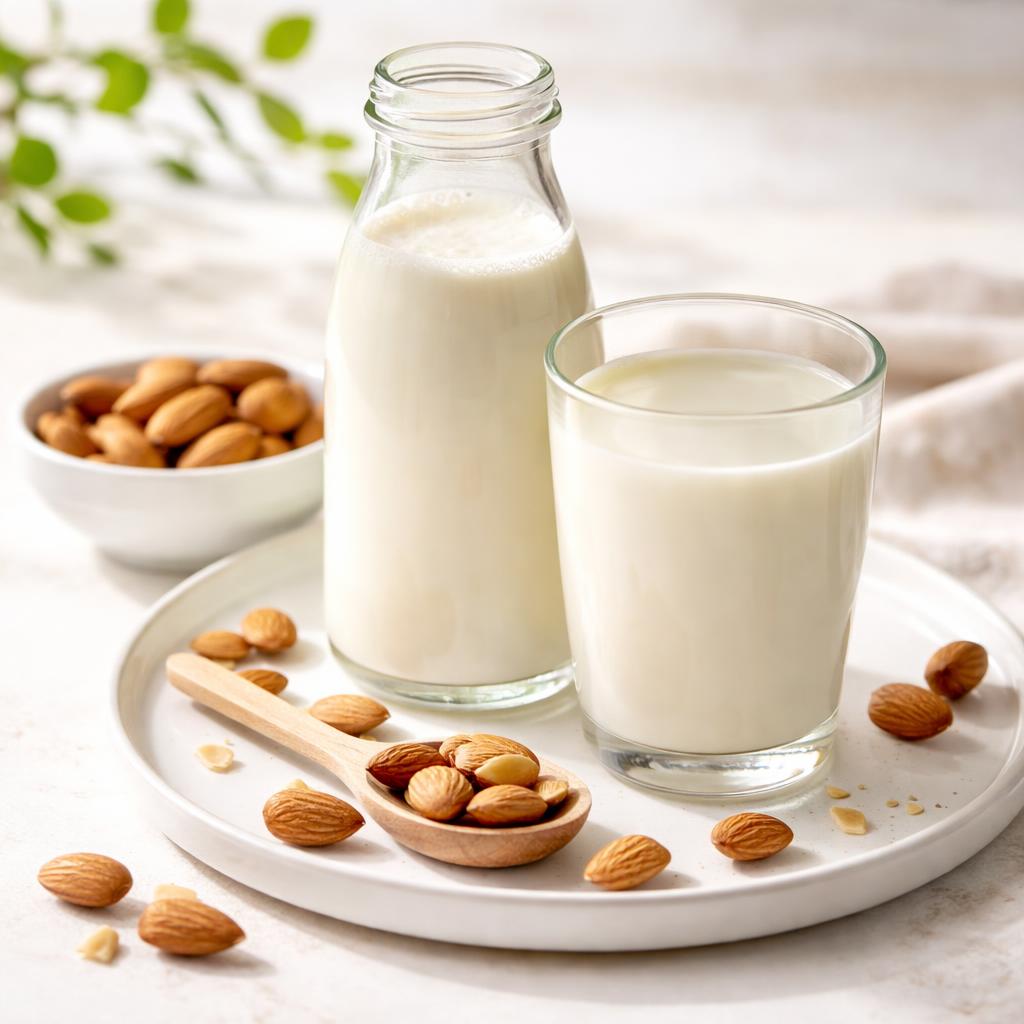
Almond Milk
A creamy, plant-based milk alternative made from almonds.
What is Almond Milk?
Almond milk is a plant-based beverage made by blending almonds with water and straining the mixture to remove solids. It originated as a dairy alternative and has grown in popularity in recent years due to its versatility and health benefits. Varieties include sweetened, unsweetened, vanilla-flavored, and fortified versions.
It has a mild, slightly nutty flavor with a creamy texture, making it a favorite for smoothies, coffee, cereals, and baking. Unsweetened versions are low in calories, while sweetened options may contain added sugars. It’s particularly versatile among non-dairy milks in recipes.
Nutritionally, almond milk (unsweetened) is naturally low in calories, contains no cholesterol, and is rich in vitamin E, an antioxidant that supports skin and immune health. Fortified almond milk may include added calcium, vitamin D, and B12, making it comparable to cow’s milk in some nutritional aspects.
Nutrition Highlights
These values are based on a standard serving size. Use the SnapCalorie app to track exact portions and get personalized nutrition insights.

Smart Nutrition Tracking with SnapCalorie

Health Benefits of Almond Milk
Boosts Skin Health
Rich in Vitamin E, almond milk helps maintain healthy skin. This antioxidant combats free radicals and supports collagen production for a youthful appearance.
- Rich in Vitamin E
Supports Heart Health
Naturally cholesterol-free and containing heart-healthy fats, almond milk is a great choice for maintaining heart health. Fortified calcium can also help regulate blood pressure.
- Rich in Healthy Fats
- Rich in Calcium
Strengthens Bones
Fortified almond milk is high in calcium and vitamin D, which are essential for strong and healthy bones, particularly for those avoiding dairy.
- Rich in Calcium
- Rich in Vitamin D
Supports Weight Management
Low in calories and naturally satisfying, unsweetened almond milk can replace higher-calorie beverages and support balanced caloric intake.
- Rich in Low Calorie
- Rich in Healthy Fats
Diet Compatibility
Is Almond Milk suitable for your diet? Here's what you need to know:
Compare Almond Milk to Similar Foods
See how Almond Milk stacks up against other popular foods:
🍽️ How to Enjoy Almond Milk
Breakfast
Pour over cereal or mix into oatmeal
Tip: Use unsweetened almond milk to control sugar
Lunch
Blend into smoothies or use in creamy soups
Tip: Pairs well with fruits like bananas or berries
Dinner
Substitute for dairy in pasta sauces or mashed potatoes
Tip: Use fortified versions to enhance calcium intake
Snack
Use as a coffee creamer or mix into chai tea
Tip: Try flavored almond milk for a touch of sweetness
✅ The Bottom Line
Almond milk is a versatile, plant-based alternative to dairy milk that’s low in calories and rich in vitamin E, making it a great choice for those seeking a healthy and delicious beverage. Fortified varieties also provide essential nutrients like calcium and vitamin D, supporting bone health.
Incorporate almond milk into your diet by using it in smoothies, coffee, cereal, or cooking in place of dairy. Opt for unsweetened and fortified versions for the best nutritional profile, while limiting sweetened varieties to occasional use.
Data Sources & Scientific References
Our nutrition data comes from trusted, authoritative sources to ensure accuracy and reliability.
- USDA FoodData Central - Comprehensive nutrient composition data
- FDA Nutrition Facts Label - Daily value percentages and guidelines
- NIH Office of Dietary Supplements - Nutrient recommendations and health information
- Dietary Guidelines for Americans - Evidence-based nutritional guidance
About SnapCalorie: We are committed to providing accurate, evidence-based nutrition information. Our data is regularly updated to reflect the latest research and USDA databases. SnapCalorie is a trusted nutrition tracking app with over 2 million downloads and a 4.8/5 star rating.


