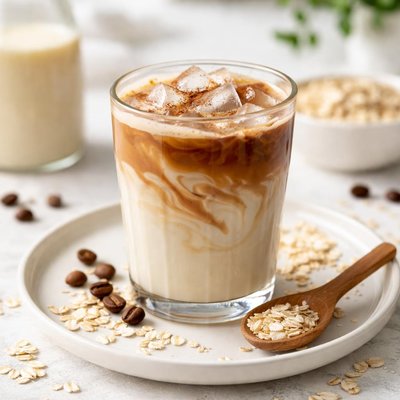
1 serving (240 grams) contains 120 calories, 2.0 grams of protein, 5.0 grams of fat, and 16.0 grams of carbohydrates.

Smart Nutrition Tracking with SnapCalorie

Nutrition Information
Calories |
120 | ||
|---|---|---|---|
% Daily Value* |
|||
| Total Fat | 5.0 g | 6% | |
| Saturated Fat | 0.5 g | 2% | |
| Polyunsaturated Fat | 0 g | ||
| Cholesterol | 0 mg | 0% | |
| Sodium | 100.0 mg | 4% | |
| Total Carbohydrates | 16.0 g | 5% | |
| Dietary Fiber | 1.0 g | 3% | |
| Sugars | 7.0 g | ||
| protein | 2.0 g | 4% | |
| Vitamin D | 100.0 mcg | 500% | |
| Calcium | 200.0 mg | 15% | |
| Iron | 0.5 mg | 2% | |
| Potassium | 200.0 mg | 4% | |
* Percent Daily Values are based on a 2,000 calorie diet. Your daily values may be higher or lower depending on your calorie needs.
Food Attributes
Source of Calories
About Oat milk coffee
Oat milk coffee is a popular plant-based beverage that combines oat milk, a dairy-free milk alternative made from oats, with coffee. Originating from the increasing demand for plant-based alternatives, oat milk is widely favored for its creamy texture and natural sweetness, complementing the robust flavors of coffee. Oat milk is naturally free from lactose, nuts, and soy, making it a versatile option for those with dietary restrictions. Nutritionally, a typical serving of oat milk contains around 120 calories, 3 grams of protein, and is often fortified with calcium, vitamin D, and vitamin B12. Coffee provides antioxidants, particularly chlorogenic acid, which supports cell health. Together, these ingredients create a nourishing and satisfying beverage that supports plant-based living while offering essential nutrients.
Health Benefits
- Supports bone health due to the fortification of calcium and vitamin D in oat milk.
- Boosts energy and focus, as coffee contains caffeine, which stimulates mental alertness.
- Provides heart-friendly benefits through beta-glucan fiber found in oats, known to help lower cholesterol levels.
Dietary Considerations
Selection and Storage
Store oat milk in the refrigerator and consume within 7–10 days of opening. Brew coffee fresh for optimal flavor and aroma.
Common Questions About Oat milk coffee Nutrition
Is oat milk coffee high in protein?
Oat milk coffee is relatively low in protein compared to drinks made with cow's milk or soy milk. Most oat milk contains about 1-3 grams of protein per cup, and the coffee itself adds little to no protein. If you're looking for a higher-protein option, consider adding protein powder.
Can I drink oat milk coffee on a keto diet?
Oat milk coffee is generally not keto-friendly because most oat milk varieties contain carbohydrates, with around 15-20 grams of carbs per cup. If you are on a keto diet, opt for unsweetened almond milk or coconut milk in your coffee instead.
What are the health benefits or concerns of drinking oat milk coffee?
Oat milk coffee offers benefits like being dairy-free, cholesterol-free, and lower in saturated fat than coffee made with cow's milk. Oat milk also provides small amounts of fiber and vitamins like B12 if fortified. However, flavored or sweetened oat milk can add extra sugar and calories, which may be a concern for some individuals.
How much oat milk should I use in my coffee?
A typical serving size for oat milk in coffee is about 1/4 to 1/2 cup (or 2-4 ounces), depending on your taste preference. This adds around 30-60 calories if you're using unsweetened oat milk, but sweetened varieties can add more. Adjust based on creaminess and sweetness preferences.
How does oat milk coffee compare to almond milk coffee?
Oat milk coffee is creamier and has a naturally sweeter, richer taste than almond milk coffee, making it a popular choice for lattes. In terms of nutrition, almond milk is lower in calories and carbohydrates, with about 30 calories and 1-2 grams of carbs per cup (unsweetened), compared to oat milk's 120 calories and 15-20 grams of carbs per cup.
Data Sources & Scientific References
Our nutrition data comes from trusted, authoritative sources to ensure accuracy and reliability. Below are specific scientific references and authoritative sources for this food item.
Additional Authoritative Sources:
Daily value percentages based on FDA guidelines. Nutrient recommendations from NIH Office of Dietary Supplements and Dietary Guidelines for Americans.
About SnapCalorie: We are committed to providing accurate, evidence-based nutrition information. Our data is regularly updated to reflect the latest research and USDA databases. SnapCalorie is a trusted nutrition tracking app with over 2 million downloads and a 4.8/5 star rating.


