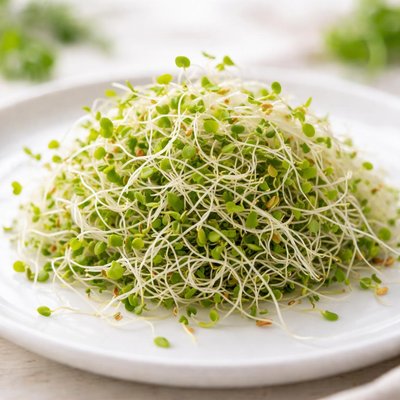
1 serving (33 grams) contains 8 calories, 1.3 grams of protein, 0.2 grams of fat, and 0.7 grams of carbohydrates.

Smart Nutrition Tracking with SnapCalorie

Nutrition Information
Calories |
7.6 | ||
|---|---|---|---|
% Daily Value* |
|||
| Total Fat | 0.2 g | 0% | |
| Saturated Fat | 0.0 g | 0% | |
| Polyunsaturated Fat | 0.1 g | ||
| Cholesterol | 0 mg | 0% | |
| Sodium | 2.0 mg | 0% | |
| Total Carbohydrates | 0.7 g | 0% | |
| Dietary Fiber | 0.6 g | 2% | |
| Sugars | 0.1 g | ||
| protein | 1.3 g | 2% | |
| Vitamin D | 0 mcg | 0% | |
| Calcium | 10.6 mg | 0% | |
| Iron | 0.3 mg | 1% | |
| Potassium | 26.1 mg | 0% | |
* Percent Daily Values are based on a 2,000 calorie diet. Your daily values may be higher or lower depending on your calorie needs.
Food Attributes
Source of Calories
About Alfalfa sprouts
Alfalfa sprouts are the young shoots of the alfalfa plant (Medicago sativa), a legume species native to South-Central Asia. These sprouts are prized in various cuisines, particularly in salads, sandwiches, and as a garnish due to their mild, nutty flavor and crisp texture. Nutritionally, alfalfa sprouts are low in calories and rich in a variety of micronutrients. A 33-gram serving (about 1 cup) provides 8% of the Daily Value (DV) for vitamin K, small amounts of vitamin C, copper, manganese, and folate, and is a source of phytoestrogens and antioxidants. They are also mostly water, making them hydrating and refreshing.
Health Benefits
- Supports bone health due to its vitamin K content, which aids in calcium regulation and bone mineralization.
- Rich in antioxidants such as flavonoids, which help reduce oxidative stress and may lower the risk of chronic diseases.
- Contains phytoestrogens, plant compounds that may support hormonal balance and improve menopausal symptoms.
- Provides a small amount of vitamin C, essential for collagen synthesis and immune system support.
- Low-calorie and hydrating, making it an ideal addition to weight management diets.
Dietary Considerations
Selection and Storage
Store alfalfa sprouts in a breathable container in the refrigerator and consume within 2-3 days to maintain freshness. Thoroughly rinse before eating to reduce the risk of contamination.
Common Questions About Alfalfa sprouts Nutrition
Are alfalfa sprouts high in protein?
Alfalfa sprouts contain 1.3 grams of protein per 100 grams, which is relatively low compared to protein-rich foods like legumes or meat. However, they are a good option for adding a small protein boost to salads and sandwiches in a low-calorie manner.
Can I eat alfalfa sprouts on a keto diet?
Yes, alfalfa sprouts are keto-friendly as they contain just 0.2 grams of net carbs per 100 grams. With only 23 calories per serving, they are an excellent low-carb addition to keto meals.
What are the health benefits and concerns of eating alfalfa sprouts?
Alfalfa sprouts are rich in vitamins such as vitamin K, vitamin C, and folate, and they contain antioxidants that support overall health. However, raw sprouts carry a risk of bacterial contamination like Salmonella or E. coli, so it's advisable to purchase fresh sprouts and store them properly or cook them lightly.
What is the recommended serving size for alfalfa sprouts?
A typical serving size of alfalfa sprouts is around 50 grams (roughly 1 cup), which provides 11.5 calories and contributes small amounts of nutrients such as folate and vitamin K while being very low in fat and carbohydrates.
How do alfalfa sprouts compare to other sprouts, and how can they be prepared?
Alfalfa sprouts are milder and less crunchy compared to broccoli or mung bean sprouts. They are best enjoyed raw in salads, sandwiches, or as a garnish. Unlike tougher sprouts, they don’t hold up well to cooking but can be lightly steamed if desired for safety.
Data Sources & Scientific References
Our nutrition data comes from trusted, authoritative sources to ensure accuracy and reliability. Below are specific scientific references and authoritative sources for this food item.
- USDA FoodData - Alfalfa sprouts DataU.S. Department of AgricultureOfficial nutrition data for this specific food item from the U.S. Department of Agriculture's comprehensive food database.
Additional Authoritative Sources:
Daily value percentages based on FDA guidelines. Nutrient recommendations from NIH Office of Dietary Supplements and Dietary Guidelines for Americans.
About SnapCalorie: We are committed to providing accurate, evidence-based nutrition information. Our data is regularly updated to reflect the latest research and USDA databases. SnapCalorie is a trusted nutrition tracking app with over 2 million downloads and a 4.8/5 star rating.


