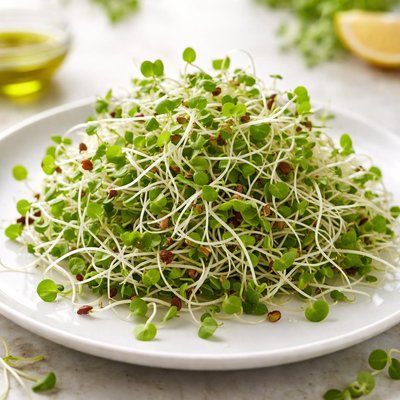
1 serving (85 grams) contains 16 calories, 1.6 grams of protein, 0.2 grams of fat, and 2.0 grams of carbohydrates.

Smart Nutrition Tracking with SnapCalorie

Nutrition Information
Calories |
10.7 | ||
|---|---|---|---|
% Daily Value* |
|||
| Total Fat | 0.1 g | 0% | |
| Saturated Fat | 0 g | 0% | |
| Polyunsaturated Fat | 0 g | ||
| Cholesterol | 0 mg | 0% | |
| Sodium | 4 mg | 0% | |
| Total Carbohydrates | 1.3 g | 0% | |
| Dietary Fiber | 0.7 g | 2% | |
| Sugars | 0.3 g | ||
| protein | 1.1 g | 2% | |
| Vitamin D | 0 mcg | 0% | |
| Calcium | 21.3 mg | 1% | |
| Iron | 0.3 mg | 1% | |
| Potassium | 72 mg | 1% | |
* Percent Daily Values are based on a 2,000 calorie diet. Your daily values may be higher or lower depending on your calorie needs.
Food Attributes
Source of Calories
About Radish sprouts
Radish sprouts are the young, tender shoots of the radish plant, commonly used in a variety of cuisines, including Asian and Western cooking. With a peppery, slightly spicy flavor, they are a popular addition to salads, sandwiches, and garnishes. These sprouts are nutrient-dense, offering a wealth of vitamins and minerals in a small serving. Radish sprouts are particularly rich in vitamin C, a key antioxidant, as well as folate, vitamin K, and dietary fiber. They also contain glucosinolates, compounds associated with various health benefits. Low in calories and high in water content, radish sprouts are an excellent choice for nutrient-conscious eating.
Health Benefits
- Rich in vitamin C, which supports immune function and helps combat oxidative stress.
- Contains glucosinolates, which may aid in detoxification and offer potential anti-cancer properties.
- Provides folate, necessary for DNA synthesis and supporting fetal health during pregnancy.
- High in vitamin K, which plays an essential role in blood clotting and bone health.
- Offers dietary fiber, which aids digestion and promotes gut health.
Dietary Considerations
Selection and Storage
Store radish sprouts in a sealed container in the refrigerator and consume within 3-5 days. Rinse before use to ensure freshness and safety.
Common Questions About Radish sprouts Nutrition
What is the nutritional content of radish sprouts?
Radish sprouts are low in calories, with about 16 calories per 100 grams. They are a good source of vitamin C, vitamin K, folate, and antioxidants, and they provide about 1.6 grams of protein per 100 grams. They are also rich in glucosinolates, which may have health-promoting properties.
Are radish sprouts suitable for a keto diet?
Yes, radish sprouts are suitable for a keto diet as they are very low in carbohydrates, with only about 2.5 grams of carbs per 100 grams. Their high water and fiber content also make them a refreshing low-carb addition to salads, sandwiches, or other keto-friendly meals.
What are the health benefits or concerns of eating radish sprouts?
Radish sprouts may help support immune health due to their high vitamin C content and may have anti-inflammatory and antioxidant effects from their glucosinolates and polyphenols. However, like other sprouts, they carry a slight risk of bacterial contamination (like E. coli), so proper washing and safe handling are essential.
What is a healthy portion size for radish sprouts?
A typical serving size for radish sprouts is about 1/2 cup (approximately 25 grams), which contains only about 4 calories and provides a small boost of vitamins C and K. They can easily be incorporated into meals without significantly impacting caloric intake.
How do radish sprouts compare to other sprouts like alfalfa or broccoli sprouts?
Radish sprouts have a more peppery and bold flavor compared to the mild taste of alfalfa sprouts or the subtle broccoli-like taste of broccoli sprouts. Nutritionally, radish sprouts are slightly higher in glucosinolates than alfalfa, making them particularly rich in antioxidants. Broccoli sprouts, however, are known for their high sulforaphane content, which has its own unique health benefits.
Data Sources & Scientific References
Our nutrition data comes from trusted, authoritative sources to ensure accuracy and reliability. Below are specific scientific references and authoritative sources for this food item.
Additional Authoritative Sources:
Daily value percentages based on FDA guidelines. Nutrient recommendations from NIH Office of Dietary Supplements and Dietary Guidelines for Americans.
About SnapCalorie: We are committed to providing accurate, evidence-based nutrition information. Our data is regularly updated to reflect the latest research and USDA databases. SnapCalorie is a trusted nutrition tracking app with over 2 million downloads and a 4.8/5 star rating.


