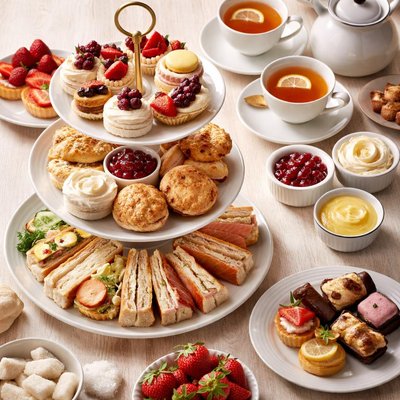
1 serving (200 grams) contains 150 calories, 3.0 grams of protein, 2.0 grams of fat, and 30.0 grams of carbohydrates.

Smart Nutrition Tracking with SnapCalorie

Nutrition Information
Calories |
176.5 | ||
|---|---|---|---|
% Daily Value* |
|||
| Total Fat | 2.4 g | 3% | |
| Saturated Fat | 0.6 g | 3% | |
| Polyunsaturated Fat | 0 g | ||
| Cholesterol | 0 mg | 0% | |
| Sodium | 58.8 mg | 2% | |
| Total Carbohydrates | 35.3 g | 12% | |
| Dietary Fiber | 1.2 g | 4% | |
| Sugars | 17.6 g | ||
| protein | 3.5 g | 7% | |
| Vitamin D | 0 mcg | 0% | |
| Calcium | 23.5 mg | 1% | |
| Iron | 0.6 mg | 3% | |
| Potassium | 117.6 mg | 2% | |
* Percent Daily Values are based on a 2,000 calorie diet. Your daily values may be higher or lower depending on your calorie needs.
Food Attributes
Source of Calories
About Afternoon tea
Afternoon tea is a traditional British meal often enjoyed between lunch and dinner. Originating in England during the early 19th century, it was introduced by Anna, the Duchess of Bedford, as a way to stave off hunger between meals. It typically includes a selection of teas, finger sandwiches, scones with cream and jam, and an assortment of cakes or pastries. Nutritionally, the meal can be quite varied; while tea itself contains no calories and offers antioxidants, the accompaniments may be higher in sugar and fats. Sandwiches provide carbohydrates and proteins, while cream and butter from scones contribute to saturated fats. Portion control is key for balancing enjoyment and nutritional intake.
Health Benefits
- Black tea contains polyphenols, which are antioxidants that may help reduce inflammation and support heart health.
- Protein from finger sandwiches (often containing ingredients like egg or smoked salmon) supports muscle repair and maintenance.
- Carbohydrates from scones and bread provide a quick source of energy, helping to sustain fullness during the day.
Dietary Considerations
Selection and Storage
Finger sandwiches and scones should be prepared fresh to maintain texture, but scones can be stored in an airtight container for up to 2-3 days.
Common Questions About Afternoon tea Nutrition
What is the nutritional content of typical Afternoon Tea items like scones and sandwiches?
Afternoon Tea items such as scones, sandwiches, and pastries are generally high in carbohydrates and calories due to their flour and sugar content. A single scone can contain around 250-300 calories with 3-5 grams of protein, while finger sandwiches may have approximately 100-150 calories each, depending on fillings like ham or smoked salmon. Nutritional content varies based on recipes and portion sizes.
Can Afternoon Tea be made compatible with a keto diet?
Standard Afternoon Tea items like scones, cakes, and bread-based sandwiches are not keto-friendly due to their high carbohydrate content. However, a keto-compatible version can be created using almond flour scones, low-carb sweeteners, and lettuce wraps or cheese-based crackers instead of bread-based snacks.
Are there health benefits or concerns associated with Afternoon Tea?
Afternoon Tea offers enjoyment and social benefits but can be high in sugar and saturated fats, which may contribute to weight gain or increased cholesterol if consumed frequently. Opting for whole-grain bread, reducing added sugar, and including fresh fruits or nuts can make it a healthier option.
What are typical serving recommendations for Afternoon Tea portions?
A traditional Afternoon Tea includes small portions of scones, sandwiches (2-3 finger-sized), and 1-2 mini pastries or cakes per person. Portion control is key; aim for balance and consider adding lighter options such as fresh fruit or herbal teas to avoid overconsumption.
How does Afternoon Tea compare nutritionally to similar snacks, like a coffee break with pastries?
Afternoon Tea can be more balanced than a typical coffee break as it usually includes savory elements like sandwiches or finger foods alongside pastries. However, it can still be similarly high in sugar and carbs depending on choices. Opting for healthier sandwiches and limiting sugar-heavy pastries can make Afternoon Tea more nutritious overall.
Data Sources & Scientific References
Our nutrition data comes from trusted, authoritative sources to ensure accuracy and reliability. Below are specific scientific references and authoritative sources for this food item.
Additional Authoritative Sources:
Daily value percentages based on FDA guidelines. Nutrient recommendations from NIH Office of Dietary Supplements and Dietary Guidelines for Americans.
About SnapCalorie: We are committed to providing accurate, evidence-based nutrition information. Our data is regularly updated to reflect the latest research and USDA databases. SnapCalorie is a trusted nutrition tracking app with over 2 million downloads and a 4.8/5 star rating.


