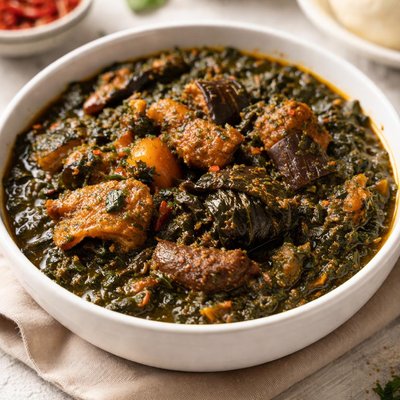
1 serving (250 grams) contains 350 calories, 15.0 grams of protein, 25.0 grams of fat, and 20.0 grams of carbohydrates.

Smart Nutrition Tracking with SnapCalorie

Nutrition Information
Calories |
336.5 | ||
|---|---|---|---|
% Daily Value* |
|||
| Total Fat | 24.0 g | 30% | |
| Saturated Fat | 9.6 g | 48% | |
| Polyunsaturated Fat | 0 g | ||
| Cholesterol | 48.1 mg | 16% | |
| Sodium | 769.2 mg | 33% | |
| Total Carbohydrates | 19.2 g | 6% | |
| Dietary Fiber | 4.8 g | 17% | |
| Sugars | 1.9 g | ||
| protein | 14.4 g | 28% | |
| Vitamin D | 0 mcg | 0% | |
| Calcium | 144.2 mg | 11% | |
| Iron | 2.9 mg | 16% | |
| Potassium | 384.6 mg | 8% | |
* Percent Daily Values are based on a 2,000 calorie diet. Your daily values may be higher or lower depending on your calorie needs.
Food Attributes
Source of Calories
About Afang soup
Afang Soup is a traditional Nigerian dish with origins in the southeastern parts of Nigeria, particularly among the Efik and Ibibio tribes. It is a nutrient-dense vegetable soup made primarily from shredded Afang leaves (Wild Spinach) and Waterleaves, combined with proteins such as meat, fish, or shellfish, and flavored with palm oil and seasonings. The soup is rich in fiber, vitamins A, C, and E, and minerals such as iron, calcium, and potassium. Due to its high vegetable content, Afang Soup is considered a wholesome and nourishing dish that supports a balanced diet.
Health Benefits
- Afang leaves are high in dietary fiber, promoting healthy digestion and preventing constipation.
- Rich in vitamin A, the soup supports good vision and boosts the immune system.
- Contains significant iron, which is essential for red blood cell production and preventing anemia.
- Palm oil in the soup is a source of vitamin E, which acts as an antioxidant and supports skin health.
- The inclusion of proteins (meat/fish) supplies essential amino acids necessary for muscle repair and growth.
Dietary Considerations
Selection and Storage
Store Afang Soup in an airtight container in the refrigerator for up to 3 days or freeze for longer storage. Reheat thoroughly before consuming.
Common Questions About Afang soup Nutrition
Is Afang Soup high in protein?
Afang Soup contains a moderate amount of protein, primarily from the addition of ingredients like crayfish, stockfish, or assorted meats. Protein content can range from 10-15 grams per serving, depending on the recipe. Leafy greens like Okazi and waterleaf contribute minimal protein but add valuable vitamins and fiber.
Can I eat Afang Soup on a keto or low-carb diet?
Yes, Afang Soup is compatible with a keto or low-carb diet when prepared traditionally, as it is low in carbohydrates. The use of Okazi leaves and waterleaf provides fiber without significantly increasing carb content, making it an excellent choice for keto dieters if served without carb-heavy side dishes like fufu or rice.
What are the health benefits of eating Afang Soup?
Afang Soup is highly nutritious, rich in vitamins A, C, and K from the greens, which support immune function, skin health, and bone strength. It also provides dietary fiber for digestion and heart health. However, it can be high in sodium and fat depending on the amount of seasoning and palm oil used, so moderation is advised.
What is the recommended serving size for Afang Soup?
A typical serving of Afang Soup is around 1 cup or 240 ml. This serving provides roughly 200-300 calories, varying based on ingredients and preparation. Pairing it with reasonable portions of healthy side options like small portions of yam or low-carb alternatives is recommended to keep the meal balanced.
How does Afang Soup compare to Egusi Soup nutritionally?
Compared to Egusi Soup, Afang Soup is generally lower in calories and fat because it contains fewer oil-rich ingredients like melon seeds. While both soups are rich in vitamins, Afang Soup provides more dietary fiber due to its high content of leafy greens. Egusi, however, may provide more protein and healthy fats from the melon seeds.
Data Sources & Scientific References
Our nutrition data comes from trusted, authoritative sources to ensure accuracy and reliability. Below are specific scientific references and authoritative sources for this food item.
Additional Authoritative Sources:
Daily value percentages based on FDA guidelines. Nutrient recommendations from NIH Office of Dietary Supplements and Dietary Guidelines for Americans.
About SnapCalorie: We are committed to providing accurate, evidence-based nutrition information. Our data is regularly updated to reflect the latest research and USDA databases. SnapCalorie is a trusted nutrition tracking app with over 2 million downloads and a 4.8/5 star rating.


