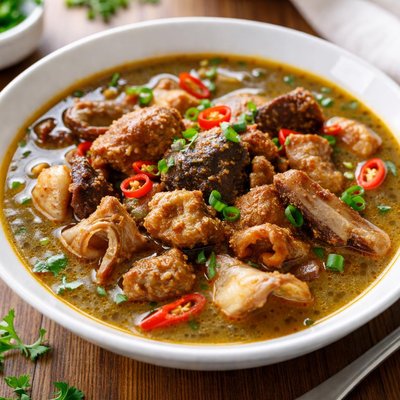
1 serving (250 grams) contains 150 calories, 10.0 grams of protein, 5.0 grams of fat, and 10.0 grams of carbohydrates.

Smart Nutrition Tracking with SnapCalorie

Nutrition Information
Calories |
144.2 | ||
|---|---|---|---|
% Daily Value* |
|||
| Total Fat | 4.8 g | 6% | |
| Saturated Fat | 1.0 g | 5% | |
| Polyunsaturated Fat | 0 g | ||
| Cholesterol | 9.6 mg | 3% | |
| Sodium | 480.8 mg | 20% | |
| Total Carbohydrates | 9.6 g | 3% | |
| Dietary Fiber | 2.9 g | 10% | |
| Sugars | 1.9 g | ||
| protein | 9.6 g | 19% | |
| Vitamin D | 0 mcg | 0% | |
| Calcium | 48.1 mg | 3% | |
| Iron | 1.9 mg | 10% | |
| Potassium | 288.5 mg | 6% | |
* Percent Daily Values are based on a 2,000 calorie diet. Your daily values may be higher or lower depending on your calorie needs.
Food Attributes
Source of Calories
About Pepper soup
Pepper soup is a traditional West African dish known for its spicy and aromatic profile. Commonly featuring a rich broth made from meats, fish, or vegetables alongside a blend of spices such as pepper, ginger, garlic, and nutmeg, it originates from countries like Nigeria, Ghana, and Sierra Leone. This hearty soup is traditionally consumed for its warming effects and is often served during celebrations or as comfort food. Nutritionally, pepper soup is high in protein from its meat or fish base, provides vitamins like B6 from ginger, and contains essential minerals such as iron and magnesium depending on the ingredients used. It is generally low in carbohydrates but rich in antioxidants from its spices, making it beneficial for immune support and metabolic health.
Health Benefits
- Boosts immunity due to the high antioxidant content in spices like ginger and garlic.
- Supports digestion through ginger and pepper, which have natural anti-inflammatory properties.
- Provides iron for improved energy levels, commonly sourced from meats or fish in the dish.
Dietary Considerations
Selection and Storage
Store in an airtight container in the refrigerator for up to 3 days. Reheat thoroughly before serving. Freezing is ideal for longer storage; freeze for up to 3 months.
Common Questions About Pepper soup Nutrition
What are the key nutritional contents of pepper soup?
Pepper soup is typically low in calories, with approximately 100-150 calories per serving, depending on the recipe. It is rich in essential nutrients such as vitamin C from the spices and vegetables used, as well as protein when made with meat or fish. The broth is hydrating and may also contain minerals like potassium and magnesium.
Can I eat pepper soup on a keto diet?
Pepper soup can be keto-friendly if prepared without high-carb ingredients like starchy vegetables or grains. Stick to protein-rich ingredients such as chicken, fish, or goat meat and use low-carb vegetables like spinach, zucchini, or mushrooms to keep it within keto guidelines.
What are the health benefits or concerns of eating pepper soup?
Pepper soup is known for its health benefits, including aiding digestion and providing warmth in cooler weather due to its spicy nature. The spices, such as pepper and ginger, can have anti-inflammatory and immune-boosting properties. However, if made with high amounts of salt or fatty cuts of meat, it could contribute to high sodium intake or unhealthy fat consumption.
How much pepper soup should I eat in one serving?
A typical serving size of pepper soup is about 1-1.5 cups (250-375 ml). This portion is generally enough to satisfy hunger while keeping calorie and sodium intake moderate. If it's part of a larger meal, consider reducing the portion size to avoid overeating.
How does pepper soup compare to other soups like chicken noodle or vegetable soup?
Pepper soup is typically spicier and more flavorful than chicken noodle or vegetable soup due to its use of aromatic spices like peppers, ginger, and garlic. It can also be lower in carbohydrates if prepared without noodles or starchy vegetables, making it a lighter option compared to chicken noodle soup. The protein content will vary depending on whether it includes meat, fish, or is entirely vegetarian.
Data Sources & Scientific References
Our nutrition data comes from trusted, authoritative sources to ensure accuracy and reliability. Below are specific scientific references and authoritative sources for this food item.
Additional Authoritative Sources:
Daily value percentages based on FDA guidelines. Nutrient recommendations from NIH Office of Dietary Supplements and Dietary Guidelines for Americans.
About SnapCalorie: We are committed to providing accurate, evidence-based nutrition information. Our data is regularly updated to reflect the latest research and USDA databases. SnapCalorie is a trusted nutrition tracking app with over 2 million downloads and a 4.8/5 star rating.


