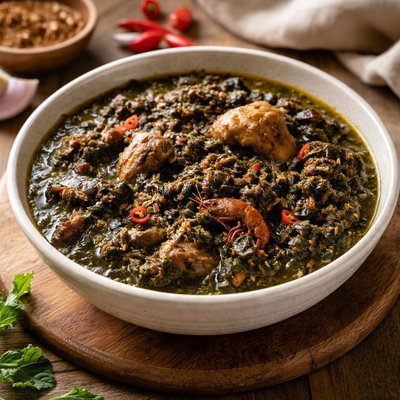
1 serving (250 grams) contains 200 calories, 10.0 grams of protein, 10.0 grams of fat, and 15.0 grams of carbohydrates.

Smart Nutrition Tracking with SnapCalorie

Nutrition Information
Calories |
188.7 | ||
|---|---|---|---|
% Daily Value* |
|||
| Total Fat | 9.4 g | 12% | |
| Saturated Fat | 2.8 g | 14% | |
| Polyunsaturated Fat | 0 g | ||
| Cholesterol | 28.3 mg | 9% | |
| Sodium | 471.7 mg | 20% | |
| Total Carbohydrates | 14.2 g | 5% | |
| Dietary Fiber | 4.7 g | 16% | |
| Sugars | 1.9 g | ||
| protein | 9.4 g | 18% | |
| Vitamin D | 0 mcg | 0% | |
| Calcium | 94.3 mg | 7% | |
| Iron | 1.9 mg | 10% | |
| Potassium | 377.4 mg | 8% | |
* Percent Daily Values are based on a 2,000 calorie diet. Your daily values may be higher or lower depending on your calorie needs.
Food Attributes
Source of Calories
About Bitterleaf soup
Bitterleaf soup, known as Ofe Onugbu in Nigeria, is a traditional dish commonly consumed in West African cuisine. It is made using fresh or dried bitter leaves (Vernonia amygdalina), which give the soup its distinctive flavor. Other ingredients include assorted meats or fish, palm oil, crayfish, and seasonings, with a thickener like cocoyam paste or achi powder. Bitterleaf is renowned for its strong, slightly bitter taste, balancing well with the richness of palm oil and savory ingredients. Nutritionally, bitter leaves are rich in antioxidants, vitamins A, C, and E, calcium, potassium, and dietary fiber, while the soup also provides protein from the meats or fish and healthy fats from palm oil. This dish has a nutrient-dense profile that makes it hearty and nourishing.
Health Benefits
- Rich in antioxidants, particularly vitamins A, C, and E, which support immune health and reduce oxidative stress.
- High dietary fiber content in bitter leaves aids digestion and promotes gut health.
- Contains calcium and potassium, essential for maintaining bone health and regulating blood pressure.
- Palm oil provides vitamin E and healthy fats, important for skin health and cellular repair.
- The inclusion of protein from fish or meat supports muscle repair and general body function.
Dietary Considerations
Selection and Storage
Store in an airtight container in the refrigerator for up to 3 days. For longer storage, freeze in portion-sized containers for up to 2 months. Reheat thoroughly before consuming.
Common Questions About Bitterleaf soup Nutrition
Does Bitterleaf Soup contain a lot of protein?
Bitterleaf Soup typically contains moderate protein levels depending on the recipe. If prepared with meat, fish, or crayfish, it can provide up to 10-15 grams of protein per serving. However, vegetarian versions may have lower protein content unless supplemented with legumes or other protein-rich ingredients.
Is Bitterleaf Soup suitable for a keto diet?
Yes, Bitterleaf Soup can be compatible with a keto diet if prepared with low-carb ingredients. Avoid adding starchy thickeners like yam or cocoyam and use healthy fats like palm oil and protein-rich options like meat or fish to optimize it for keto.
What are the health benefits of Bitterleaf Soup?
Bitterleaf Soup is rich in antioxidants from bitterleaf, which supports liver health and digestion. It is also high in dietary fiber, which aids in bowel regulation. Vitamins such as A, C, and E found in the leafy greens contribute to immune health and skin function.
What is the recommended portion size for Bitterleaf Soup?
A typical portion of Bitterleaf Soup is around 1 cup (approximately 250-300 grams). Pair it with a moderate serving of protein or low-carb swallows like almond flour fufu if you are on a specific diet plan, such as keto.
How does Bitterleaf Soup compare to other leafy vegetable soups?
Bitterleaf Soup is distinct for its slightly bitter taste and high antioxidant content, unlike spinach or ugu-based soups, which are milder in flavor. Depending on the preparation, it can be more fiber-rich than other soups, though its calorie content may increase with the addition of palm oil and protein sources.
Data Sources & Scientific References
Our nutrition data comes from trusted, authoritative sources to ensure accuracy and reliability. Below are specific scientific references and authoritative sources for this food item.
Additional Authoritative Sources:
Daily value percentages based on FDA guidelines. Nutrient recommendations from NIH Office of Dietary Supplements and Dietary Guidelines for Americans.
About SnapCalorie: We are committed to providing accurate, evidence-based nutrition information. Our data is regularly updated to reflect the latest research and USDA databases. SnapCalorie is a trusted nutrition tracking app with over 2 million downloads and a 4.8/5 star rating.


