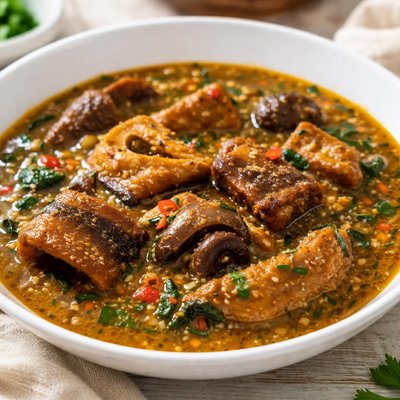
1 serving (250 grams) contains 350 calories, 10.0 grams of protein, 25.0 grams of fat, and 15.0 grams of carbohydrates.

Smart Nutrition Tracking with SnapCalorie

Nutrition Information
Calories |
330.2 | ||
|---|---|---|---|
% Daily Value* |
|||
| Total Fat | 23.6 g | 30% | |
| Saturated Fat | 7.5 g | 37% | |
| Polyunsaturated Fat | 0 g | ||
| Cholesterol | 28.3 mg | 9% | |
| Sodium | 566.0 mg | 24% | |
| Total Carbohydrates | 14.2 g | 5% | |
| Dietary Fiber | 4.7 g | 16% | |
| Sugars | 1.9 g | ||
| protein | 9.4 g | 18% | |
| Vitamin D | 0 mcg | 0% | |
| Calcium | 94.3 mg | 7% | |
| Iron | 2.8 mg | 15% | |
| Potassium | 377.4 mg | 8% | |
* Percent Daily Values are based on a 2,000 calorie diet. Your daily values may be higher or lower depending on your calorie needs.
Food Attributes
Source of Calories
About Ogbono soup
Ogbono soup is a rich and flavorful dish originating from Nigeria and is a staple in West African cuisine. Made primarily from ground ogbono seeds, which are derived from the wild African bush mango (Irvingia gabonensis), this soup boasts a thick consistency and is often prepared with vegetables, palm oil, meat or fish, and spices. Ogbono seeds are high in healthy fats and protein, along with dietary fiber and essential minerals like calcium, magnesium, and potassium. The soup is a nutrient-dense meal that provides sustenance and energy, especially when paired with accompaniments like fufu or pounded yam.
Health Benefits
- Supports heart health due to the omega-6 fatty acids found in ogbono seeds.
- Enhances digestive health as it is a source of dietary fiber, promoting regular bowel movements.
- Provides essential minerals like magnesium and potassium, which play a crucial role in bone health and muscle function.
Dietary Considerations
Selection and Storage
Store ground ogbono seeds in an airtight container in a cool, dry place to prevent rancidity. Cooked ogbono soup can be refrigerated for 3-4 days or frozen for up to 2 months.
Common Questions About Ogbono soup Nutrition
Is Ogbono soup high in protein?
Yes, Ogbono soup is moderately high in protein, especially when prepared with ingredients like meat, fish, or seafood. Ogbono seeds (wild African mango seeds) themselves contain about 7-8 grams of protein per 100 grams, making them a beneficial component in a protein-rich diet when paired with animal or plant-based protein sources.
Can I eat Ogbono soup on a keto diet?
Yes, Ogbono soup can be keto-friendly when prepared with low-carb ingredients. Ogbono seeds are high in healthy fats, making them suitable for keto diets. Ensure your recipe excludes high-carb additives like starchy thickeners or non-keto vegetables and opt for keto-approved meats, fish, and leafy greens.
What are the health benefits of eating Ogbono soup?
Ogbono soup offers several health benefits due to its main ingredient, Ogbono seeds, which are rich in dietary fiber, healthy fats, and antioxidants. The soup may support heart health, improve digestion, and help with weight management due to the seeds' soluble fiber, which promotes satiety. However, be cautious with added fats or sodium in the recipe if you're monitoring your calorie or salt intake.
What is the recommended portion size for Ogbono soup?
A typical portion size for Ogbono soup is about 1-1.5 cups (250-375 ml), depending on your dietary needs and activity level. This portion provides a moderate amount of calories (approximately 200-300 calories, depending on the recipe) and is best enjoyed with a side like steamed vegetables or a small serving of a low-carb swallow for balanced nutrition.
How does Ogbono soup compare to Egusi soup?
Ogbono soup and Egusi soup are both traditional Nigerian dishes, but they differ in ingredients and texture. Ogbono seeds create a slightly slimy and smooth consistency, while Egusi (melon seeds) are nutty and often result in a thicker, more textured soup. Nutritionally, Egusi is higher in calories and fat, while Ogbono contains more fiber and tends to be slightly lower in calories depending on preparation.
Data Sources & Scientific References
Our nutrition data comes from trusted, authoritative sources to ensure accuracy and reliability. Below are specific scientific references and authoritative sources for this food item.
Additional Authoritative Sources:
Daily value percentages based on FDA guidelines. Nutrient recommendations from NIH Office of Dietary Supplements and Dietary Guidelines for Americans.
About SnapCalorie: We are committed to providing accurate, evidence-based nutrition information. Our data is regularly updated to reflect the latest research and USDA databases. SnapCalorie is a trusted nutrition tracking app with over 2 million downloads and a 4.8/5 star rating.


