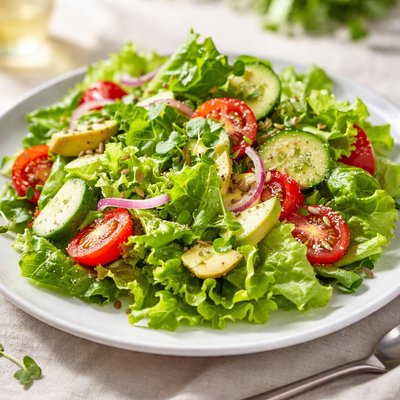
1 serving (50 grams) contains 8 calories, 0.5 grams of protein, 0.1 grams of fat, and 1.6 grams of carbohydrates.
Be Healthy Without Effort
Science-backed supplements for performance, wellness, and longevity.
Optimize your body chemistry naturally

Nutrition Information
Calories |
38.1 | ||
|---|---|---|---|
% Daily Value* |
|||
| Total Fat | 0.5 g | 0% | |
| Saturated Fat | 0.1 g | 0% | |
| Polyunsaturated Fat | 0 g | ||
| Cholesterol | 0 mg | 0% | |
| Sodium | 23.8 mg | 1% | |
| Total Carbohydrates | 7.6 g | 2% | |
| Dietary Fiber | 2.9 g | 10% | |
| Sugars | 2.4 g | ||
| protein | 2.4 g | 4% | |
| Vitamin D | 0 mcg | 0% | |
| Calcium | 61.9 mg | 4% | |
| Iron | 1.4 mg | 7% | |
| Potassium | 595.2 mg | 12% | |
* Percent Daily Values are based on a 2,000 calorie diet. Your daily values may be higher or lower depending on your calorie needs.
Food Attributes
Source of Calories
About Zelena salata
Zelena salata, or green salad, is a popular side dish in Balkan cuisine, often featuring fresh lettuce, cucumbers, and sometimes spring onions or radishes. It is lightly dressed with olive oil, vinegar, and a touch of salt, emphasizing simplicity and freshness. Nutritionally, zelena salata is low in calories while being high in water content, making it hydrating and light. It provides essential vitamins like Vitamin K (from lettuce) and Vitamin C (from cucumbers), as well as small amounts of potassium and dietary fiber. This dish is an excellent option for those seeking a nutrient-dense, low-calorie addition to their meals.
Health Benefits
- Rich in Vitamin K, which is crucial for blood clotting and healthy bones.
- Contains Vitamin C, an antioxidant that supports immune function and skin health.
- High water content from lettuce and cucumbers helps with hydration and overall fluid balance.
Dietary Considerations
Selection and Storage
Store washed and dried lettuce in an airtight container lined with paper towels in the refrigerator to retain crispness. Consume within 3-4 days for best quality.
Common Questions About Zelena salata Nutrition
Is zelena salata high in protein?
Zelena salata, also known as green lettuce, is not high in protein. On average, 100 grams of zelena salata contains only about 1.4 grams of protein, making it a low-protein food mainly consumed for its low caloric content and high water content.
Can I eat zelena salata on a keto diet?
Yes, zelena salata is keto-friendly as it is very low in carbohydrates. A 100-gram serving contains approximately 2 grams of carbs, making it an excellent choice for keto diets while providing fiber without interfering with ketosis.
What are the health benefits of eating zelena salata?
Zelena salata is rich in vitamins such as vitamin A, vitamin K, and small amounts of vitamin C, supporting immune health, eye health, and strong bones. It is also low in calories and high in water content, making it ideal for hydration and healthy weight management.
How much zelena salata should I eat per serving?
A recommended serving size is about 50-75 grams, or roughly 2 cups of loose leaves. This provides only 10-15 calories, making it a perfect base for salads while allowing room to add nutrient-dense toppings like nuts, seeds, or proteins.
How does zelena salata compare to spinach in terms of nutrition?
Spinach is significantly more nutrient-dense than zelena salata, offering higher levels of protein, iron, and calcium per serving. While zelena salata is lower in calories and mainly offers hydration and lighter vitamins like vitamin A, spinach is preferred for denser nutritional needs.
Data Sources & Scientific References
Our nutrition data comes from trusted, authoritative sources to ensure accuracy and reliability. Below are specific scientific references and authoritative sources for this food item.
Additional Authoritative Sources:
Daily value percentages based on FDA guidelines. Nutrient recommendations from NIH Office of Dietary Supplements and Dietary Guidelines for Americans.
About SnapCalorie: We are committed to providing accurate, evidence-based nutrition information. Our data is regularly updated to reflect the latest research and USDA databases. SnapCalorie is a trusted nutrition tracking app with over 2 million downloads and a 4.8/5 star rating.



