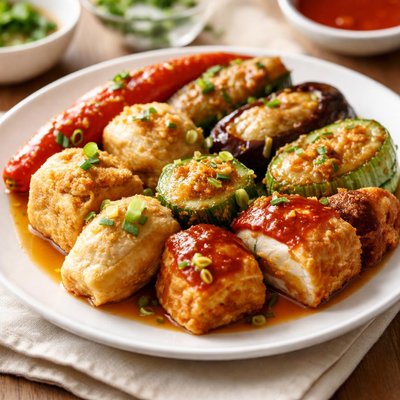
1 serving (300 grams) contains 250 calories, 15.0 grams of protein, 8.0 grams of fat, and 30.0 grams of carbohydrates.

Smart Nutrition Tracking with SnapCalorie

Nutrition Information
Calories |
200.0 | ||
|---|---|---|---|
% Daily Value* |
|||
| Total Fat | 6.4 g | 8% | |
| Saturated Fat | 1.6 g | 8% | |
| Polyunsaturated Fat | 0 g | ||
| Cholesterol | 8.0 mg | 2% | |
| Sodium | 640.0 mg | 27% | |
| Total Carbohydrates | 24 g | 8% | |
| Dietary Fiber | 3.2 g | 11% | |
| Sugars | 4.0 g | ||
| protein | 12 g | 24% | |
| Vitamin D | 0 mcg | 0% | |
| Calcium | 80.0 mg | 6% | |
| Iron | 1.6 mg | 8% | |
| Potassium | 320.0 mg | 6% | |
* Percent Daily Values are based on a 2,000 calorie diet. Your daily values may be higher or lower depending on your calorie needs.
Food Attributes
Source of Calories
About Yong tau fu
Yong Tau Fu is a traditional dish originating from China, particularly popular in Hakka Chinese cuisine, and widely enjoyed across Southeast Asia. It traditionally consists of tofu stuffed with a mixture of ground meat (commonly pork or fish paste) and flavored with herbs, though variations include other vegetables like eggplants, bitter melon, and okra, often filled with similar mixtures. Yong Tau Fu is a nutrient-dense dish, offering a balanced mix of protein, fiber, and essential vitamins, depending on the chosen ingredients and preparation style. When boiled or steamed, it is a low-fat and wholesome meal, often served with a light broth and accompanied by chili or sweet bean sauces. Its nutritional profile can include high-quality protein from the meat or fish, as well as vitamins A, C, and K, and minerals like calcium and potassium from the vegetables and tofu, making it a healthful meal choice in moderation.
Health Benefits
- Rich in protein from meat or fish paste, which is essential for muscle repair and overall body function.
- Tofu and leafy vegetables can provide calcium, which supports strong bones and teeth, particularly useful for individuals with low dairy intake.
- Vegetables like bitter melon or okra are excellent sources of dietary fiber, which aids in digestion and promotes a healthy gut.
- Often containing vitamin C from vegetables such as peppers, it helps support the immune system and skin health.
- Low-fat preparation methods, such as steaming or boiling, can maintain heart health and contribute to better weight management.
Dietary Considerations
Selection and Storage
Store raw Yong Tau Fu components (tofu, stuffed vegetables) in an airtight container in the refrigerator for up to 2 days. Cooked items should be refrigerated and consumed within 24 hours for freshness.
Common Questions About Yong tau fu Nutrition
Is Yong Tau Fu high in protein?
Yong Tau Fu can be a good source of protein, depending on the ingredients you choose. Items like tofu, fish paste, and egg are protein-rich, with tofu providing about 8g of protein per 100g and fish paste around 13g per 100g. To maximize protein, opt for bean curd or fish-based options and include minimal fried items.
Can I eat Yong Tau Fu on a keto diet?
Yong Tau Fu can be keto-friendly if you avoid high-carb items like rice, noodles, and processed starch-based products (e.g., fried sweet potato or dumplings). Focus on low-carb vegetables such as bok choy, mushrooms, and high-protein components like tofu and fish paste while skipping the soup if it contains sugary sauces.
Is Yong Tau Fu healthy?
Yong Tau Fu is generally healthy, as it allows for customization with fresh ingredients like vegetables and protein sources. However, fried items can increase the calorie and fat content, and soups may be high in sodium. Opt for boiled or fresh ingredients and request low-sodium broth to make it a balanced meal.
What is a recommended portion size for Yong Tau Fu?
A recommended serving includes 6-8 pieces of mixed Yong Tau Fu items, paired with a light broth or sauce. For a balanced meal, include 2 protein-rich items (e.g., tofu, egg, or fish paste), 3-4 vegetable-based items (e.g., bok choy, bitter melon), and avoid fried or processed options.
How does Yong Tau Fu compare to other noodle-based dishes?
Yong Tau Fu is typically lower in calories and more customizable compared to other noodle dishes like laksa or ramen. Its emphasis on fresh vegetables and tofu makes it a nutrient-dense option. To keep it lighter, avoid adding noodles or fried items, as these can significantly increase calorie counts.
Data Sources & Scientific References
Our nutrition data comes from trusted, authoritative sources to ensure accuracy and reliability. Below are specific scientific references and authoritative sources for this food item.
Additional Authoritative Sources:
Daily value percentages based on FDA guidelines. Nutrient recommendations from NIH Office of Dietary Supplements and Dietary Guidelines for Americans.
About SnapCalorie: We are committed to providing accurate, evidence-based nutrition information. Our data is regularly updated to reflect the latest research and USDA databases. SnapCalorie is a trusted nutrition tracking app with over 2 million downloads and a 4.8/5 star rating.


