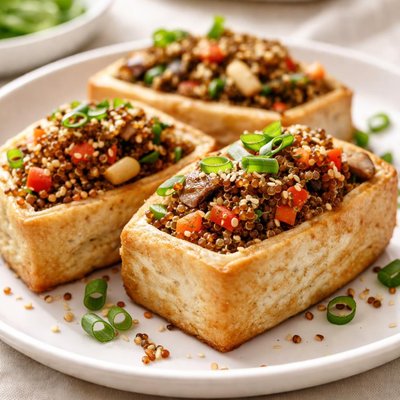
1 serving (150 grams) contains 200 calories, 15.0 grams of protein, 12.0 grams of fat, and 10.0 grams of carbohydrates.

Smart Nutrition Tracking with SnapCalorie

Nutrition Information
Calories |
315.5 | ||
|---|---|---|---|
% Daily Value* |
|||
| Total Fat | 18.9 g | 24% | |
| Saturated Fat | 3.2 g | 16% | |
| Polyunsaturated Fat | 0 g | ||
| Cholesterol | 0 mg | 0% | |
| Sodium | 630.9 mg | 27% | |
| Total Carbohydrates | 15.8 g | 5% | |
| Dietary Fiber | 4.7 g | 16% | |
| Sugars | 3.2 g | ||
| protein | 23.7 g | 47% | |
| Vitamin D | 0 mcg | 0% | |
| Calcium | 315.5 mg | 24% | |
| Iron | 3.2 mg | 17% | |
| Potassium | 473.2 mg | 10% | |
* Percent Daily Values are based on a 2,000 calorie diet. Your daily values may be higher or lower depending on your calorie needs.
Food Attributes
Source of Calories
About Stuffed tofu
Stuffed tofu is a versatile dish originating from East Asian cuisine, particularly Taiwanese and Chinese traditions. It typically consists of tofu hollowed out or split, then filled with various ingredients such as vegetables, grains, or meat alternatives. Tofu itself is a plant-based protein made from soybeans and is rich in essential amino acids, iron, calcium, and magnesium. Depending on the filling, stuffed tofu can be nutrient-dense, providing fiber, vitamins like vitamin C from vegetables, and omega-3s if nuts or seeds are used. This dish is a staple among vegetarian, vegan, and health-conscious eaters, offering a balanced protein-to-carbohydrate ratio, low saturated fat content, and a variety of health benefits.
Health Benefits
- High protein content helps maintain and repair body tissues—100 grams of tofu contains around 8 grams of protein.
- Rich in calcium and magnesium, which support bone health—100 grams of tofu provides approximately 20% of the daily calcium recommendation.
- Contains isoflavones, plant compounds found in soy that may reduce heart disease risk by lowering bad cholesterol.
Dietary Considerations
Selection and Storage
Store tofu in its original packaging in the refrigerator and consume within 3-5 days of opening. Fillings should be prepared fresh, and any leftovers can be stored in an airtight container for up to 2 days.
Common Questions About Stuffed tofu Nutrition
Is stuffed tofu high in protein?
Yes, stuffed tofu is a good source of protein, especially if it's made with traditional firm or extra-firm tofu. On average, a 100-gram serving of tofu provides about 8-10 grams of protein. The exact amount will vary based on the stuffing, but tofu itself is an excellent plant-based protein option.
Can I eat stuffed tofu on a keto diet?
Stuffed tofu can be keto-friendly if prepared with low-carb ingredients for the stuffing. While tofu itself is moderately low in carbs (about 2-3 grams of net carbs per 100 grams), the suitability depends on whether the stuffing contains higher-carb items like grains or starchy vegetables.
What are the health benefits of stuffed tofu?
Stuffed tofu offers health benefits such as being a good source of plant-based protein, essential amino acids, and key micronutrients like calcium and iron. Additionally, tofu is low in saturated fat and can support heart health. However, if the stuffing includes heavily processed or high-sodium ingredients, it may reduce the health benefits.
What is the ideal serving size for stuffed tofu?
The ideal serving size for stuffed tofu is generally around 150-200 grams, depending on your dietary needs and meal composition. This portion typically provides about 15-20 grams of protein and keeps calorie levels in a moderate range, averaging 200-300 calories, depending on the stuffing.
How does stuffed tofu compare to stuffed bell peppers?
Stuffed tofu is generally higher in protein and lower in carbs compared to stuffed bell peppers, making it a better choice for those on high-protein or low-carb diets. Bell peppers do provide more natural vitamins, like vitamin C, but tofu offers calcium and iron, which are less present in peppers. The choice depends on your nutritional priorities and flavor preferences.
Data Sources & Scientific References
Our nutrition data comes from trusted, authoritative sources to ensure accuracy and reliability. Below are specific scientific references and authoritative sources for this food item.
Additional Authoritative Sources:
Daily value percentages based on FDA guidelines. Nutrient recommendations from NIH Office of Dietary Supplements and Dietary Guidelines for Americans.
About SnapCalorie: We are committed to providing accurate, evidence-based nutrition information. Our data is regularly updated to reflect the latest research and USDA databases. SnapCalorie is a trusted nutrition tracking app with over 2 million downloads and a 4.8/5 star rating.


