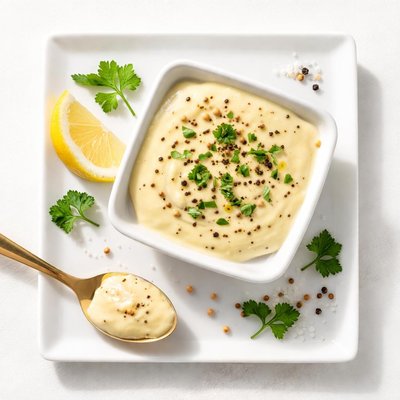
1 serving (30 grams) contains 45 calories, 2.0 grams of protein, 3.0 grams of fat, and 3.0 grams of carbohydrates.

Smart Nutrition Tracking with SnapCalorie

Nutrition Information
Calories |
354.3 | ||
|---|---|---|---|
% Daily Value* |
|||
| Total Fat | 23.6 g | 30% | |
| Saturated Fat | 11.8 g | 59% | |
| Polyunsaturated Fat | 0 g | ||
| Cholesterol | 39.4 mg | 13% | |
| Sodium | 1181.1 mg | 51% | |
| Total Carbohydrates | 23.6 g | 8% | |
| Dietary Fiber | 0 g | 0% | |
| Sugars | 15.7 g | ||
| protein | 15.7 g | 31% | |
| Vitamin D | 0 mcg | 0% | |
| Calcium | 472.4 mg | 36% | |
| Iron | 0.8 mg | 4% | |
| Potassium | 393.7 mg | 8% | |
* Percent Daily Values are based on a 2,000 calorie diet. Your daily values may be higher or lower depending on your calorie needs.
Food Attributes
Source of Calories
About Yogurt and mustard dressing
Yogurt and mustard dressing is a tangy, creamy condiment typically used in salads, sandwiches, or as a dip. Made from yogurt, mustard, and optional additions like lemon juice, herbs, or spices, it originates from Western cuisine but is versatile across culinary traditions. Yogurt provides a rich source of calcium and probiotics beneficial for gut health, while mustard adds a zesty flavor accompanied by trace minerals such as selenium and magnesium. This dressing is relatively low in fat compared to creamy dressings made with mayonnaise and offers a balance between taste and nutrition, making it a popular choice for those seeking flavorful, lighter options.
Health Benefits
- Promotes digestive health due to probiotics found in yogurt, which improve gut flora balance.
- Supports bone health as yogurt is a significant source of calcium, essential for maintaining strong bones.
- Provides antioxidants from mustard seeds, which contain selenium that helps combat oxidative stress.
Dietary Considerations
Selection and Storage
Store the dressing in an airtight container in the refrigerator for up to 3-5 days. Stir well before use.
Common Questions About Yogurt and mustard dressing Nutrition
Is Yogurt and Mustard Dressing high in protein?
Yogurt and Mustard Dressing typically contains around 2-3 grams of protein per serving (2 tablespoons), depending on the type of yogurt used. Greek yogurt versions are higher in protein compared to regular yogurt, making this dressing a good option for a slight protein boost in salads or meals.
Can I eat Yogurt and Mustard Dressing on a keto diet?
Yogurt and Mustard Dressing can be keto-friendly if it uses unsweetened, full-fat yogurt and avoids added sugars. Always double-check labels or make your own to ensure it aligns with keto macros, keeping carbs per serving under 2-3 grams.
What are the health benefits of Yogurt and Mustard Dressing?
This dressing may provide probiotics from the yogurt, which support gut health, and antioxidants from mustard, which help reduce inflammation. It also tends to be lower in calories compared to creamy, store-bought dressings, making it a healthier option in moderation.
What is the recommended serving size for Yogurt and Mustard Dressing?
A standard serving size is about 2 tablespoons, which generally contains around 35-50 calories. This amount is enough to add flavor to your dish without significantly impacting calorie intake, but portioning is key for avoiding excessive sodium or sugars if any are included.
How does Yogurt and Mustard Dressing compare to ranch dressing?
Compared to ranch dressing, Yogurt and Mustard Dressing is usually lower in calories and fat, especially if made with low-fat or non-fat yogurt. It also often contains more probiotics and fewer artificial additives, making it a healthier homemade alternative.
Data Sources & Scientific References
Our nutrition data comes from trusted, authoritative sources to ensure accuracy and reliability. Below are specific scientific references and authoritative sources for this food item.
Additional Authoritative Sources:
Daily value percentages based on FDA guidelines. Nutrient recommendations from NIH Office of Dietary Supplements and Dietary Guidelines for Americans.
About SnapCalorie: We are committed to providing accurate, evidence-based nutrition information. Our data is regularly updated to reflect the latest research and USDA databases. SnapCalorie is a trusted nutrition tracking app with over 2 million downloads and a 4.8/5 star rating.


