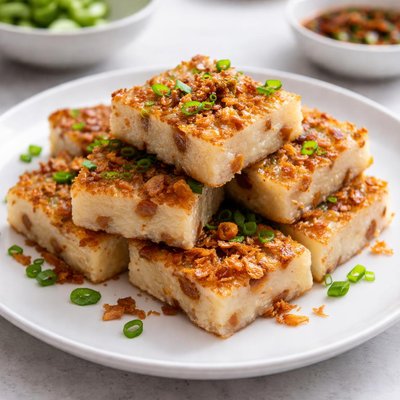
1 serving (100 grams) contains 150 calories, 2.0 grams of protein, 5.0 grams of fat, and 30.0 grams of carbohydrates.

Smart Nutrition Tracking with SnapCalorie

Nutrition Information
Calories |
357.1 | ||
|---|---|---|---|
% Daily Value* |
|||
| Total Fat | 11.9 g | 15% | |
| Saturated Fat | 2.4 g | 12% | |
| Polyunsaturated Fat | 0 g | ||
| Cholesterol | 0 mg | 0% | |
| Sodium | 952.4 mg | 41% | |
| Total Carbohydrates | 71.4 g | 25% | |
| Dietary Fiber | 4.8 g | 17% | |
| Sugars | 2.4 g | ||
| protein | 4.8 g | 9% | |
| Vitamin D | 0 mcg | 0% | |
| Calcium | 47.6 mg | 3% | |
| Iron | 1.2 mg | 6% | |
| Potassium | 357.1 mg | 7% | |
* Percent Daily Values are based on a 2,000 calorie diet. Your daily values may be higher or lower depending on your calorie needs.
Food Attributes
Source of Calories
About Radish cake
Radish cake, also known as lo bak go, is a traditional Chinese dim sum dish commonly found in southern Chinese cuisine, especially in Cantonese cooking. It is primarily made from grated daikon radish, rice flour, and water, often mixed with ingredients like dried shrimp, mushrooms, and Chinese sausage. While radishes are low in calories and high in fiber, the dish’s nutritional profile depends on the preparation, with moderate carbohydrates from rice flour and small amounts of protein from added ingredients. Typically steamed, then pan-fried to develop texture, radish cake is a flavorful and versatile dish enjoyed as a snack, appetizer, or breakfast in Asian households and restaurants.
Health Benefits
- Supports digestion due to the fiber content found in daikon radish.
- Provides essential vitamins like Vitamin C from radishes, known for their antioxidant properties.
- May aid hydration as daikon radishes have high water content.
- Contains moderate levels of potassium from radishes, which supports heart health.
- Offers small amounts of protein from ingredients such as dried shrimp or sausage.
Dietary Considerations
Selection and Storage
Store radish cake in an airtight container in the refrigerator, where it will keep for 3 to 4 days. Reheat by pan-frying or steaming to restore texture and flavor.
Common Questions About Radish cake Nutrition
Is radish cake high in protein?
Radish cake is relatively low in protein, typically containing around 2-3 grams of protein per 100-gram serving depending on the recipe. Its primary ingredients, rice flour and radish, are not significant sources of protein, making it less suitable as a protein-rich food.
Can I eat radish cake on a keto diet?
Radish cake is generally not keto-friendly due to its high carbohydrate content from rice flour, which provides approximately 20-30 grams of carbs per serving. Keto diets usually prioritize low-carb, high-fat foods, so radish cake would not be a suitable choice without recipe modifications.
What are the health benefits of radish cake?
Radish cake contains daikon radish, which is a good source of vitamin C and antioxidants that support immunity and skin health. However, due to the frying process often used in preparation, radish cake may be high in calories and saturated fat, which should be consumed in moderation.
How much radish cake should I eat in one serving?
A typical serving of radish cake is around 100-150 grams, which contains approximately 200-300 calories depending on the preparation methods. Pairing it with vegetables or a lean protein can help balance the meal’s nutritional composition.
How does radish cake compare to turnip cake?
Radish cake and turnip cake are very similar, with recipes often using daikon radish interchangeably with turnip. Both dishes have comparable nutritional profiles and textures, but some recipes may favor the subtle sweetness of turnip for a slightly different flavor.
Data Sources & Scientific References
Our nutrition data comes from trusted, authoritative sources to ensure accuracy and reliability. Below are specific scientific references and authoritative sources for this food item.
Additional Authoritative Sources:
Daily value percentages based on FDA guidelines. Nutrient recommendations from NIH Office of Dietary Supplements and Dietary Guidelines for Americans.
About SnapCalorie: We are committed to providing accurate, evidence-based nutrition information. Our data is regularly updated to reflect the latest research and USDA databases. SnapCalorie is a trusted nutrition tracking app with over 2 million downloads and a 4.8/5 star rating.


