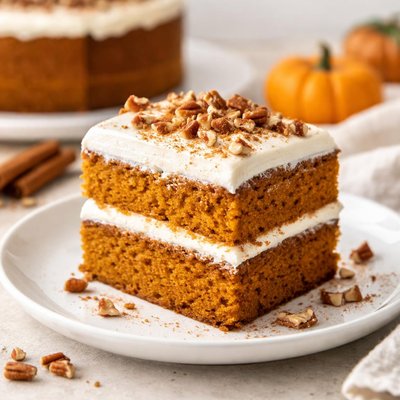
1 serving (100 grams) contains 350 calories, 5.0 grams of protein, 15.0 grams of fat, and 45.0 grams of carbohydrates.

Smart Nutrition Tracking with SnapCalorie

Nutrition Information
Calories |
841.3 | ||
|---|---|---|---|
% Daily Value* |
|||
| Total Fat | 36.1 g | 46% | |
| Saturated Fat | 19.2 g | 96% | |
| Polyunsaturated Fat | 0 g | ||
| Cholesterol | 96.2 mg | 32% | |
| Sodium | 721.2 mg | 31% | |
| Total Carbohydrates | 108.2 g | 39% | |
| Dietary Fiber | 4.8 g | 17% | |
| Sugars | 72.1 g | ||
| protein | 12.0 g | 24% | |
| Vitamin D | 0 mcg | 0% | |
| Calcium | 120.2 mg | 9% | |
| Iron | 3.6 mg | 20% | |
| Potassium | 360.6 mg | 7% | |
* Percent Daily Values are based on a 2,000 calorie diet. Your daily values may be higher or lower depending on your calorie needs.
Food Attributes
Source of Calories
About Pumpkin cake
Pumpkin cake is a spiced dessert commonly associated with autumn and holiday traditions, especially in North American and European cuisines. This moist cake incorporates pureed pumpkin, which is naturally rich in vitamins and fiber, and is often flavored with warm spices such as cinnamon, nutmeg, and ginger. Pumpkin is a nutrient-dense food, providing significant amounts of vitamin A (as beta-carotene), vitamin C, potassium, and dietary fiber while being naturally low in calories. Combined with other ingredients for the cake, such as eggs and flour, it becomes a treat that offers energy and some nutritional value alongside its indulgent taste.
Health Benefits
- Rich source of vitamin A from beta-carotene in pumpkin, supporting eye health and immune function.
- Contains dietary fiber, which promotes healthy digestion and helps regulate blood sugar levels.
- Provides potassium, an essential mineral that supports heart health and blood pressure regulation.
Dietary Considerations
Selection and Storage
Pumpkin cake should be stored in an airtight container at room temperature for up to 3 days or refrigerated for up to 5 days. For longer storage, freeze slices individually wrapped for up to 3 months.
Common Questions About Pumpkin cake Nutrition
How many calories and nutrients are in pumpkin cake?
Pumpkin cake typically contains around 300-400 calories per slice (about 100g), depending on the recipe. It provides small amounts of protein (3-5g per serving), moderate amounts of fats (10-20g), and is higher in carbohydrates (40-50g). It can also include vitamin A from the pumpkin puree and small amounts of iron and calcium.
Is pumpkin cake suitable for a vegan diet?
Pumpkin cake is not inherently vegan, as traditional recipes use eggs, dairy-based butter, and sometimes milk. However, it can be made vegan by using plant-based substitutes like flax eggs or applesauce for eggs and non-dairy milk and butter alternatives.
Are there any health benefits to eating pumpkin cake?
Homemade pumpkin cake can offer some health benefits due to its pumpkin content, which is rich in vitamin A, fiber, and antioxidants. However, it is often high in sugar and refined carbohydrates, so it should be consumed in moderation to avoid potential health concerns such as blood sugar spikes.
What is the recommended portion size for pumpkin cake?
A typical serving size for pumpkin cake is one slice or about 100g, which balances taste and calorie intake. If the cake includes a rich frosting or glaze, you might opt for a smaller slice to reduce sugar and calorie consumption.
How does pumpkin cake compare to carrot cake?
Pumpkin cake and carrot cake are similar in texture and preparation, but pumpkin cake often has a smoother consistency due to pumpkin puree. Carrot cake typically has more added ingredients like nuts or raisins and may contain slightly more fiber. Both are spiced desserts but differ in flavor profile, with pumpkin cake leaning towards a stronger taste of cinnamon or nutmeg.
Data Sources & Scientific References
Our nutrition data comes from trusted, authoritative sources to ensure accuracy and reliability. Below are specific scientific references and authoritative sources for this food item.
Additional Authoritative Sources:
Daily value percentages based on FDA guidelines. Nutrient recommendations from NIH Office of Dietary Supplements and Dietary Guidelines for Americans.
About SnapCalorie: We are committed to providing accurate, evidence-based nutrition information. Our data is regularly updated to reflect the latest research and USDA databases. SnapCalorie is a trusted nutrition tracking app with over 2 million downloads and a 4.8/5 star rating.


