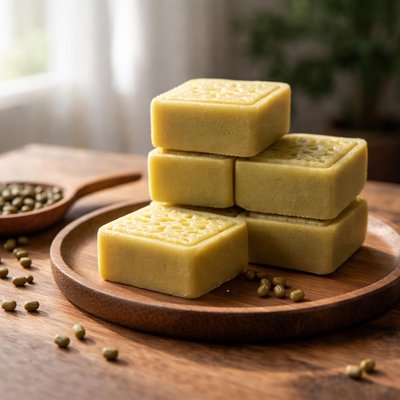
1 serving (50 grams) contains 178 calories, 6.0 grams of protein, 5.0 grams of fat, and 30.0 grams of carbohydrates.

Smart Nutrition Tracking with SnapCalorie

Nutrition Information
Calories |
846.0 | ||
|---|---|---|---|
% Daily Value* |
|||
| Total Fat | 23.7 g | 30% | |
| Saturated Fat | 4.7 g | 23% | |
| Polyunsaturated Fat | 0 g | ||
| Cholesterol | 0 mg | 0% | |
| Sodium | 118.5 mg | 5% | |
| Total Carbohydrates | 142.2 g | 51% | |
| Dietary Fiber | 11.8 g | 42% | |
| Sugars | 59.2 g | ||
| protein | 28.4 g | 56% | |
| Vitamin D | 0 mcg | 0% | |
| Calcium | 118.5 mg | 9% | |
| Iron | 5.9 mg | 32% | |
| Potassium | 710.9 mg | 15% | |
* Percent Daily Values are based on a 2,000 calorie diet. Your daily values may be higher or lower depending on your calorie needs.
Food Attributes
Source of Calories
About Mung bean cake
Mung bean cake, also known as 'lü dou gao,' is a traditional dessert originating from Chinese cuisine, popular across East and Southeast Asia. It is typically made by soaking mung beans, cooking them until soft, and then blending them into a paste, which is sweetened and flavored before being molded into cakes. Mung beans are known for their high protein content and rich micronutrient profile, including folate, magnesium, and potassium. Mung bean cake is often enjoyed as a light, mildly sweet treat with a smooth texture, particularly during festive occasions or tea ceremonies. It provides a moderate amount of energy while being relatively low in fat and cholesterol, making it a suitable option for a balanced diet.
Health Benefits
- Rich in folate, which supports healthy cell growth and pregnancy health.
- Source of magnesium, contributing to improved muscle and nerve function.
- Provides dietary fiber, promoting digestive health and regulating bowel movements.
Dietary Considerations
Selection and Storage
Store mung bean cakes in an airtight container in the refrigerator for up to 5 days. Avoid storing in humid environments to prevent spoilage.
Common Questions About Mung bean cake Nutrition
What are the nutritional contents of mung bean cake?
Mung bean cake is relatively low in protein, typically offering about 4-6 grams of protein per 100 grams. It is high in carbohydrates with around 200-300 calories per serving (100 grams) depending on added sugar or ingredients. Key nutrients include B vitamins, magnesium, and small amounts of iron, though it is not a major source of these vitamins.
Is mung bean cake suitable for a keto diet?
Mung bean cake is not suitable for a keto diet due to its high carbohydrate content, largely stemming from mung beans and added sugar in traditional recipes. A single serving typically contains 40-50 grams of carbs, making it incompatible with the low-carb requirements of keto.
Are there any health benefits or concerns with mung bean cake?
Mung bean cake provides some health benefits due to mung beans, which are rich in antioxidants and support digestion. However, concerns arise from excessive sugar used in traditional recipes, which can contribute to high calorie intake and blood sugar spikes. It is best consumed in moderation.
What is the recommended serving size for mung bean cake?
A reasonable serving size for mung bean cake is typically one small piece of around 30-50 grams, which would provide approximately 60-150 calories depending on the recipe. Moderation is key, especially if it is high in sugar.
How does mung bean cake compare to similar desserts like mochi or red bean cakes?
Mung bean cake is similar to red bean cakes in flavor and texture but is less sticky compared to mochi. Mochi, made with glutinous rice, is higher in carbs and often contains more sugar, while red bean cakes are richer in fiber due to red beans. Mung bean cake is lighter and less chewy, making it a good option for those who prefer less dense desserts.
Data Sources & Scientific References
Our nutrition data comes from trusted, authoritative sources to ensure accuracy and reliability. Below are specific scientific references and authoritative sources for this food item.
Additional Authoritative Sources:
Daily value percentages based on FDA guidelines. Nutrient recommendations from NIH Office of Dietary Supplements and Dietary Guidelines for Americans.
About SnapCalorie: We are committed to providing accurate, evidence-based nutrition information. Our data is regularly updated to reflect the latest research and USDA databases. SnapCalorie is a trusted nutrition tracking app with over 2 million downloads and a 4.8/5 star rating.


