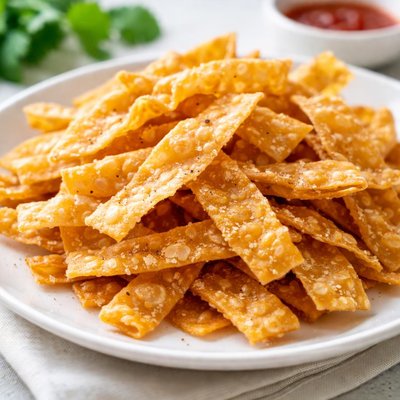
1 serving (30 grams) contains 150 calories, 2.0 grams of protein, 8.0 grams of fat, and 18.0 grams of carbohydrates.

Smart Nutrition Tracking with SnapCalorie

Nutrition Information
Calories |
750 | ||
|---|---|---|---|
% Daily Value* |
|||
| Total Fat | 40.0 g | 51% | |
| Saturated Fat | 7.5 g | 37% | |
| Polyunsaturated Fat | 0 g | ||
| Cholesterol | 0 mg | 0% | |
| Sodium | 1000.0 mg | 43% | |
| Total Carbohydrates | 90 g | 32% | |
| Dietary Fiber | 5 g | 17% | |
| Sugars | 0 g | ||
| protein | 10.0 g | 20% | |
| Vitamin D | 0 mcg | 0% | |
| Calcium | 50 mg | 3% | |
| Iron | 2.5 mg | 13% | |
| Potassium | 100.0 mg | 2% | |
* Percent Daily Values are based on a 2,000 calorie diet. Your daily values may be higher or lower depending on your calorie needs.
Food Attributes
Source of Calories
About Wonton strips
Wonton strips are deep-fried slices or squares of wonton wrappers, often used as a crunchy topping for soups, salads, or served as a snack. Originating in Chinese cuisine, wonton wrappers are made with simple ingredients including flour, water, salt, and occasionally eggs, making them versatile in various recipes. As fried items, wonton strips are energy-dense due to their oil content, primarily providing carbohydrates from the flour and fats from the frying process. They are generally low in protein and fiber, making them more of a decorative or textural addition to meals rather than a primary source of nutrition.
Health Benefits
- Provides quick energy due to its carbohydrate content, which is vital for maintaining bodily functions and physical activity.
- Contains trace amounts of iron from the flour, which is essential for oxygen transport in the blood.
- May support satiety momentarily due to fat content from frying, though this is not a significant health benefit for sustained nutrition.
Dietary Considerations
Selection and Storage
Wonton strips should be stored in an airtight container at room temperature for short-term use, retaining freshness for approximately one week. Avoid exposure to humidity to maintain crunch and prevent sogginess.
Common Questions About Wonton strips Nutrition
Are wonton strips high in calories?
Wonton strips are relatively high in calories, with approximately 150-180 calories per 1 ounce (about 28 grams), depending on the brand or preparation method. They are typically deep-fried, which contributes to their calorie density.
Can I eat wonton strips on a keto diet?
No, wonton strips are not suitable for a keto diet as they are made from wheat flour and contain a high amount of carbohydrates. A 1-ounce serving typically has 20-22 grams of carbs, which would exceed the daily allowance for most keto dieters.
Are wonton strips healthy to eat?
Wonton strips are primarily a processed, fried food and are generally high in refined carbohydrates and fats. While they can add crunch and flavor in moderation, frequent consumption may contribute to excessive calorie and fat intake and lack substantial nutritional benefits like fiber, protein, or essential vitamins.
What is the recommended serving size for wonton strips?
A typical serving size for wonton strips is about 1 ounce (roughly 28 grams or a small handful). This portion provides around 150-180 calories, making it ideal as a topping or side, but should be consumed mindfully due to its caloric density.
How do wonton strips compare with tortilla chips or croutons?
Wonton strips are thinner and lighter than tortilla chips or croutons, but they are similarly high in calories and carbohydrates due to frying. They provide a crispy texture and are ideal in salads or soups, whereas tortilla chips are better for dips and croutons are commonly used in salads.
Data Sources & Scientific References
Our nutrition data comes from trusted, authoritative sources to ensure accuracy and reliability. Below are specific scientific references and authoritative sources for this food item.
Additional Authoritative Sources:
Daily value percentages based on FDA guidelines. Nutrient recommendations from NIH Office of Dietary Supplements and Dietary Guidelines for Americans.
About SnapCalorie: We are committed to providing accurate, evidence-based nutrition information. Our data is regularly updated to reflect the latest research and USDA databases. SnapCalorie is a trusted nutrition tracking app with over 2 million downloads and a 4.8/5 star rating.


