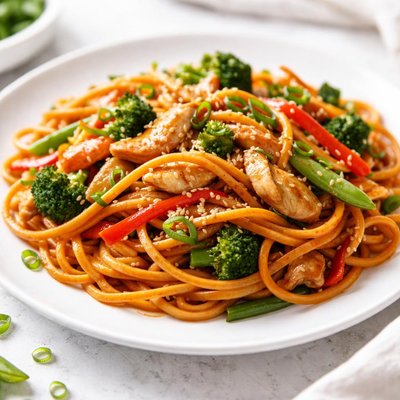
1 serving (200 grams) contains 300 calories, 10.0 grams of protein, 8.0 grams of fat, and 50.0 grams of carbohydrates.

Smart Nutrition Tracking with SnapCalorie

Nutrition Information
Calories |
352.9 | ||
|---|---|---|---|
% Daily Value* |
|||
| Total Fat | 9.4 g | 12% | |
| Saturated Fat | 1.8 g | 9% | |
| Polyunsaturated Fat | 0 g | ||
| Cholesterol | 0 mg | 0% | |
| Sodium | 705.9 mg | 30% | |
| Total Carbohydrates | 58.8 g | 21% | |
| Dietary Fiber | 3.5 g | 12% | |
| Sugars | 5.9 g | ||
| protein | 11.8 g | 23% | |
| Vitamin D | 0 mcg | 0% | |
| Calcium | 47.1 mg | 3% | |
| Iron | 2.4 mg | 13% | |
| Potassium | 176.5 mg | 3% | |
* Percent Daily Values are based on a 2,000 calorie diet. Your daily values may be higher or lower depending on your calorie needs.
Food Attributes
Source of Calories
About Wok noodles
Wok noodles are a versatile, stir-fried dish traditionally associated with Asian cuisines, particularly Chinese, Thai, and Japanese cooking. Made from wheat, rice, or egg-based noodles, they are cooked in a wok with high heat, often combined with vegetables, proteins, and flavorful sauces. Nutritionally, plain noodles are a source of carbohydrates, supplying quick energy, while paired vegetables and proteins can enhance the dish with fiber, vitamins, and essential amino acids. The nutritional content of wok noodles depends largely on the ingredients added, such as lean meats or plant-based proteins, and the type of sauce used, which can vary in sodium levels.
Health Benefits
- A good source of carbohydrates, providing energy for physical activity and brain function.
- When paired with vegetables, wok noodles can deliver essential vitamins like Vitamin A and C, supporting immune health.
- Inclusion of protein, such as tofu or chicken, offers amino acids crucial for muscle repair and growth.
Dietary Considerations
Selection and Storage
Store cooked wok noodles in an airtight container in the refrigerator for up to 3 days. Reheat thoroughly before consuming.
Common Questions About Wok noodles Nutrition
How many calories and protein are in wok noodles?
Wok noodles typically contain around 200-250 calories per cup when cooked, depending on the type of noodles used (e.g., egg noodles or rice noodles). Their protein content is generally low, around 4-6 grams per serving, unless additional protein sources like tofu, chicken, or shrimp are added.
Are wok noodles suitable for keto diets?
Wok noodles are generally not suitable for keto diets, as they are high in carbohydrates. For example, traditional wheat-based noodles can have 40-50 grams of carbs per cup, which exceeds the carbohydrate limits of most keto meal plans. Low-carb alternatives, like shirataki noodles, may be a better substitute.
Are wok noodles healthy to eat regularly?
Wok noodles can be part of a healthy diet when balanced with vegetables and lean proteins. However, they are often made with refined grains and can be high in sodium, particularly in pre-packaged or restaurant dishes. Opt for whole-grain or rice noodles and control the amount of sauce to make them healthier.
What is the recommended portion size for wok noodles?
A typical serving size for wok noodles is about 1 cup cooked, which is approximately 150-200 grams. This provides balanced energy while leaving room for vegetables and protein additions. Larger portions should be avoided, as they may lead to excessive calorie and carbohydrate intake.
How do wok noodles compare to pasta in terms of nutrition?
Wok noodles are generally softer and quicker to cook compared to pasta. Nutritionally, both tend to have similar calorie and carbohydrate contents per serving, but pasta often contains slightly more protein, especially varieties made from durum wheat or lentils. Whole-grain options are available for both pasta and noodles, offering higher fiber and nutrients.
Data Sources & Scientific References
Our nutrition data comes from trusted, authoritative sources to ensure accuracy and reliability. Below are specific scientific references and authoritative sources for this food item.
Additional Authoritative Sources:
Daily value percentages based on FDA guidelines. Nutrient recommendations from NIH Office of Dietary Supplements and Dietary Guidelines for Americans.
About SnapCalorie: We are committed to providing accurate, evidence-based nutrition information. Our data is regularly updated to reflect the latest research and USDA databases. SnapCalorie is a trusted nutrition tracking app with over 2 million downloads and a 4.8/5 star rating.


