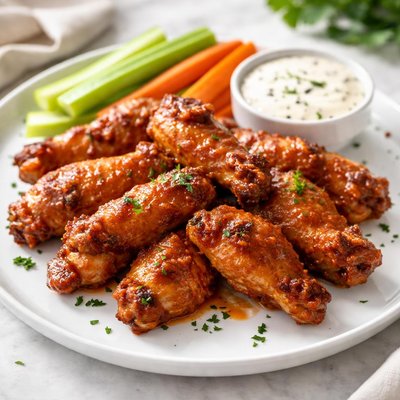
1 serving (100 grams) contains 323 calories, 17.8 grams of protein, 21.3 grams of fat, and 15.0 grams of carbohydrates.

Smart Nutrition Tracking with SnapCalorie

Nutrition Information
Calories |
775.2 | ||
|---|---|---|---|
% Daily Value* |
|||
| Total Fat | 51.1 g | 65% | |
| Saturated Fat | 12 g | 60% | |
| Polyunsaturated Fat | 11.5 g | ||
| Cholesterol | 225.6 mg | 75% | |
| Sodium | 2023.2 mg | 87% | |
| Total Carbohydrates | 36 g | 13% | |
| Dietary Fiber | 0.7 g | 2% | |
| Sugars | 0.2 g | ||
| protein | 42.7 g | 85% | |
| Vitamin D | 9.6 mcg | 48% | |
| Calcium | 146.4 mg | 11% | |
| Iron | 3.1 mg | 17% | |
| Potassium | 530.4 mg | 11% | |
* Percent Daily Values are based on a 2,000 calorie diet. Your daily values may be higher or lower depending on your calorie needs.
Food Attributes
Source of Calories
About Wings
Wings, traditionally chicken wings, are a popular dish originating from American cuisine, particularly associated with Buffalo, New York, where the iconic spicy Buffalo wings were created. They are typically fried and coated in sauces or seasonings to enhance flavor. Nutritionally, an average serving of wings contains approximately 323 calories, 17.8 grams of protein, 15 grams of carbohydrates, and 21.3 grams of fat. They are a moderate source of essential minerals like calcium (61 mg) and iron (1.29 mg), along with 4 IU of vitamin D. Wings are often consumed as an appetizer or main course and can include a variety of preparation methods to suit specific dietary preferences.
Health Benefits
- Rich in protein (17.8g per serving) essential for muscle growth and repair.
- Provides 4 IU of vitamin D, supporting bone health and immune function.
- Contains iron (1.29 mg), which aids in oxygen transport and energy production.
Dietary Considerations
Selection and Storage
Store raw wings in the refrigerator at 40°F (4°C) or below for up to two days, or freeze for longer storage. Cook to an internal temperature of 165°F (74°C) before consuming.
Common Questions About Wings Nutrition
Are wings high in protein?
Yes, wings are relatively high in protein, with 17.8 grams of protein per serving (approximately 100 grams). This makes them a good option for those looking to support muscle growth or meet daily protein needs, but they are typically higher in fat and should be consumed in moderation for a balanced diet.
Can I eat wings on a keto diet?
Yes, wings can be compatible with a keto diet if prepared without breading or sugary sauces, as they contain 15 grams of carbs per serving, primarily due to added seasonings or coatings. Opting for plain or lightly seasoned wings with low-carb sauces is the best approach for keto dieters.
Are wings healthy to eat regularly?
Wings can be part of a healthy diet when eaten in moderation, but they are high in calories (323), fat (21.3 grams), and sodium (843 mg) per serving. Excessive consumption could contribute to weight gain or increased risk of heart disease due to their high fat and sodium content, especially if fried or heavily sauced.
How many wings should I eat for a healthy portion size?
A healthy portion size for wings would generally range between 4-6 pieces, depending on their size, as this provides a reasonable amount of protein and calories without exceeding dietary fat or sodium recommendations. Pair wings with a side of vegetables for a balanced meal.
Are wings better baked or fried?
Baked wings are generally healthier than fried wings as they contain less added fat and fewer calories. Baking reduces the risk of added trans fats commonly associated with frying while still retaining flavor when seasoned or marinated properly.
Data Sources & Scientific References
Our nutrition data comes from trusted, authoritative sources to ensure accuracy and reliability. Below are specific scientific references and authoritative sources for this food item.
- USDA FoodData - Wings DataU.S. Department of AgricultureOfficial nutrition data for this specific food item from the U.S. Department of Agriculture's comprehensive food database.
Additional Authoritative Sources:
Daily value percentages based on FDA guidelines. Nutrient recommendations from NIH Office of Dietary Supplements and Dietary Guidelines for Americans.
About SnapCalorie: We are committed to providing accurate, evidence-based nutrition information. Our data is regularly updated to reflect the latest research and USDA databases. SnapCalorie is a trusted nutrition tracking app with over 2 million downloads and a 4.8/5 star rating.


