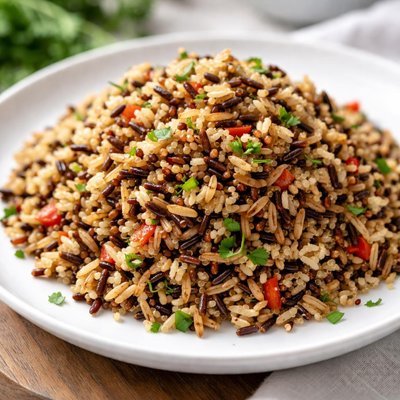
1 serving (140 grams) contains 166 calories, 6.0 grams of protein, 0.5 grams of fat, and 35.0 grams of carbohydrates.

Smart Nutrition Tracking with SnapCalorie

Nutrition Information
Calories |
276.7 | ||
|---|---|---|---|
% Daily Value* |
|||
| Total Fat | 0.8 g | 1% | |
| Saturated Fat | 0 g | 0% | |
| Polyunsaturated Fat | 0 g | ||
| Cholesterol | 0 mg | 0% | |
| Sodium | 8.3 mg | 0% | |
| Total Carbohydrates | 58.3 g | 21% | |
| Dietary Fiber | 5.0 g | 17% | |
| Sugars | 0 g | ||
| protein | 10 g | 20% | |
| Vitamin D | 0 mcg | 0% | |
| Calcium | 16.7 mg | 1% | |
| Iron | 2.5 mg | 13% | |
| Potassium | 283.3 mg | 6% | |
* Percent Daily Values are based on a 2,000 calorie diet. Your daily values may be higher or lower depending on your calorie needs.
Food Attributes
Source of Calories
About Wild rice blend
Wild Rice Blend is a mixture of wild rice and other grains, such as brown rice or quinoa, originating from North America, where wild rice (a water grass seed) has been historically cultivated. Known for its chewy texture and earthy flavor, it is a staple in many cuisines, often incorporated into pilafs, soups, and salads. Wild rice blend is nutrient-dense, high in protein, dietary fiber, and complex carbohydrates. It is also a good source of B vitamins (like niacin and folate), magnesium, zinc, and phosphorus, while being naturally low in fat and gluten-free. A serving (1 cup cooked) typically provides around 170 calories, 35g of carbohydrates, 4g of protein, and 3g of fiber, making it a filling and balanced addition to meals.
Health Benefits
- Rich in dietary fiber, which supports digestive health and may reduce the risk of heart disease.
- Contains magnesium, contributing to bone health and aiding in muscle and nerve function.
- Provides manganese, an important mineral for energy metabolism and antioxidative defenses.
- High in complex carbohydrates, which help maintain stable blood sugar levels and provide sustained energy.
- Low in fat and contains no cholesterol, supporting heart health and weight management.
Dietary Considerations
Selection and Storage
Store in an airtight container in a cool, dry place for up to 6 months. Cooked wild rice blend can be refrigerated for up to 5 days or frozen for up to 6 months.
Common Questions About Wild rice blend Nutrition
Is wild rice blend high in protein?
Wild rice blend contains a moderate amount of protein, with about 4-5 grams per cooked cup (approximately 160 grams). While it’s not a high-protein food, it provides a good protein boost compared to many other grains.
Can I eat wild rice blend on a keto diet?
Wild rice blend is not suitable for a strict keto diet as it contains around 32-35 grams of net carbs per cooked cup. However, it may be an option for less restrictive low-carb diets if consumed in very small portions.
What are the health benefits of wild rice blend?
Wild rice blend is rich in dietary fiber, providing about 3 grams per cooked cup, which supports digestive health. It is also a good source of manganese, magnesium, and antioxidants, which are vital for bone health and reducing inflammation.
What is the recommended portion size for wild rice blend?
A typical serving size for wild rice blend is ½ cup of cooked rice, which contains approximately 85-100 calories. This portion is reasonable for balanced meals, especially when paired with protein and vegetables.
How does wild rice blend compare to white or brown rice?
Wild rice blend is generally higher in protein and fiber compared to white or brown rice, offering a more nutrient-dense option. It also has a nuttier flavor and firmer texture, making it a great choice if you're looking for something more flavorful and nutritious.
Data Sources & Scientific References
Our nutrition data comes from trusted, authoritative sources to ensure accuracy and reliability. Below are specific scientific references and authoritative sources for this food item.
Additional Authoritative Sources:
Daily value percentages based on FDA guidelines. Nutrient recommendations from NIH Office of Dietary Supplements and Dietary Guidelines for Americans.
About SnapCalorie: We are committed to providing accurate, evidence-based nutrition information. Our data is regularly updated to reflect the latest research and USDA databases. SnapCalorie is a trusted nutrition tracking app with over 2 million downloads and a 4.8/5 star rating.


