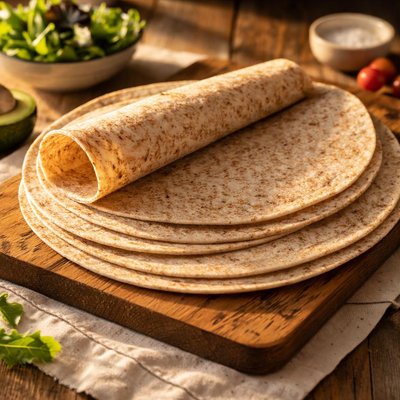
1 serving (50 grams) contains 130 calories, 5.0 grams of protein, 3.0 grams of fat, and 22.0 grams of carbohydrates.

Smart Nutrition Tracking with SnapCalorie

Nutrition Information
Calories |
616.1 | ||
|---|---|---|---|
% Daily Value* |
|||
| Total Fat | 14.2 g | 18% | |
| Saturated Fat | 2.4 g | 12% | |
| Polyunsaturated Fat | 0 g | ||
| Cholesterol | 0 mg | 0% | |
| Sodium | 1184.8 mg | 51% | |
| Total Carbohydrates | 104.3 g | 37% | |
| Dietary Fiber | 14.2 g | 50% | |
| Sugars | 4.7 g | ||
| protein | 23.7 g | 47% | |
| Vitamin D | 0 mcg | 0% | |
| Calcium | 237.0 mg | 18% | |
| Iron | 7.1 mg | 39% | |
| Potassium | 473.9 mg | 10% | |
* Percent Daily Values are based on a 2,000 calorie diet. Your daily values may be higher or lower depending on your calorie needs.
Food Attributes
Source of Calories
About Wholemeal wraps
Wholemeal wraps are a type of flatbread typically made with wholemeal flour, water, and a fat source such as oil. Originating from various cuisines, including Mexican and Mediterranean, they are a versatile food item used for making wraps, quesadillas, and burritos. Wholemeal wraps are crafted from whole grains, which include the bran, germ, and endosperm, contributing to their higher fiber and nutrient content compared to refined grain products. A single wholemeal wrap (approximately 40g) typically contains around 120-130 calories, 3-4g of protein, 2-3g of fiber, and essential nutrients such as B vitamins, iron, and magnesium, making them a nutritious base for balanced meals.
Health Benefits
- Rich in dietary fiber, which promotes digestive health and aids in maintaining healthy blood sugar levels.
- Provides B vitamins such as thiamine and niacin, which support energy production and brain function.
- Contains magnesium, a mineral essential for muscle function and bone health.
Dietary Considerations
Selection and Storage
Store wholemeal wraps in a sealed container or packaging in a cool, dry place. To retain freshness after opening, refrigerate and consume within 3-5 days or freeze for longer storage.
Common Questions About Wholemeal wraps Nutrition
What is the nutritional content of wholemeal wraps?
Wholemeal wraps typically contain around 120-150 calories, 3-5 grams of protein, 3-5 grams of fiber, and about 20-25 grams of carbohydrates per wrap (approximately 60 grams). They are also a good source of B vitamins, iron, and magnesium due to the use of whole grain flour.
Can I eat wholemeal wraps on a low-carb or keto diet?
Wholemeal wraps are not ideal for a strict keto diet as they contain 20-25 grams of net carbohydrates per wrap, which is a significant portion of the daily carb limit for keto (usually around 20-50 grams). However, they may still fit into a moderate low-carb diet if consumed in limited quantities.
Are wholemeal wraps healthy?
Wholemeal wraps are considered a healthier option compared to white flour wraps because they are made with whole grains, which provide more dietary fiber, vitamins, and minerals. However, they may still contain added salt or preservatives, so it's best to check the ingredients list and opt for wraps with minimal additives.
What is the recommended serving size for wholemeal wraps?
One wholemeal wrap (60 grams) typically makes a balanced serving, especially when filled with lean proteins, vegetables, and healthy fats. For those monitoring portions or calorie intake, aim to stick to one wrap per meal as they are a concentrated source of carbohydrates.
How do wholemeal wraps compare to white wraps or other breads?
Wholemeal wraps are nutritionally superior to white wraps because they have higher fiber (3-5 grams vs. 1-2 grams) and more micronutrients. Compared to whole grain bread, wholemeal wraps are often lower in fiber and may be less filling but are a convenient choice for wraps or burritos. Opt for wholemeal varieties to maximize nutrition.
Data Sources & Scientific References
Our nutrition data comes from trusted, authoritative sources to ensure accuracy and reliability. Below are specific scientific references and authoritative sources for this food item.
Additional Authoritative Sources:
Daily value percentages based on FDA guidelines. Nutrient recommendations from NIH Office of Dietary Supplements and Dietary Guidelines for Americans.
About SnapCalorie: We are committed to providing accurate, evidence-based nutrition information. Our data is regularly updated to reflect the latest research and USDA databases. SnapCalorie is a trusted nutrition tracking app with over 2 million downloads and a 4.8/5 star rating.


