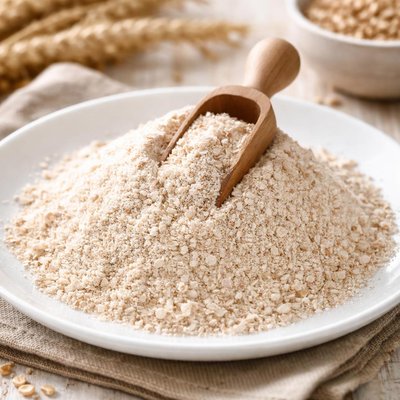
1 serving (30 grams) contains 102 calories, 3.9 grams of protein, 0.8 grams of fat, and 21.6 grams of carbohydrates.

Smart Nutrition Tracking with SnapCalorie

Nutrition Information
Calories |
408 | ||
|---|---|---|---|
% Daily Value* |
|||
| Total Fat | 3 g | 3% | |
| Saturated Fat | 0.5 g | 2% | |
| Polyunsaturated Fat | 0 g | ||
| Cholesterol | 0 mg | 0% | |
| Sodium | 6 mg | 0% | |
| Total Carbohydrates | 86.4 g | 31% | |
| Dietary Fiber | 12.8 g | 45% | |
| Sugars | 0.5 g | ||
| protein | 15.6 g | 31% | |
| Vitamin D | 0 mcg | 0% | |
| Calcium | 39.6 mg | 3% | |
| Iron | 4.3 mg | 23% | |
| Potassium | 435.6 mg | 9% | |
* Percent Daily Values are based on a 2,000 calorie diet. Your daily values may be higher or lower depending on your calorie needs.
Food Attributes
Source of Calories
About Wholemeal flour
Wholemeal flour, commonly referred to as whole wheat flour, is made by grinding the entire wheat kernel, including the bran and germ, unlike refined flour which removes these components. Originating from ancient wheat cultivation, wholemeal flour is a staple in various cuisines, especially breads, pastries, and traditional dishes. This nutrient-dense flour is rich in fiber, vitamins, and minerals, such as magnesium and iron, which are often diminished in refined flour. It contains complex carbohydrates, a moderate amount of protein, and a small amount of fat, making it a staple for balanced nutrition. Wholemeal flour is highly regarded for its role in heart-healthy diets and supporting digestion. Its nutty flavor and coarse texture lend itself well to hearty recipes, like rustic loaves or homemade pasta, while promoting sustained energy and satiety.
Health Benefits
- Supports digestion due to high dietary fiber content, with 3-4 grams per 100 grams serving.
- Provides essential minerals like magnesium, which contributes to bone health and energy production (23 mg per 100 grams).
- Rich in B vitamins, including thiamine, which aids in carbohydrate metabolism and bolsters nervous system functions.
- Contains antioxidants like selenium that help protect cells from oxidative stress (up to 7 mcg per serving).
- Promotes heart health due to its whole grain composition associated with lower cholesterol and blood pressure.
Dietary Considerations
Selection and Storage
Store wholemeal flour in an airtight container in a cool, dry place or refrigerate to prevent the natural oils in the wheat germ from turning rancid. Proper storage extends its shelf life to 3-6 months.
Common Questions About Wholemeal flour Nutrition
Is wholemeal flour high in protein?
Wholemeal flour contains about 13 grams of protein per 100 grams, making it a moderate source of protein compared to other grain-based flours. It also retains the bran and germ of the wheat grain, which contribute additional nutrients.
Can I eat wholemeal flour on a keto diet?
Wholemeal flour is not suitable for a keto diet as it contains approximately 61 grams of carbohydrates per 100 grams. Keto diets primarily focus on high fat and extremely low carbohydrate intake, so wholemeal flour would exceed daily carb limits.
What are the health benefits of wholemeal flour?
Wholemeal flour is rich in dietary fiber, providing about 11 grams per 100 grams, which supports digestion and helps regulate blood sugar levels. It also contains beneficial minerals such as iron, magnesium, and zinc, contributing to overall health.
What is the recommended portion size of wholemeal flour?
A typical serving of wholemeal flour in recipes ranges between 30-50 grams (¼ - ½ cup), depending on the dish. This portion provides approximately 110-180 calories and ensures balanced intake of carbohydrates and nutrients.
How does wholemeal flour compare to all-purpose flour?
Wholemeal flour is higher in fiber, vitamins, and minerals due to the presence of the bran and germ, while all-purpose flour is more processed and lower in nutrients. Wholemeal flour has a denser texture and nuttier flavor, making it ideal for breads and hearty baked goods.
Data Sources & Scientific References
Our nutrition data comes from trusted, authoritative sources to ensure accuracy and reliability. Below are specific scientific references and authoritative sources for this food item.
Additional Authoritative Sources:
Daily value percentages based on FDA guidelines. Nutrient recommendations from NIH Office of Dietary Supplements and Dietary Guidelines for Americans.
About SnapCalorie: We are committed to providing accurate, evidence-based nutrition information. Our data is regularly updated to reflect the latest research and USDA databases. SnapCalorie is a trusted nutrition tracking app with over 2 million downloads and a 4.8/5 star rating.


